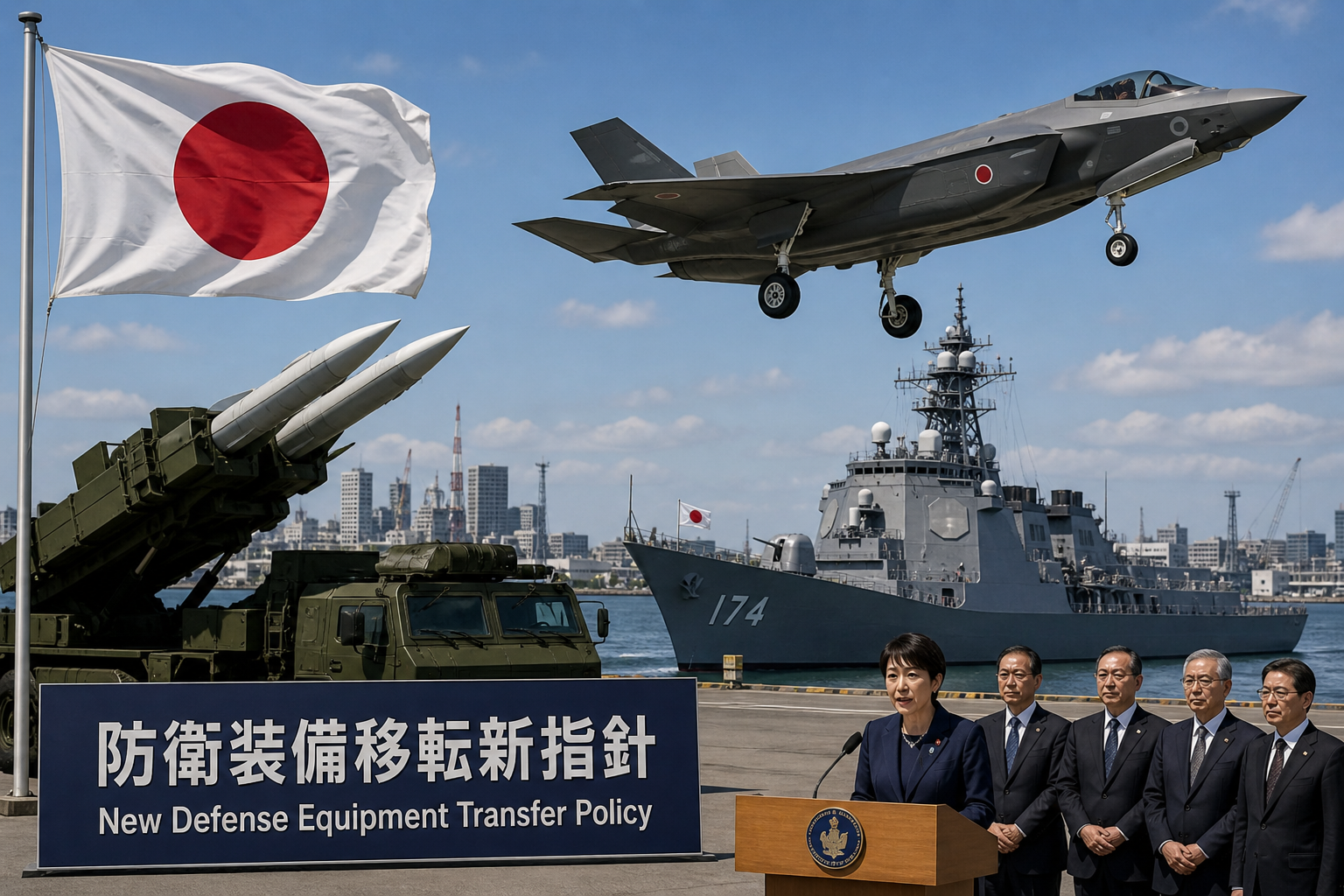
Japan’s Cabinet approved a new policy Tuesday that lifts a long-standing ban on exporting lethal weapons, marking a major change in the country’s postwar security stance and opening the door for sales of fighter jets, missiles, destroyers and other military equipment.
Prime Minister Sanae Takaichi announced the changes on social media, saying countries can no longer protect their peace and security alone. She said Japan would continue to follow strict standards while expanding defense equipment transfers to partner nations.
The move changes decades of limits tied to Japan’s pacifist constitution adopted after World War II. Earlier rules had mostly restricted military exports to non-lethal items such as rescue gear, surveillance equipment, transport systems and minesweeping tools. Japan had also sent items like flak jackets, gas masks and civilian-use vehicles to Ukraine.
Under the new guidelines, exports of lethal weapons will in principle be possible, though they will be limited for now to countries that have defense equipment and technology transfer agreements with Japan. Reports said at least 17 countries currently qualify. Each sale must still be approved by Japan’s National Security Council, and the government said it will monitor how equipment is used after delivery.
Officials said Japan would not export lethal weapons to countries currently at war, though they also said exceptions could be allowed in special circumstances tied to national security. That part drew attention quickly.
Chief Cabinet Secretary Minoru Kihara said the policy would help create a security environment favorable to Japan while strengthening the industrial base needed for defense readiness. He said the regional security climate is changing rapidly.
Japan has increasingly pointed to pressure from China, North Korea and Russia as reasons for boosting military capacity and spending in recent years.
China sharply criticized the announcement. Foreign Ministry spokesperson Guo Jiakun said the international community would remain vigilant and resist what he called Japan’s reckless moves toward a new kind of militarism.
At home, opponents said the change goes against the spirit of Japan’s pacifist constitution and could raise tensions abroad. Protesters in Tokyo recently gathered outside the National Diet Building carrying flags reading “No War” and voicing support for Article 9, the constitutional clause renouncing war.
Japan had already been easing export restrictions in steps. In late 2023, it approved sales of some lethal weapons and parts made under foreign licenses, clearing the way for exports such as U.S.-designed Patriot missiles back to the United States.
That same revision also supported Japan’s joint sixth-generation fighter jet project with United Kingdom and Italy.
One of the clearest examples of Japan’s new direction came last week, when Australia finalized a multibillion-dollar agreement for Japanese-designed frigates. Under the deal, Mitsubishi Heavy Industries will deliver the first three ships for the Australian navy and help build eight more in Australia.
Other countries have shown interest too. New Zealand has reportedly looked at the frigates, while the Philippines is seeking used destroyers. Indonesia has also been mentioned as a possible customer.
Japan’s defense sector, once seen by many companies as a limited market with low returns, is now being pushed as one of 17 strategic growth areas under the Takaichi government. Startups and larger firms are showing more interest, especially in drones and dual-use technology. The government has also increased support for research and newer companies.
This image is the property of The New Dispatch LLC and is not licenseable for external use without explicit written permission.