The United Arab Emirates announced Tuesday that it will leave OPEC on May 1, removing one of the group’s largest producers at a time when oil markets are already under pressure from conflict in the Gulf region.
The decision means OPEC will lose a member that has long carried weight inside the organization. The UAE has been one of the few countries in the group, alongside Saudi Arabia, with extra production capacity available if markets suddenly need more supply.
UAE Energy Minister Suhail Mohamed al-Mazrouei said the move followed an internal review of the country’s energy plans. He said no other nation was consulted before the announcement.
According to Mazrouei, officials looked at both present and future production goals before making the choice. He also said global demand for energy is expected to keep rising, and the UAE wants to be positioned for that demand.
Leaving OPEC would remove the country from the quota system used by the producer group. That could give the UAE more room to raise output later, especially once export routes in the Gulf become easier to use again.
There was no sharp market response right away. Oil prices reduced some earlier gains after the news became public. Mazrouei said he did not expect an immediate shock because current shipping limits are already affecting producers in the region.
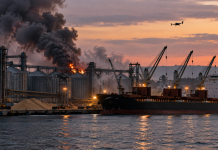
Much of that pressure comes from the Strait of Hormuz, the narrow waterway between Iran and Oman that serves as a major route for oil and gas exports. Large volumes of global energy supplies usually move through it. Recent threats and attacks tied to the Iran war have made transport more difficult for Gulf exporters.
The International Energy Agency said the share of worldwide oil production tied to OPEC+ declined in March compared with February. Analysts expect that number could fall again if supply outages continue and after the UAE exits the alliance.
Some market watchers said the change may help consumers later if the UAE increases production once regional tensions ease.
Monica Malik, chief economist at ADCB, said the move creates an opening for the UAE to expand its share of global oil sales when conditions become more stable.
Jorge Leon of Rystad Energy said the UAE is one of the few producers capable of adding barrels quickly. Outside OPEC, he said, the country would have more freedom and more reason to do that. It also raises questions about how much Saudi Arabia can continue guiding the market largely on its own.
The announcement also adds to signs of strain between Abu Dhabi and Riyadh. The two governments have worked closely in the past, but differences have grown over oil policy, regional strategy, and competition for business investment.
The UAE has developed into a leading trade and finance center in the region while also building a more independent foreign policy. It has expanded ties with the United States and Israel in recent years, especially after attacks during the Iran conflict.
On Tuesday, Gulf leaders also gathered in Saudi Arabia. A Gulf official said the meeting was focused on coordinating a response to repeated Iranian missile and drone strikes faced by countries in the region since fighting involving the United States, Israel, and Iran began in late February. Some parts of the region remain tense still.
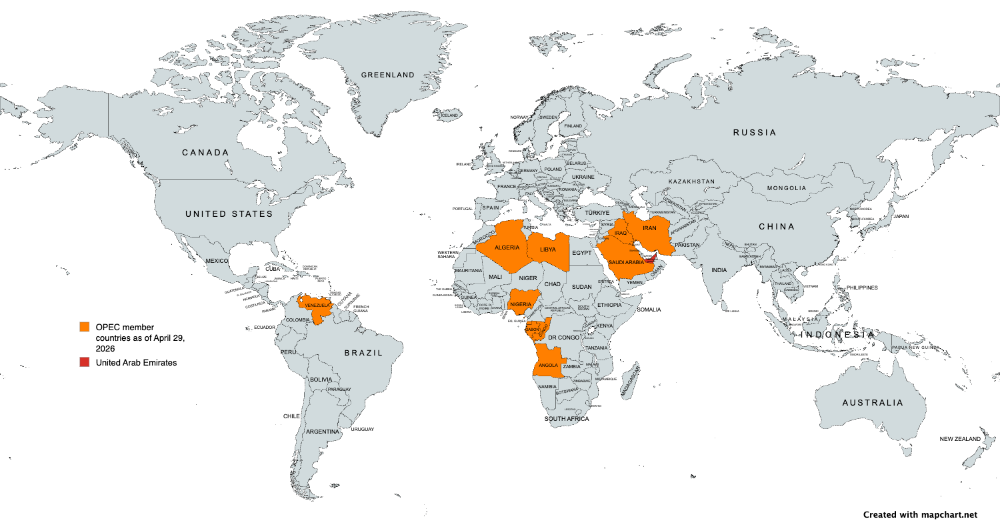
OPEC member countries as of April 29, 2026 = Orange
UAE = Red
Image is licensed under the Creative Commons Attribution-Share Alike 4.0 International license and was created using MapChart (https://mapchart.net).