Mother’s Day has existed in the United States for more than a hundred years, although traditions connected to honoring mothers go back much further. Ancient Greek and Roman cultures held festivals dedicated to mother goddesses, and in Britain a religious tradition known as Mothering Sunday had already been observed for centuries before the American holiday was created.
The version celebrated in the United States grew largely from the efforts of Anna Jarvis. After her mother died in 1905, Jarvis began campaigning for a national day that would recognize the role mothers played in family life. Her mother, Ann Reeves Jarvis, had organized women’s groups in West Virginia during the nineteenth century that focused on sanitation, public health, and helping communities during the Civil War years. Anna Jarvis wanted that kind of work and sacrifice to be remembered.
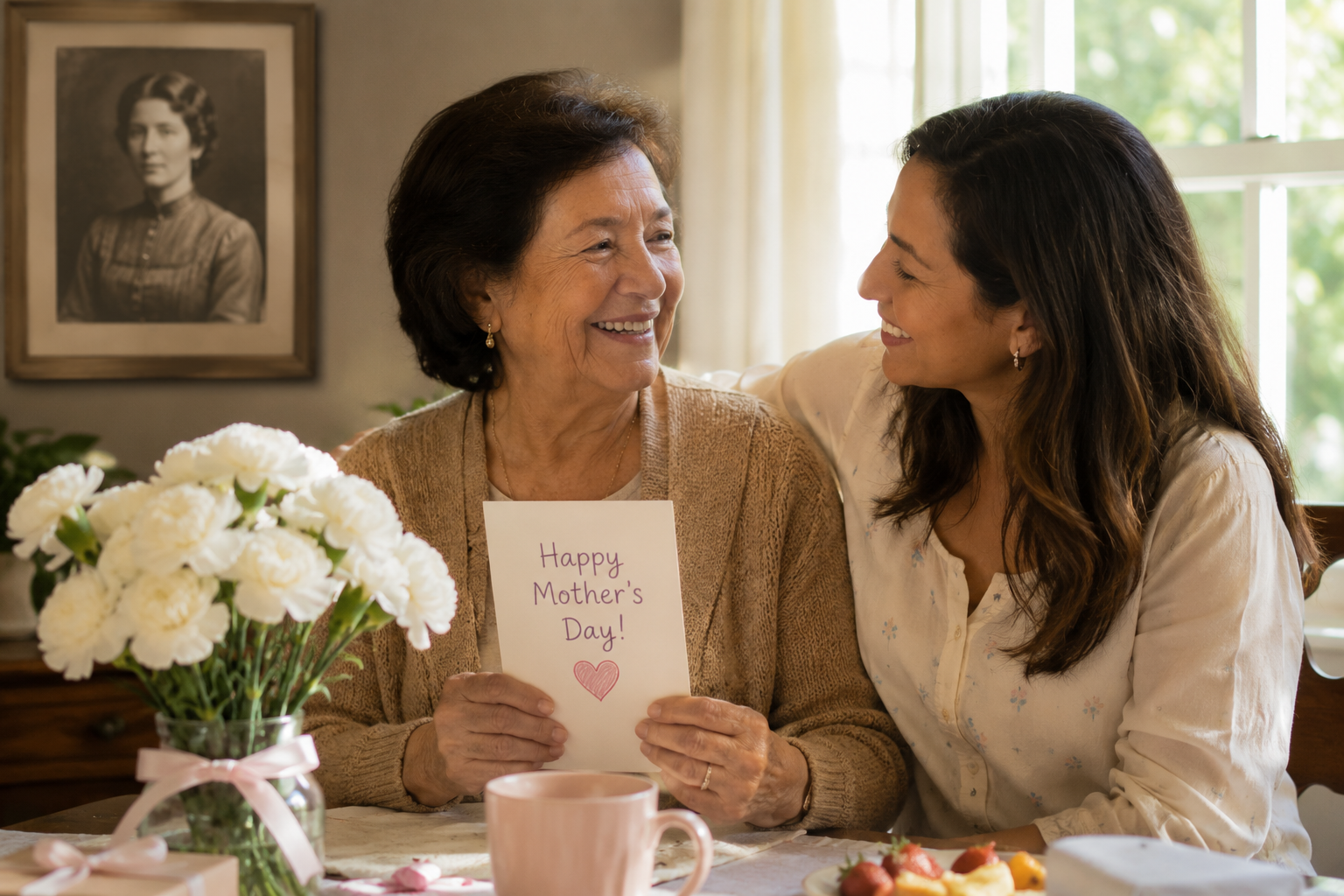
The idea spread gradually. Jarvis spent years writing letters to churches, civic groups, and political leaders before Mother’s Day gained wider support. In 1908, a memorial service honoring mothers was held at a church in Grafton, West Virginia, while another large gathering took place in Philadelphia on the same day. White carnations became associated with the holiday because they had been her mother’s favorite flower, and they are still connected to Mother’s Day celebrations today.
In 1914, President Woodrow Wilson signed a proclamation establishing Mother’s Day as a national observance to be held on the second Sunday in May. The holiday became popular very quickly, and businesses soon began advertising flowers, candy, cards, and special events tied to the occasion.
That commercial side of the holiday frustrated Anna Jarvis more and more over time. She believed Mother’s Day was supposed to center on personal appreciation rather than shopping or large public promotions. Jarvis often argued that a handwritten letter carried more meaning than a store-bought greeting card. During the 1920s and 1930s, she publicly criticized organizations she believed were profiting from the holiday and protested several events connected to Mother’s Day fundraising. In 1925, she was arrested after interrupting a gathering associated with the American War Mothers organization during a dispute involving carnations and fundraising activities.
Mother’s Day is now celebrated in many countries, although traditions differ depending on the region. In the United Kingdom, Mothering Sunday is still observed earlier in the spring. Countries such as Mexico and Japan also have their own customs connected to honoring mothers and families, with some celebrations centered on religious traditions and others focused more on meals, flowers, or family gatherings.
Today, Mother’s Day remains one of the busiest days of the year for restaurants and florists in the United States. Some families celebrate with brunches or gifts, while others keep things simple with a phone call, a handwritten card, or time spent together. More than a century after the holiday was officially recognized, the way people observe it still varies widely from one family to another.
This image is the property of The New Dispatch LLC and is not licenseable for external use without explicit written permission.