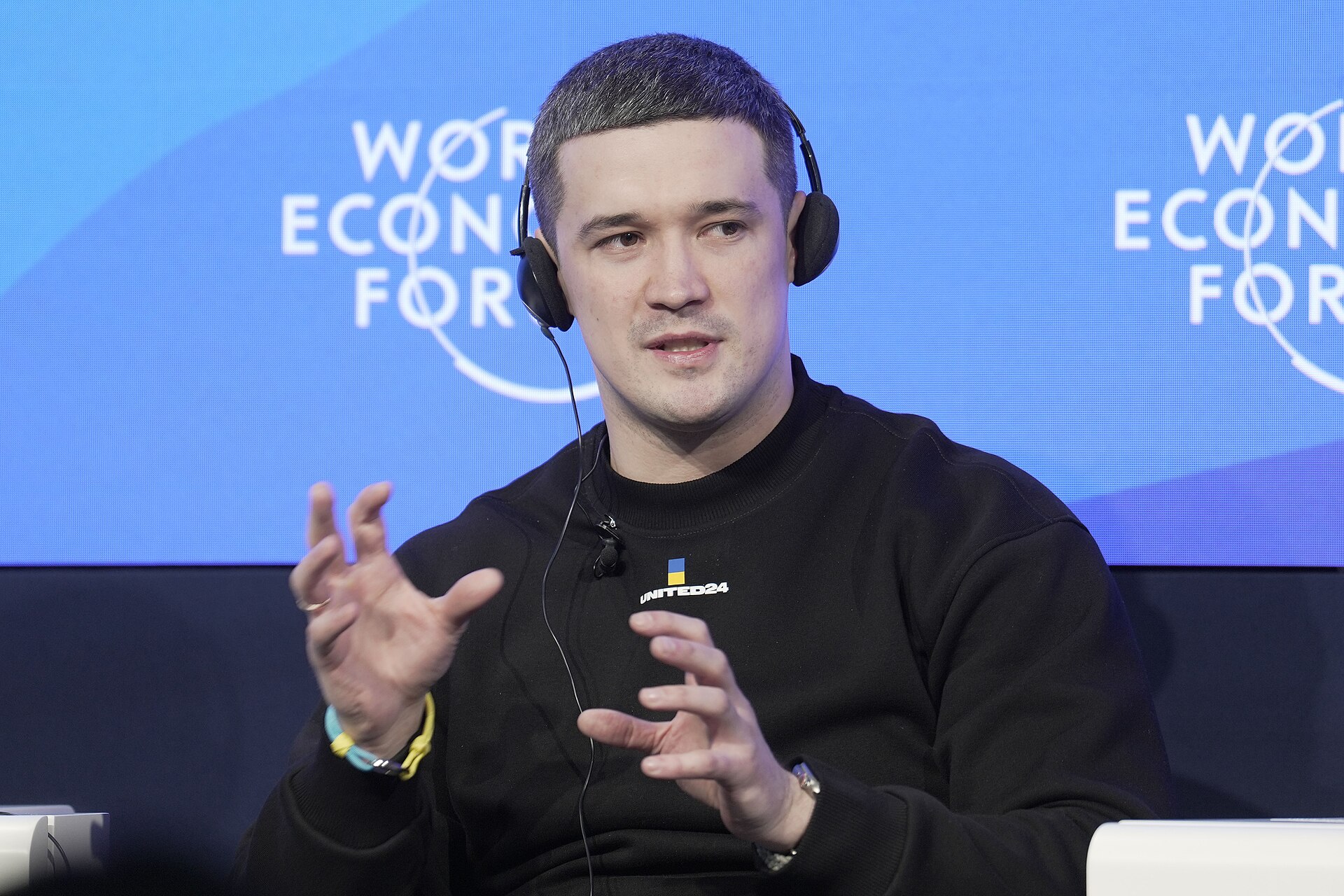
President Volodymyr Zelenskyy’s decision to remove Ukraine’s Defense Minister Mykhailo Fedorov has sparked protests across the country and exposed growing divisions within the nation’s wartime leadership.
Fedorov, who served as defense minister for six months after previously leading Ukraine’s digital transformation ministry, was dismissed as part of a broader government reshuffle. Zelensky acknowledged that tensions between Fedorov and Ukraine’s top military commander, Gen. Oleksandr Syrskyi, had reached a point where the two could no longer work together without his direct involvement. Speaking to reporters in Kyiv, Zelensky said, “I wanted unity very much. The sides did not find it.”
Fedorov had become one of the most recognizable faces of Ukraine’s shift toward modern warfare. Lawmakers, soldiers, and activists often described him as one of the country’s most effective wartime officials. Much of that reputation came from his efforts to expand Ukraine’s drone program during a critical period of the war.
During his tenure, Ukraine increased its use of long-range and mid-range drones to target Russian military infrastructure and supply routes. Supporters say those efforts helped Ukraine maintain pressure on Russian forces despite continuing challenges on the front.
At a press conference on Thursday, Fedorov openly criticized Syrskyi, accusing him of resisting reforms and failing to adapt to changes on the battlefield. He argued that the conflict has entered a different phase, saying, “The war has completely changed. We can’t keep going on what worked back then.”
The disagreement appears to have centered on military strategy. Syrskyi, 60, is widely viewed as a traditional commander focused on infantry and artillery operations. Fedorov, 35, pushed for technological solutions and argued that drones are reshaping warfare at a rapid pace. Some of the comments from both sides were blunt, and the dispute became increasingly public over recent weeks.
Protests broke out in Kyiv and several other Ukrainian cities following the announcement of Fedorov’s dismissal. Demonstrators called for his reinstatement, while others demanded Syrskyi’s removal instead. A senior Ukrainian air force commander, Pavlo Yelizarov, also announced his resignation, calling the decision “a great blow to the country’s defense capability.”
The political fallout did not stop there. Zelensky later announced the dismissal of Syrskyi as commander in chief, appointing Mykhailo Drapatyi as his replacement after days of public pressure. It marked one of the most turbulent moments of Zelenskyy’s presidency since the start of the war.
Zelensky has named Yevhen Khmara, the current head of Ukraine’s security service, as acting defense minister. Khmara has reportedly been involved in long-range strike operations targeting Russian oil facilities and depots.
The leadership changes come at a busy moment for Ukraine. The country recently signed agreements with the European Union aimed at increasing drone production. President Donald Trump also agreed during NATO’s summit in Turkey to grant Ukraine a license to produce missiles for the Patriot air defense system.
It remains unclear what role Fedorov may play in the government moving forward. Zelensky has said he offered him another position focused on unifying Ukraine’s technology sector. Fedorov has not publicly confirmed whether he will accept it.
Fedorov struck a measured tone in a recent social media post. “Change is inevitable,” he wrote. “The dialogue is happening. I believe we will succeed.”
Image is licensed under the Creative Commons Attribution 2.0 Generic license and was created by the Foundations World Economic Forum.









.jpg)