The Trump administration is increasing American military activity across Latin America, with an Army unit beginning a series of assignments in the region. About 600 soldiers are involved in the deployment, which comes as Washington considers taking its campaign against suspected drug trafficking organizations beyond operations at sea.
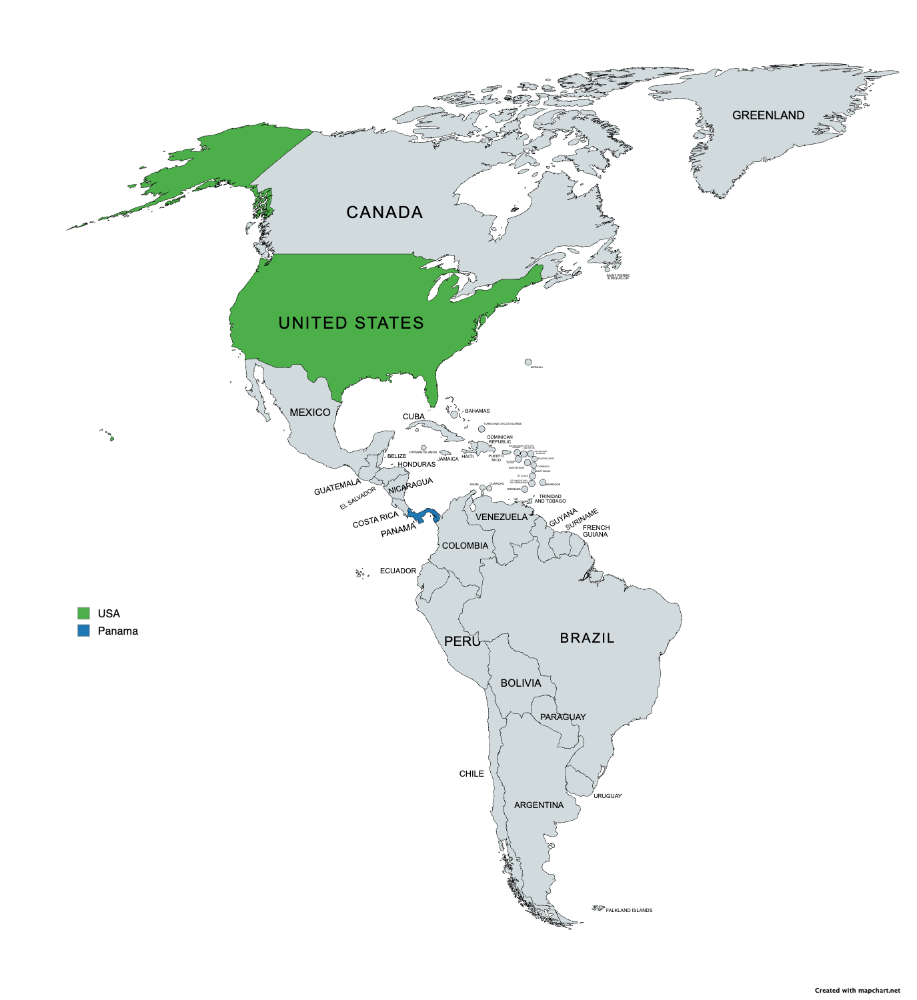
The soldiers are members of the 10th Mountain Division, stationed at Fort Drum in New York. Their initial assignment takes them to Panama, where they will use a jungle facility for training before working with military personnel in other countries.
Colombia and Honduras are among the places where additional exercises are planned. Some American soldiers may also provide security for helicopters or assist teams working with local forces during operations involving suspected drug traffickers.
Details of the deployment were first published by The New York Times, based on information from U.S. military officials. Fox News subsequently received confirmation from a senior official that decisions about troop assignments would be handled by U.S. Southern Command.
The activities include Southern Vanguard, an exercise scheduled to take place in Colombia this month. Officials have described the troop rotations as temporary, though the possibility of keeping American personnel in the region longer has been discussed.
The deployment follows a series of deadly encounters between American forces and boats suspected of transporting drugs. During the past year, the military has carried out 71 attacks in the Caribbean and eastern Pacific.
At least 239 people have been killed in those incidents. The U.S. government has described the victims as people involved in trafficking, but has not released evidence publicly demonstrating their alleged connections to the drug trade.
Attention is now turning toward possible operations away from the coast. Gen. Francis Donovan, the commander responsible for American military activity in the region, has acknowledged that actions against suspected trafficking groups on land are being considered.
The military is looking at different approaches. These could involve detaining suspects, targeting properties connected to criminal organizations or checking more cargo at international crossings.
The administration has also been speaking with governments about allowing American personnel to participate in operations within their borders. Defense Secretary Pete Hegseth previously said Colombia, Honduras and Guatemala had accepted such arrangements. Guatemala disputed his statement.
Other changes are taking place within the military’s regional operations. A new command headquartered in Miami is expected to receive several hundred additional soldiers from the 10th Mountain Division.
American drones are being repositioned as part of the wider effort. Several MQ-9 Reapers previously assigned to Africa have been sent to Colombia and Ecuador. Hegseth has also established a separate Pentagon office responsible for managing activities directed at cartels.
The campaign has drawn objections from legal specialists who question whether the attacks on suspected trafficking vessels comply with the law. Human rights organizations have warned that expanding operations onto land could put civilians at greater risk.
Adam Isacson, who works with the Washington Office on Latin America, told The New York Times that he could not remember an American troop deployment of comparable size in the region apart from military invasions or responses to natural disasters.
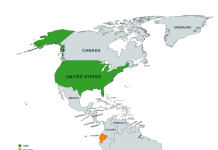
USA = Green
Panama = Blue
Image is licensed under the Creative Commons Attribution-Share Alike 4.0 International license and was created using MapChart (https://mapchart.net).