The war in Yemen took another turn Thursday, October 15, when a missile attack on a government facility in Aden left five people dead and 16 wounded. The southern city serves as the operating center for Yemen’s internationally recognized administration, which has been fighting Houthi forces with support from Saudi Arabia.
Several senior officials were present at the presidential compound during the attack. Prime Minister Shaya Zindani and members of his cabinet survived, while people employed at the facility were among those killed and injured. Information Minister Moammar al-Eryani reported that five missiles had reached the complex.
Houthi representatives confirmed their forces carried out an operation in Aden. They maintained that the objective was a Saudi military command center rather than the Yemeni government’s offices. The group’s news agency also alleged that Saudi personnel and weapons were based at the location, though independent verification of that account was unavailable.
Zindani denounced the attack and said the government’s work would continue. He also maintained that military operations against the Houthis would proceed despite the strike.
The incident followed renewed battles along Yemen’s western coast, where control of territory near the Bab al-Mandab Strait has become a major concern. The waterway is used by international shipping moving between the Red Sea and other routes. Losing or gaining positions nearby can affect military access to the coastline.
Government-aligned troops reported recovering ground overlooking the strait last week. Saudi aircraft provided support during the fighting, part of a broader campaign against Houthi positions.
Across the border, Saudi Arabia has been dealing with missile and drone attacks against transportation and energy facilities. The Saudi-led coalition reported 20 attacks involving Riyadh’s King Khalid International Airport during October, with 17 people killed and 333 injured.
The coalition also reported casualties at Abha airport in southwestern Saudi Arabia. Three people died and 28 were wounded in attacks there, according to Saudi military officials.
Both sides have offered different explanations for the renewed violence. The Houthis say they are responding to Saudi strikes and restrictions on areas they administer. Saudi authorities accuse Iran of helping the group obtain military equipment and training. Iran has denied providing weapons, describing its involvement as political support.
The conflict began in 2014 after Houthi fighters took control of Sanaa, forcing Yemen’s government out of the capital. Saudi Arabia entered the war in 2015 with other Arab countries. A ceasefire arrangement in 2022 reduced the fighting for several years, but clashes resumed during the summer of 2026.
The latest military operations have brought further losses among civilians. Yemen’s Health Ministry reports at least 1,282 people killed and 5,890 injured since August 6. United Nations estimates place the number of newly displaced people at about 201,000.
In Taiz, residents have reported heavier shelling and difficulty obtaining supplies as armed forces fight over surrounding areas. Humanitarian agencies are also monitoring an increase in suspected cholera infections while families continue leaving their homes.
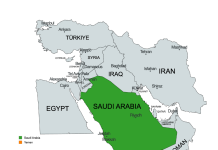
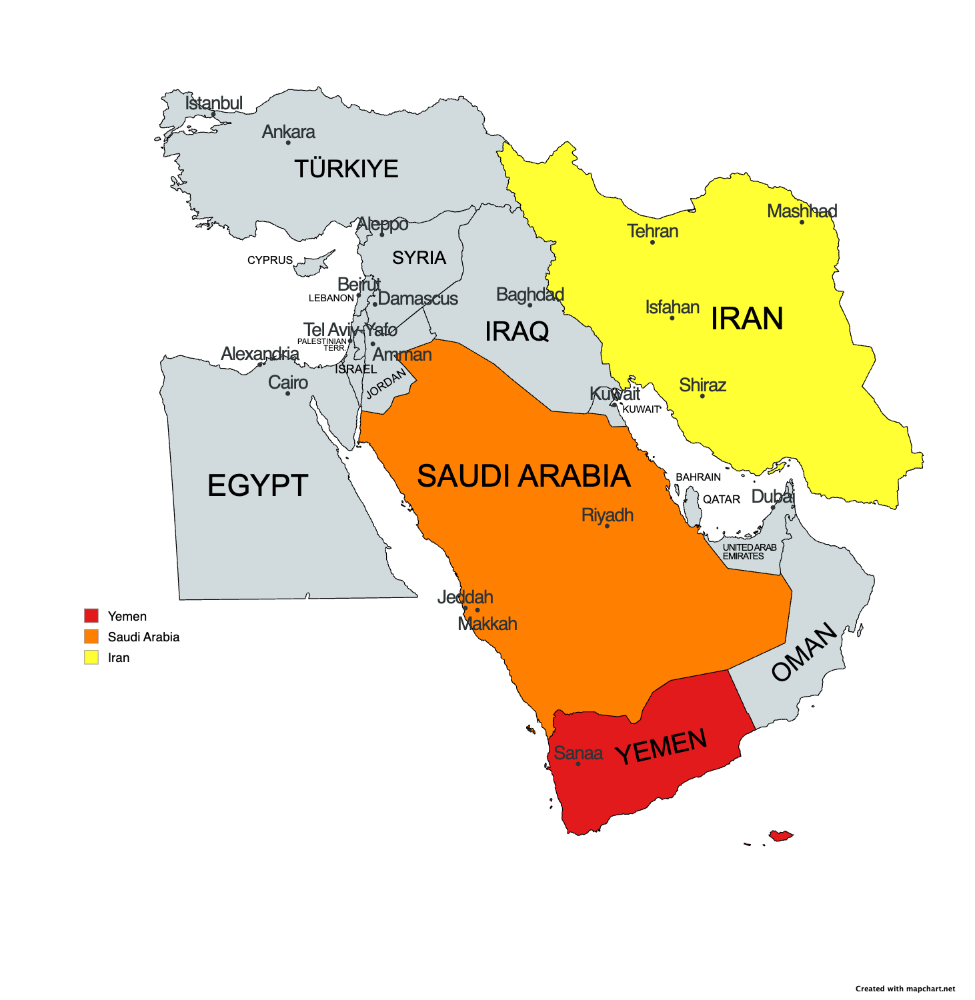
Yemen = Red
Saudi Arabia = Orange
Iran = Red
Image is licensed under the Creative Commons Attribution-Share Alike 4.0 International license and was created using MapChart (https://mapchart.net).