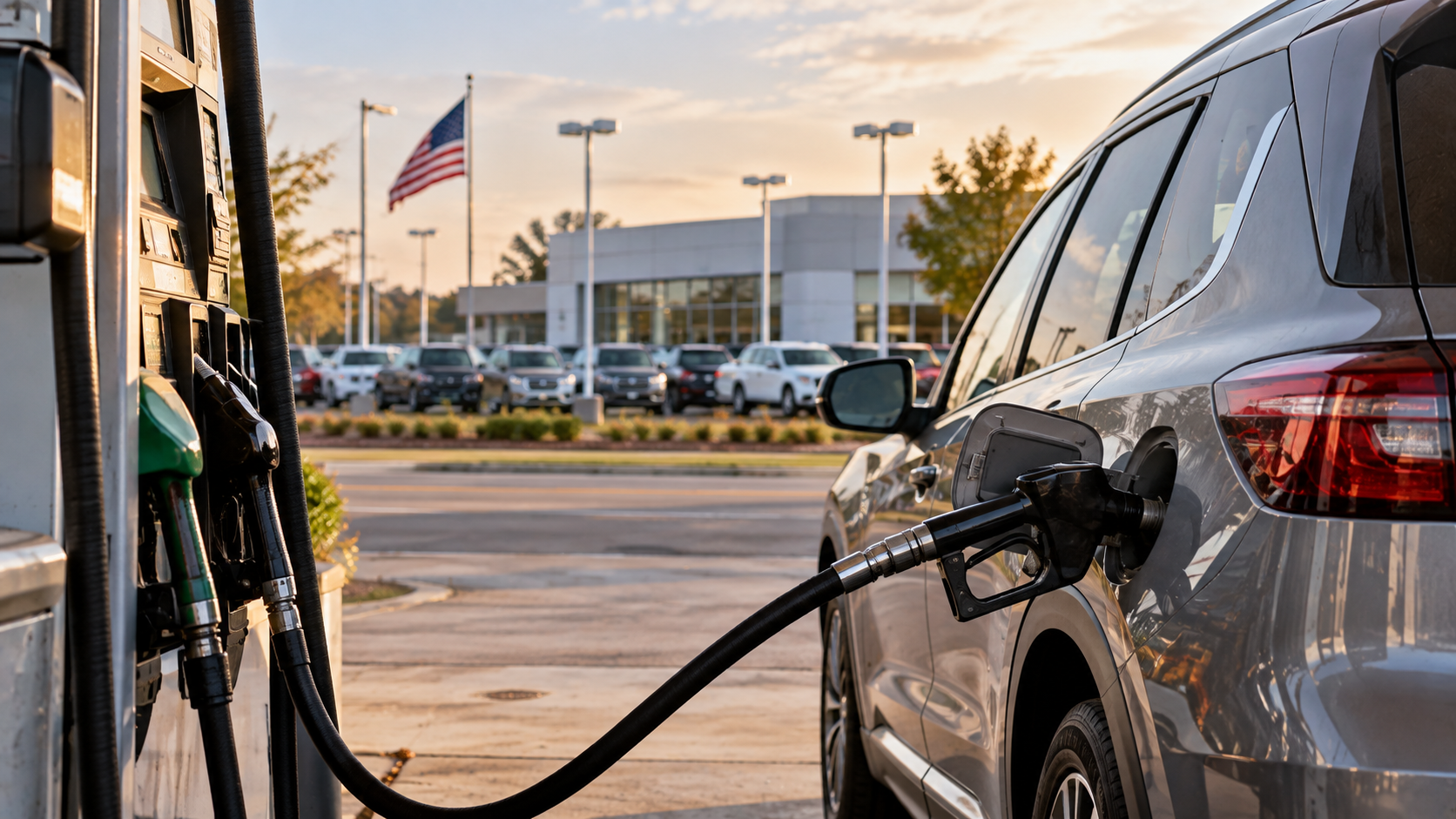
Americans shopping for a new vehicle could see lower prices under a new Trump administration policy, though critics say drivers may end up using more gasoline.
Federal officials estimate the changes could reduce the average purchase price of a new vehicle by about $1,300. The Department of Transportation also projects savings of $138 billion for Americans during the next five years. The administration says giving manufacturers fewer restrictions will help bring down the cost of producing and selling vehicles.
That could matter at dealerships, where prices remain high. The average new vehicle sold for $50,089 in August. Gas has become more expensive at the same time, reaching a national average of $4.47 per gallon on Sept. 28. The average was $3.13 one year earlier.
The lower prices projected by the administration come with a major change in federal mileage requirements.
For vehicles produced for 2031, the government is setting the expected average at 34.9 mpg. Under the policy adopted during the Biden administration, the figure for that year was expected to be 50.4 mpg. The new number is still above the 30.1 mpg figure associated with 2024 vehicles.
President Donald Trump says the revised policy will help U.S. automobile manufacturing while giving consumers access to less expensive vehicles. He has also said his administration is putting $100 billion into American autos.
Changes are also coming to a less visible part of the federal system: how different vehicles are categorized.
Starting with 2030 models, regulators will use new criteria when deciding whether a vehicle counts as a passenger car or a light truck. Some SUVs have been placed in the truck category under the existing system. Federal officials expect the revision to dramatically change the proportions. Passenger cars would make up around 70% and light trucks about 30%, compared with roughly the reverse today.
A separate program used by automakers is scheduled to disappear a couple of years earlier.
Companies can currently receive credits when their vehicles outperform federal mileage targets. Those credits have value because they can be transferred to another manufacturer that needs them to satisfy federal requirements. The government will end those transactions beginning with 2028 vehicles. Tesla is one company that has previously earned money by selling credits to other manufacturers.
Major U.S. automakers have expressed support for the direction of the changes. Ford said it was examining the final policy and would continue working with the administration. General Motors said the objectives behind the revised requirements had its support. Stellantis said the changes would help the company provide buyers with different types of vehicles.
Environmental organizations see a different problem. Lower mileage requirements mean cars can consume more fuel, and critics say that could leave owners spending more money at gas stations while increasing pollution.
One estimate in the provided material projects that carbon dioxide output from vehicles could be 22,111 tons higher per year in 2035 than under the previous requirements. It also projects increases in soot and several pollutants connected with smog.
Federal officials say affordability could have a safety benefit as well. Their position is that cheaper new vehicles could make it easier for people driving older cars to replace them with newer models equipped with more recent safety technology. That argument will now play out alongside higher gasoline prices as the new requirements begin taking effect.
This image is the property of The New Dispatch LLC and is not licenseable for external use without explicit written permission.