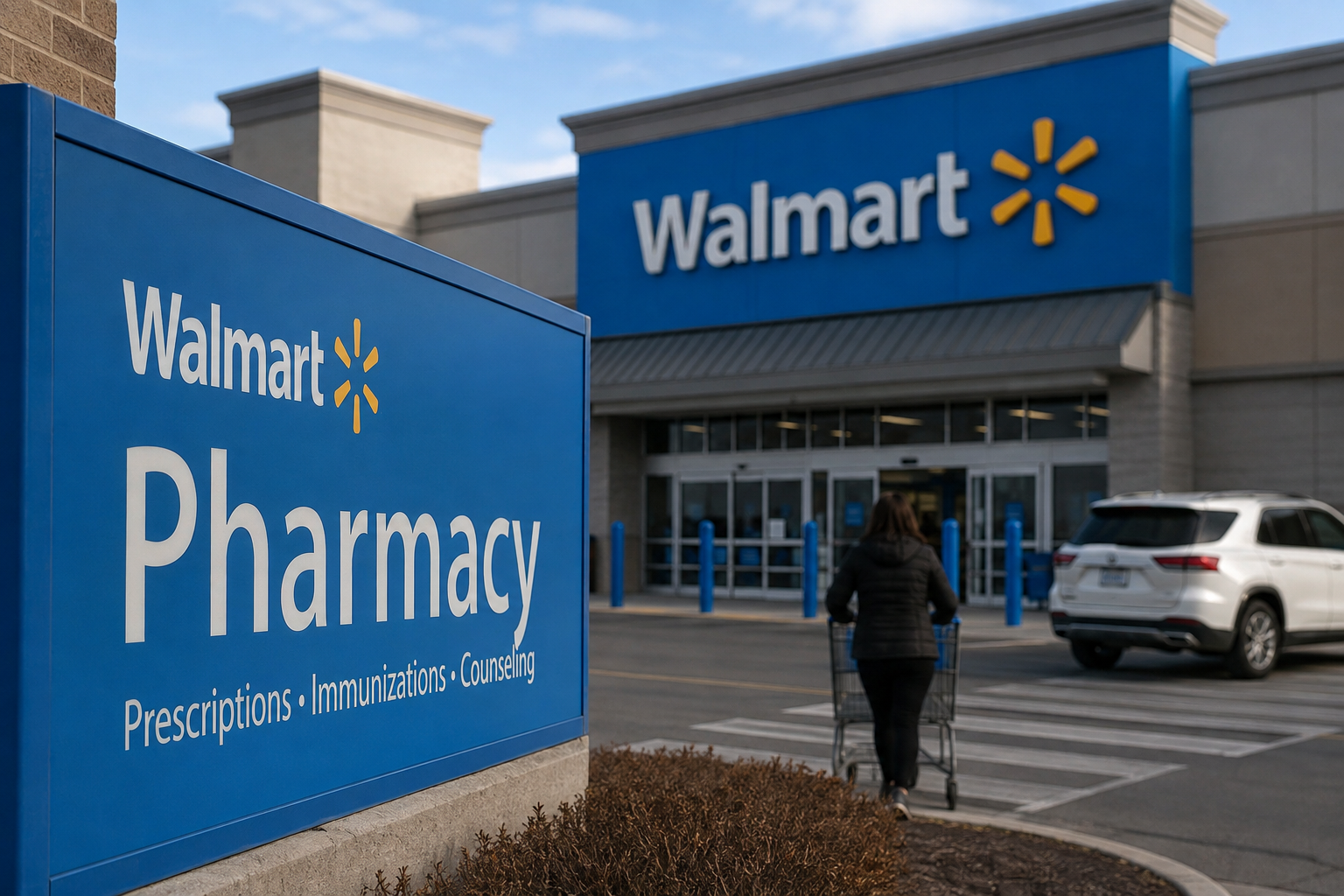
Walmart will pay $50 million to resolve a federal case involving the way controlled drugs were handled at its pharmacies. Federal authorities accused the retailer of allowing prescriptions for opioids and other controlled medications to be dispensed even when there were reasons to believe some of them were not valid.
The case began in federal court in Delaware in December 2020, with the government later changing its complaint in 2022. Investigators said the conduct described in the case went back to June 2013 and involved both pharmacists and employees responsible for company compliance.
One part of the government’s case focused on doctors and other medical providers suspected of running so-called “pill mills.” Federal officials said people working on Walmart’s compliance team were aware of concerns surrounding some of these prescribers. Still, prescriptions connected to them continued to be filled, according to the allegations.
Pharmacists themselves had raised concerns inside the company. Thousands of forms were submitted documenting decisions not to fill questionable prescriptions, federal officials said. Investigators accused the corporate compliance operation of not giving those reports enough attention and focusing its time on other business goals instead.
There were warning signs at individual pharmacies too, according to the complaint. Some prescriptions involved large opioid doses, while others combined opioids with different medications in potentially dangerous ways. Federal authorities also pointed to customers repeatedly trying to obtain controlled drugs earlier than scheduled. Despite those concerns, the government alleged that some pharmacists went ahead with prescriptions they knew should not have been filled.
The case also examined Walmart’s handling of drug orders sent to its pharmacies. Court records stated that about 37.5 million orders involving controlled substances were shipped during a period of roughly four years. Only 204 orders were reported to the DEA as suspicious during that time, according to the government.
The settlement requires more than a payment. Walmart has also reached an agreement with the DEA covering how its pharmacies will deal with controlled medications going forward.
Under those requirements, Walmart must provide a hotline where workers and patients can report concerns about possible unlawful dispensing. The retailer will also track patterns across its pharmacies in an effort to spot questionable activity. Another process will be created for examining prescribers when there is reason to suspect they may be issuing prescriptions improperly.
DEA Assistant Administrator Cheri Oz said pharmacies are expected to recognize and stop controlled medications from being dispensed unlawfully. She also said improper opioid prescriptions can create risks for patients and communities.
Walmart has faced other legal action involving opioids. In 2022, it agreed to a $1.3 billion settlement involving thousands of cases brought by states that accused the company’s pharmacies of playing a role in the opioid crisis.
Other large pharmacy businesses have reached settlements as well. Kroger agreed in 2023 to pay $1.2 billion to state and local governments in cases involving its prescription practices.
The broader toll from drug overdoses has been large. Centers for Disease Control and Prevention data included in the provided information puts the number of deaths involving prescription drugs at about 806,000 from 1999 through 2023.
This image is the property of The New Dispatch LLC and is not licenseable for external use without explicit written permission.