Prediction markets have gotten a lot bigger in 2026. A few years ago, most people probably hadn’t heard of them unless they were into crypto or followed elections really closely. Now they show up more often, especially around sports and politics, and the names of a few platforms come up again and again.
Some early 2026 reports said total monthly trading volume across the biggest platforms went past $20 billion. That number gets repeated a lot. It is hard to tell how steady that is month to month, but either way it points to how much the space has grown.
Kalshi is a big part of that. It runs in the U.S. with CFTC approval and has expanded pretty quickly. Polymarket is still one of the most recognizable platforms too, especially for political markets and crypto-related ones. Its situation in the U.S. is still not fully settled. In late April 2026, it was trying to get approval to bring its main exchange back.
A lot of the activity now is in sports. On some U.S. platforms, sports contracts make up most of the trading. That kind of makes sense. There are games every day, results come fast, and people already understand how odds work. It is easier to follow than something like a long-term policy question.
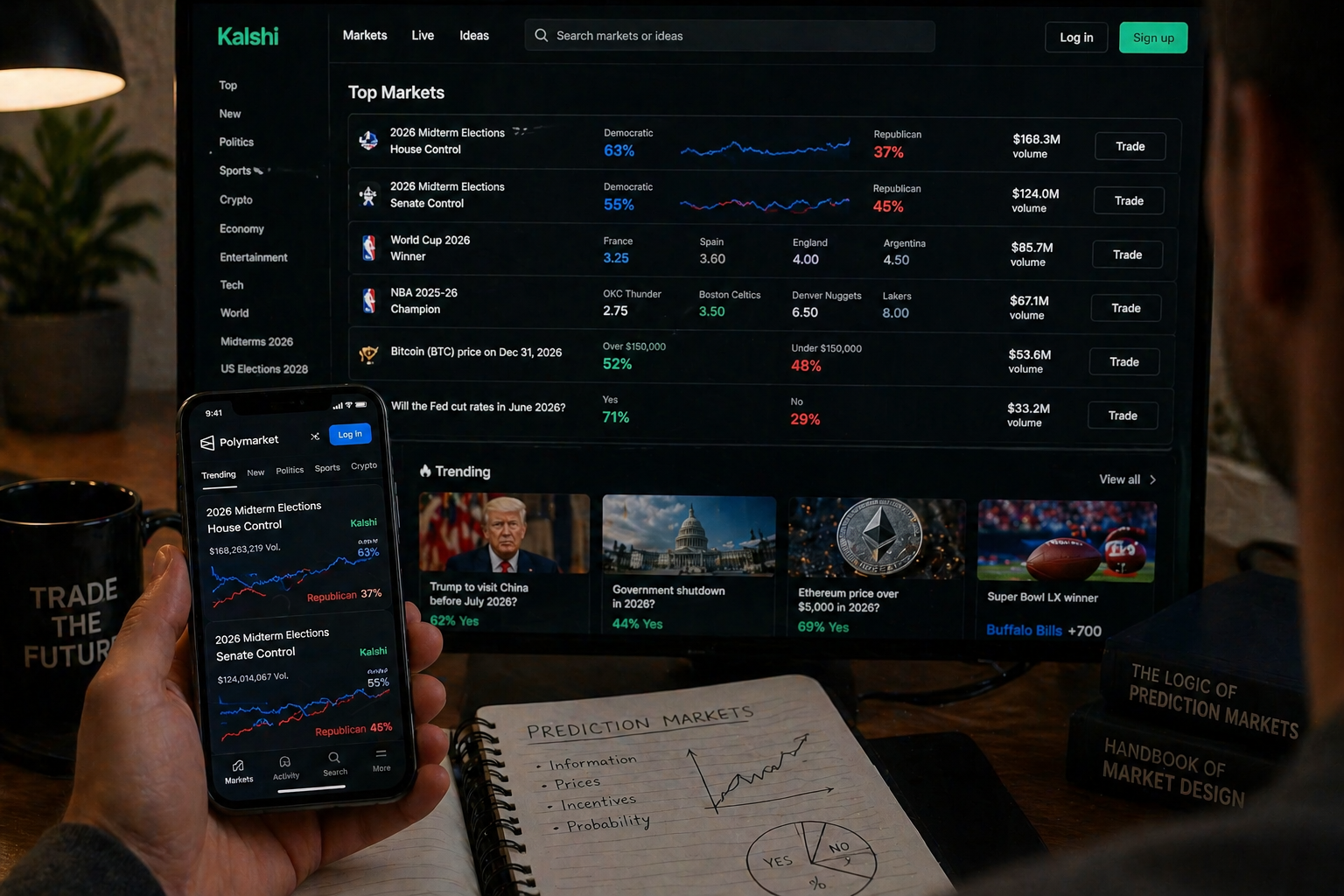
Politics is still there too, and it stays active for longer. Markets around the 2026 midterms have been trading for months. In late April, prices showed Democrats ahead in the House and slightly ahead in the Senate. Those numbers move around pretty quickly, sometimes within the same day, so they are not really fixed predictions.
There are already markets for the 2028 presidential election. That feels early but also normal for these platforms. Around late April, J.D. Vance was leading some Republican nomination markets. Other names were getting steady trading as well. It is still very early, so the numbers do not mean that much yet.
Outside the U.S., sports markets are busy too. The World Cup winner market had France and Spain near the top, with England and Argentina close behind. NBA title markets were active at the same time. Sometimes a single game shifts the odds a lot. Other times it barely changes anything, which is kind of interesting.
Crypto markets are still a big draw. People trade on Bitcoin price targets, Ethereum performance, and regulation questions. Some of those stay active for a while. Others spike and then drop off pretty quickly.
The legal side is still messy. Kalshi has federal approval, but some states have challenged certain types of contracts, especially sports-related ones. In April 2026, the CFTC sued Wisconsin over that issue. So even as the market grows, the rules around it are still being worked out.
There are also concerns that keep coming up. Things like manipulation, insider information, and low liquidity in smaller markets. Platforms say they monitor this and have suspended accounts before. It is not really a settled issue.
Prediction markets are just more visible now. Traders look at them, reporters reference them, and researchers track how prices move compared to polls. Some people rely on them more than others. They are just there now, in the mix of everything else people use to follow events.
This image is the property of The New Dispatch LLC and is not licenseable for external use without explicit written permission.