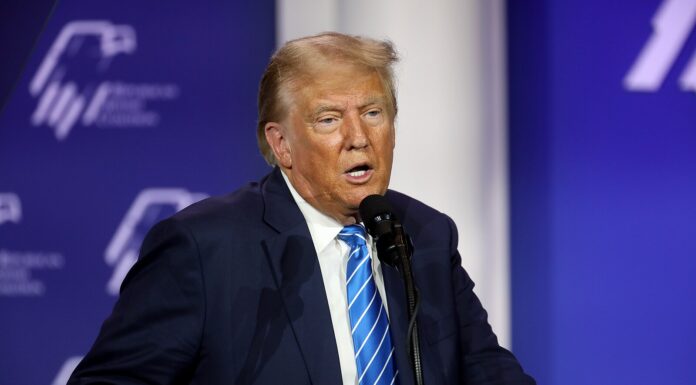
President Donald Trump said today, that he feels optimistic about a new two-week ceasefire agreement with Iran, suggesting it could lead to better conditions across the Middle East. He shared the news on Truth Social, calling it “a big day for world peace” and saying both sides seem ready for a break from the fighting.
The agreement focuses heavily on reopening the Strait of Hormuz, a key shipping route where about 20% of the world’s oil passes each day. Traffic in the area has been mostly stopped since early March because of safety concerns, including attacks on ships. Trump said the United States would help manage the return of vessels moving through the strait, describing efforts to deal with a buildup of ships waiting nearby.
He also talked about possible economic effects if the ceasefire holds. According to Trump, Iran could begin rebuilding, and more trade could move through the region again. He suggested that, if things go smoothly, the Middle East could see a period of growth similar to what he says is happening in the United States.
The ceasefire follows weeks of conflict that started after joint U.S. and Israeli strikes on Iranian targets in late February. Trump described that earlier military effort, known as Operation Epic Fury, as a complete success. At the same time, he didn’t rule out more military action if the agreement falls apart, saying only that future decisions would depend on what happens next.
Some parts of the deal are still unclear. Full details haven’t been released, but the agreement appears tied to safe passage through the Strait of Hormuz and ongoing talks being mediated by Pakistan. Iranian officials have indicated they expect sanctions to be lifted and for their control over the strait to be recognized as discussions continue.
Other countries have responded positively so far. British Prime Minister Keir Starmer said the pause could bring some relief, while French President Emmanuel Macron and German Chancellor Friedrich Merz also supported efforts to turn the ceasefire into a longer agreement.
Still, the situation is not fully settled. Israeli Prime Minister Benjamin Netanyahu said the ceasefire does not apply to Lebanon, where Israeli forces are continuing operations against Hezbollah. Reports from southern Lebanon say strikes are still happening, including in areas near the city of Tyre, where people have been killed.
At the same time, some Iran-backed groups in Iraq have said they will pause attacks during the two-week period. Hezbollah has also temporarily stopped strikes on northern Israel, though it hasn’t released a full statement explaining its plans.
Financial markets reacted quickly after the announcement. Oil prices dropped after rising during the conflict, and stock futures in the U.S. and other countries moved higher. Even with that reaction, it’s still unclear whether this pause will turn into a longer-lasting agreement.
For now, the ceasefire is only set for two weeks, and what happens after that will depend on how negotiations move forward and whether both sides stick to the deal.
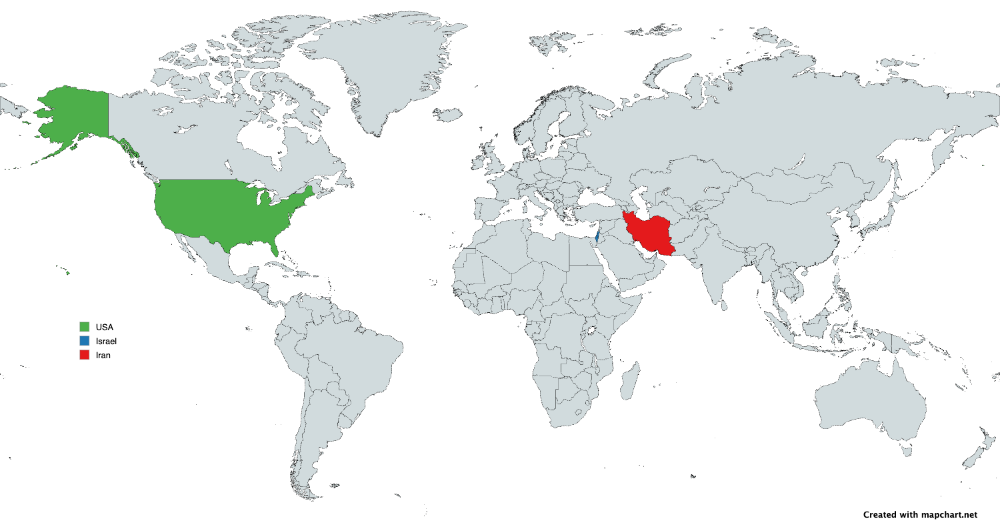
USA = Green
Israel = Blue
Iran = Red
Image is licensed under the Creative Commons Attribution-Share Alike 4.0 International license and was created using MapChart (https://mapchart.net).