French President Emmanuel Macron concluded a two-day state visit to South Korea this week, where he met with President Lee Jae-myung to deepen cooperation on defense, energy security, and economic resilience. The visit, the first by a French leader to Seoul since 2015, comes at a time of rising geopolitical strain linked to conflict in the Middle East and disruptions to global energy flows.
At the center of the discussions was the growing economic pressure caused by instability in the region, particularly around the Strait of Hormuz. The vital shipping route has faced severe disruption after Iran moved to restrict access in response to military actions involving the United States and Israel earlier this year. For South Korea, which depends heavily on imported energy, the situation poses serious risks to supply chains and price stability.
President Lee emphasized the importance of closer coordination between Seoul and Paris to navigate these challenges. He noted that both countries would share policy experience and develop joint strategies aimed at stabilizing energy access and cushioning the broader economic impact. Macron echoed these concerns, warning that the ripple effects of the conflict are already being felt in global markets through rising energy prices and increased uncertainty.
Despite calls from some allies to consider military options to reopen shipping lanes, Macron expressed caution, describing such actions as impractical under current conditions. Instead, both leaders agreed to focus on diplomatic coordination and measures to secure maritime transport routes, aiming to reduce further disruption without escalating tensions.
Defense cooperation also featured prominently in the talks. As established producers of advanced military technology, France and South Korea plan to expand joint exercises and deepen collaboration in defense manufacturing. Macron highlighted the goal of enhancing production capabilities on both sides, while Lee pointed to opportunities for broader cooperation in aerospace and security technologies.
Beyond defense and energy, the two nations are preparing to sign agreements across a wide range of industries. These include critical minerals, semiconductors, quantum technologies, nuclear power, and renewable energy such as wind. A key component involves partnerships between Korea Hydro & Nuclear Power and French firms like Orano and Framatome, aimed at securing nuclear fuel supplies and opening opportunities in the global nuclear market.
Economic ties are also set to grow. Both leaders expressed a shared ambition to increase bilateral trade to $20 billion by 2030, up from $15 billion in 2025. Macron’s itinerary included meetings with executives from major South Korean companies to encourage investment flows and strengthen industrial cooperation between the two economies.
The visit also featured cultural diplomacy. A state banquet highlighted Korean cuisine, while K-pop played a role in welcoming the French delegation, reflecting the broader cultural connection between the two countries. Macron is also scheduled to address students at Yonsei University and attend a business forum with senior Korean officials.
Overall, the summit reflects a broader push by both nations to adapt to a shifting global landscape. By strengthening cooperation across defense, energy, and technology, South Korea and France aim to better manage shared challenges and maintain stability in an increasingly uncertain world.
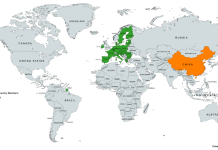
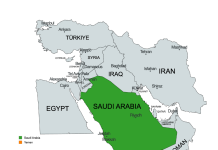
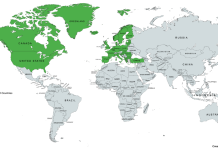
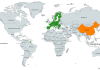
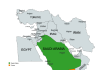
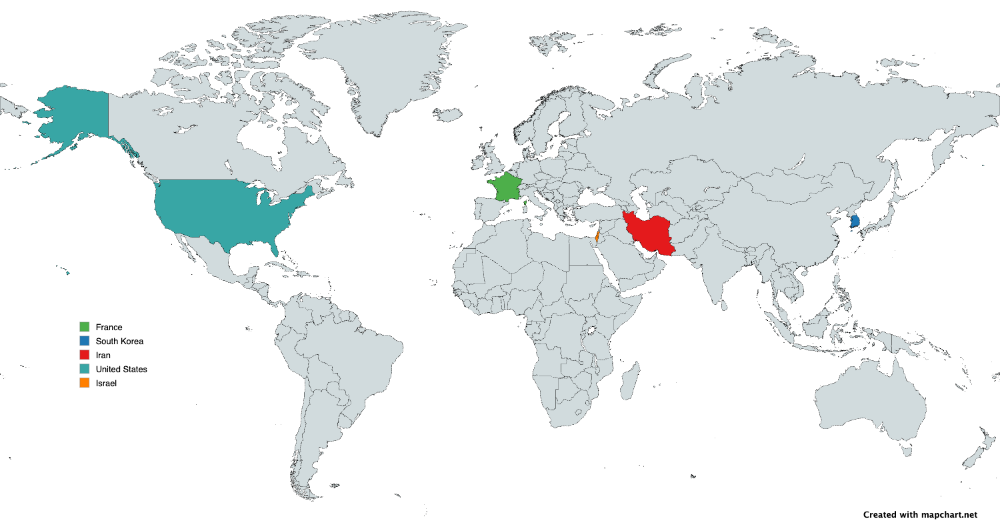
France = Green
South Korea = Blue
Iran = Red
USA = Green
Israel = Orange
Image is licensed under the Creative Commons Attribution-Share Alike 4.0 International license and was created using MapChart (https://mapchart.net).