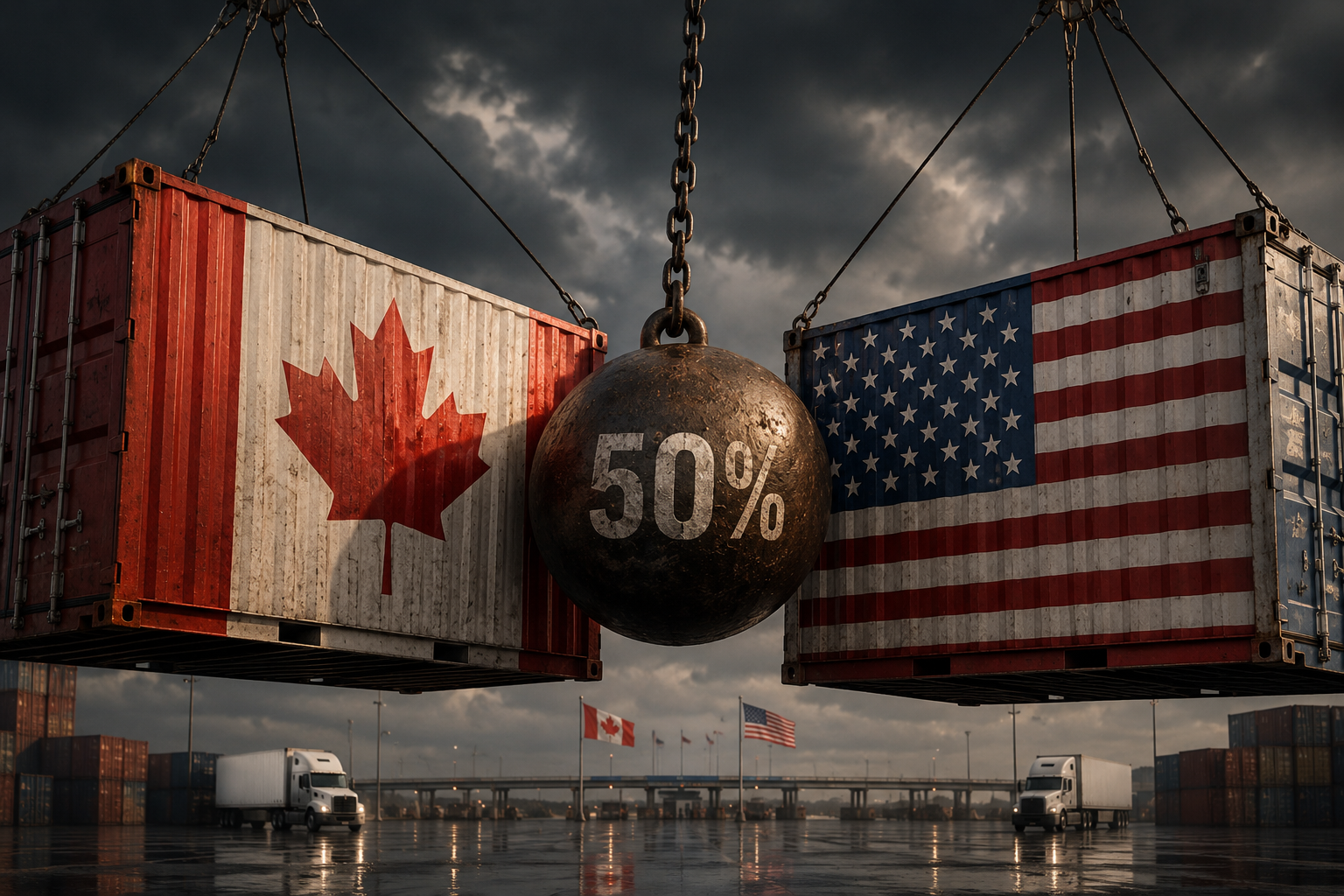
President Donald Trump announced Monday that the United States will place new 50 percent tariffs on a broad list of Canadian goods, increasing tensions between the two countries after months of trade disputes.
The measures are expected to begin in 30 days and affect products such as wine, hockey equipment, cement, dairy products, furniture, clothing, fishing gear, seeds, and several other consumer items.
The White House said the decision was made because of what it considers unfair treatment of American products in Canada. U.S. officials pointed to restrictions involving alcohol sales, vehicle exports, and Canada’s dairy system as reasons for the move.
To impose the tariffs, Trump used Section 338 of the Tariff Act of 1930, a law that gives presidents the authority to respond when another country places American goods at a disadvantage. Government officials said the law has rarely been used and has not been invoked in modern trade disputes.
Federal officials estimate the tariffs will cover roughly $20 billion in Canadian imports. That amounts to just over five percent of all goods shipped from Canada to the United States last year. Energy products, potash, critical minerals, and some goods already facing separate tariffs will not be affected.
The administration has repeatedly raised concerns about trade imbalances with Canada. According to U.S. figures, the trade gap between the two countries reached $46.4 billion in 2025, with Canadian energy exports making up a large share of that amount.
The latest tariffs will still apply to products protected under the United States-Mexico-Canada Agreement, despite the agreement’s role in reducing barriers between the three countries. The White House has said it wants changes to the current deal and does not believe it serves American interests well enough in its present form.
Canadian Prime Minister Mark Carney responded later in the day, saying Canada intends to continue discussions with Washington while looking for ways to settle the disagreement. He said Canadian officials have already presented proposals aimed at updating the trade agreement and easing tensions between the two governments.
Political leaders across Canada reacted quickly. Ontario Premier Doug Ford argued that Canada should answer with matching tariffs if the U.S. proceeds with its plan. British Columbia Premier David Eby said he believes American consumers will ultimately feel many of the effects through higher prices.
Business organizations also voiced concerns. Representatives from industry groups said companies on both sides of the border have spent months dealing with changing trade policies and uncertainty, making it harder to plan investments and manage supply chains.
The announcement comes just before Canada’s premiers gather in Charlottetown for their annual meeting, where discussions were originally expected to focus on health care, economic growth, and wildfire recovery efforts. Now, trade relations with the United States appear likely to dominate much of the conversation.
This image is the property of The New Dispatch LLC and is not licenseable for external use without explicit written permission.