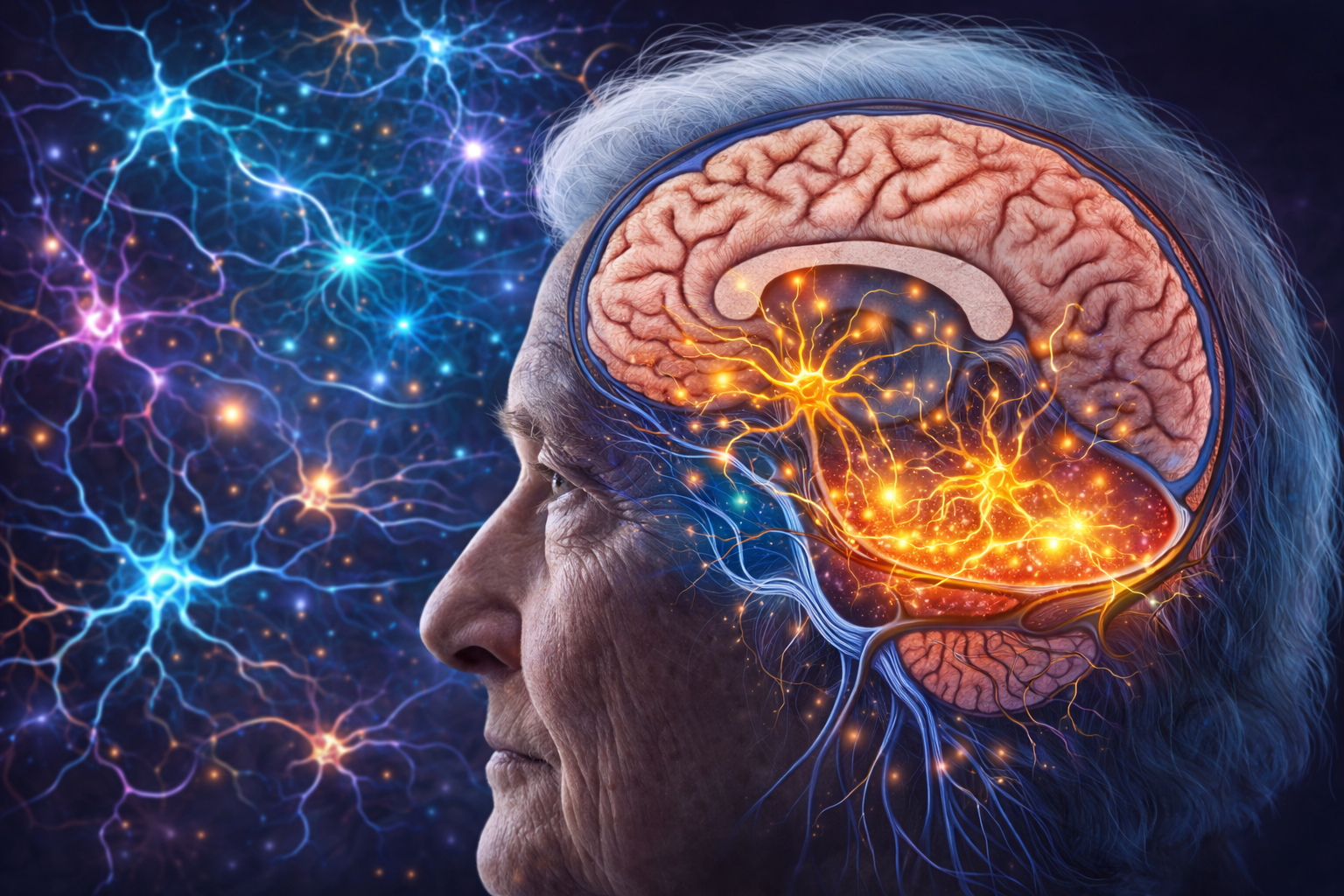
Scientists studying a rare group of older adults with exceptional memory skills have uncovered new clues about how the brain can stay strong well into advanced age. Known as “SuperAgers,” these individuals, typically over the age of 80, perform as well on memory tests as people decades younger. New research examining donated brain tissue now suggests their mental sharpness may be linked to an increased ability to generate new brain cells.
The study, led by researchers at Northwestern University and the University of Illinois Chicago, found that SuperAgers produce far more newly formed neurons in the hippocampus — the brain region central to learning and memory — than other groups. According to the researchers, SuperAgers generated roughly twice as many young neurons as cognitively healthy older adults and up to two and a half times more than individuals diagnosed with Alzheimer’s disease. Even when compared with healthy adults in their 30s and 40s, these older participants showed higher levels of neuron development.
Young neurons differ from mature ones because they are highly adaptable. They grow quickly, connect easily with other cells, and help the brain adjust to new experiences. Researchers believe this flexibility may help explain why SuperAgers maintain strong recall abilities despite advancing age.
Dr. Tamar Gefen, a coauthor of the study and a neuropsychologist at Northwestern’s Mesulam Institute for Cognitive Neurology and Alzheimer’s Disease, said the findings demonstrate that aging brains retain the ability to regenerate. Rather than slowing down completely, some brains appear capable of renewing themselves through ongoing neurogenesis — the process by which new neurons are formed and survive.
The environment inside the hippocampus also appears to play an important role. Scientists discovered that SuperAger brains contain supportive cellular networks that nurture developing neurons. These conditions resemble fertile soil helping a young plant grow, allowing immature brain cells to survive and integrate into memory circuits.
Using an advanced technique called multiomic single-cell sequencing, researchers analyzed nearly 356,000 individual cell nuclei taken from donated brains across five groups: young adults, cognitively healthy older adults, people with early dementia, individuals with Alzheimer’s disease, and SuperAgers. The technology allowed scientists to examine gene activity and DNA accessibility within specific brain cells.
Two cell types stood out as especially important. Astrocytes, which help regulate blood flow and support communication between neurons, appeared to strengthen connections needed for learning and recall. CA1 neurons, which help store and retrieve personal experiences, also showed enhanced activity. These cells are often among the first damaged in Alzheimer’s disease, yet in SuperAgers they remained active and well supported.
Researchers also observed structural differences. The cingulate cortex, an area linked to motivation and attention, tended to be thicker in SuperAgers than in many younger adults. Their hippocampi also contained far fewer tau tangles, a biological marker commonly associated with Alzheimer’s disease.
Lifestyle habits may contribute as well. Many SuperAgers remain socially active, continue learning new skills, and maintain strong family and community connections. Some stay physically active or pursue hobbies that challenge the brain, though researchers note that healthy behaviors alone do not fully explain the biological differences observed.
Scientists hope that understanding the molecular patterns behind these resilient brains could eventually lead to treatments aimed at slowing cognitive decline. By identifying how certain brains continue producing new neurons late in life, researchers believe future therapies may help more people maintain memory and independence as they age.
This image is the property of The New Dispatch LLC and is not licenseable for external use without explicit written permission.