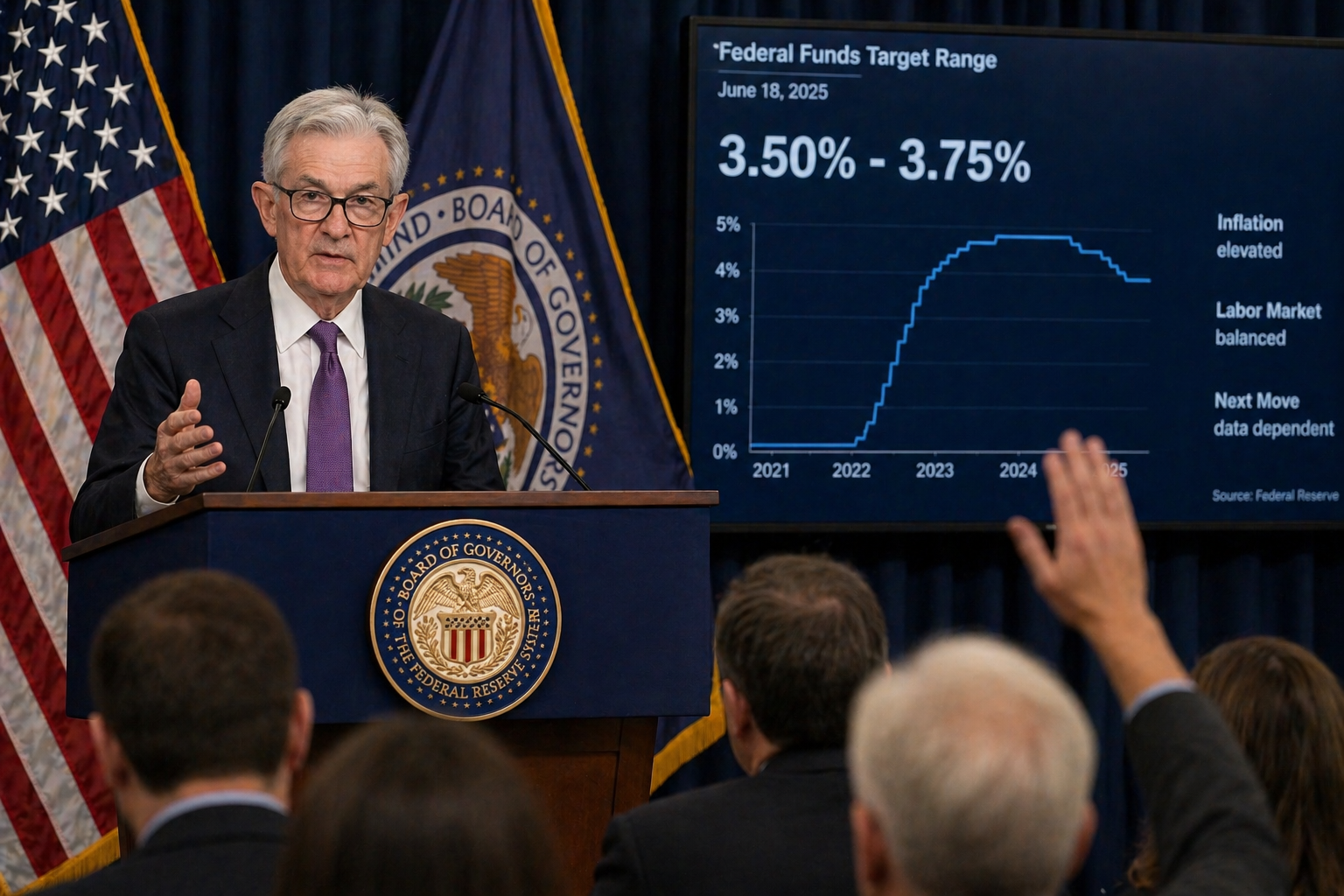
Federal Reserve officials kept interest rates unchanged Wednesday, holding their benchmark rate at 3.5% to 3.75% as inflation stayed above target and energy prices continued to rise. The decision had been widely expected by investors, but the meeting still drew attention because of an unusually divided vote and growing questions about who will lead the central bank next.
The Federal Open Market Committee voted 8-4 to leave rates where they are. That marked the largest number of dissents since October 1992.
Not all of the dissenting members disagreed for the same reason. Governor Stephen Miran supported a quarter-point rate cut. Three regional bank presidents — Beth Hammack of Cleveland, Neel Kashkari of Minneapolis, and Lorie Logan of Dallas — agreed with holding rates steady but opposed wording in the Fed’s statement that suggested cuts could still happen later.
Their objection centered on a sentence saying the committee would consider the timing and size of “additional adjustments” to rates based on future data and risks. Since the most recent moves were rate cuts, some officials saw that language as signaling the next move would likely be lower too.
The split vote came at a tense moment for policymakers. Inflation has remained above the Fed’s 2% target, while rising oil prices tied to conflict in the Middle East have added another layer of pressure. In its statement, the Fed said inflation is elevated partly because of the recent increase in global energy prices.
Oil jumped Wednesday, with U.S. crude rising above $107 a barrel and Brent topping $119. Gasoline prices have also climbed. The national average reached roughly $4.22 to $4.23 a gallon, more than a dollar higher than before the Iran war began in late February.
Chair Jerome Powell said the central bank is dealing with a difficult environment shaped by repeated supply shocks over the past few years. He listed the pandemic, Russia’s invasion of Ukraine, tariffs, and now the latest oil spike.
“Every supply shock has the capability of driving inflation up and unemployment up,” Powell said after the meeting.
The labor market has shown mixed signals. March payroll growth came in at 178,000, stronger than some forecasts, while the unemployment rate slipped to 4.3%. Other private-sector hiring data has been softer. Powell said the broader employment picture remains relatively balanced, though younger college graduates are facing a tougher search for jobs.
Wednesday’s decision was the third straight meeting with no rate change, following three consecutive cuts last year.
Leadership changes at the Fed also hung over the meeting. Earlier in the day, the Senate Banking Committee voted along party lines to advance President Donald Trump’s nomination of Kevin Warsh as the next Fed chair. A full Senate vote is expected soon.
Powell congratulated Warsh during his news conference and then added another surprise: he said he plans to remain on the Board of Governors after his term as chair ends in May. Powell’s board term lasts until January 2028.
He said he wants to stay until an investigation into renovations at the Federal Reserve’s Washington headquarters is fully resolved.
“I’m waiting for the investigation to be well and truly over with transparency and finality,” Powell said.
Powell also said he is concerned about attacks on the institution and the need to protect the Fed’s independence from political pressure. President Trump has repeatedly criticized Powell for not cutting rates faster and mocked his decision to stay on as a governor.
If Powell remains, Trump would not immediately gain another open seat on the seven-member board. That could shape internal debates as Warsh prepares to take over a central bank already split over inflation, rates, and the path ahead.
This image is the property of The New Dispatch LLC and is not licenseable for external use without explicit written permission.