Israel’s latest military actions in southern Lebanon have intensified an already volatile conflict, raising alarm among civilians and international observers alike. On March 22, Israeli forces struck a key bridge near the coastal city of Tyre, part of a broader directive to destroy crossings over the Litani River and accelerate the demolition of homes near the border. These moves are seen as part of a wider campaign targeting Hezbollah, the Iranian-backed armed group that has been engaged in hostilities with Israel since early March.
The bridge that was hit served as a vital link between southern Lebanon and the rest of the country. Its destruction has disrupted transportation along a major coastal highway, affecting not only military logistics but also civilian life. Residents in nearby areas described hurried evacuations after receiving warnings of the strike. Families fled with whatever belongings they could carry, uncertain whether their homes would still be standing upon return.
Israeli officials say the goal of these operations is to prevent Hezbollah fighters and weapons from moving freely in the region. Defense Minister Israel Katz stated that crossings over the Litani River were being used for militant activity and needed to be eliminated. He also confirmed that the military has been instructed to demolish structures in frontline villages to create buffer zones, similar to tactics used in Gaza.
However, these actions have drawn criticism from international organizations and Lebanese authorities. United Nations officials have warned that attacks on civilian infrastructure may violate international law, especially when they lead to widespread displacement and restrict access to essential services. More than one million people have reportedly been displaced since the escalation began, with many now struggling to access food, medical care, and shelter.
Lebanese President Joseph Aoun condemned the strikes, calling them a form of collective punishment and warning that they may signal preparations for a ground invasion. He expressed concern that isolating southern Lebanon could be part of a broader strategy to expand Israeli control in the المنطقة. Aid groups have also raised concerns that the destruction of bridges could hinder humanitarian efforts, making it harder to deliver supplies to affected communities.
The human toll continues to rise. According to Lebanon’s health ministry, over 1,000 people have been killed, including children, women, and medical personnel. On the Israeli side, a civilian was killed near the border under circumstances still under investigation, along with two soldiers in ongoing clashes.
Hezbollah’s involvement in the conflict began after it launched rockets into Israeli territory, citing retaliation for regional developments involving Iran. Since then, both sides have exchanged fire, with Israel expanding its operations through airstrikes and ground maneuvers. Israeli military leaders have indicated that the campaign could be prolonged, with plans for further targeted operations already approved.
As tensions mount, fears are growing that the conflict could spiral into a wider regional war. Diplomatic efforts have so far failed to produce a lasting solution, and the situation on the ground continues to deteriorate. For civilians caught in the crossfire, the destruction of infrastructure and homes adds another layer of hardship to an already dire humanitarian situation.
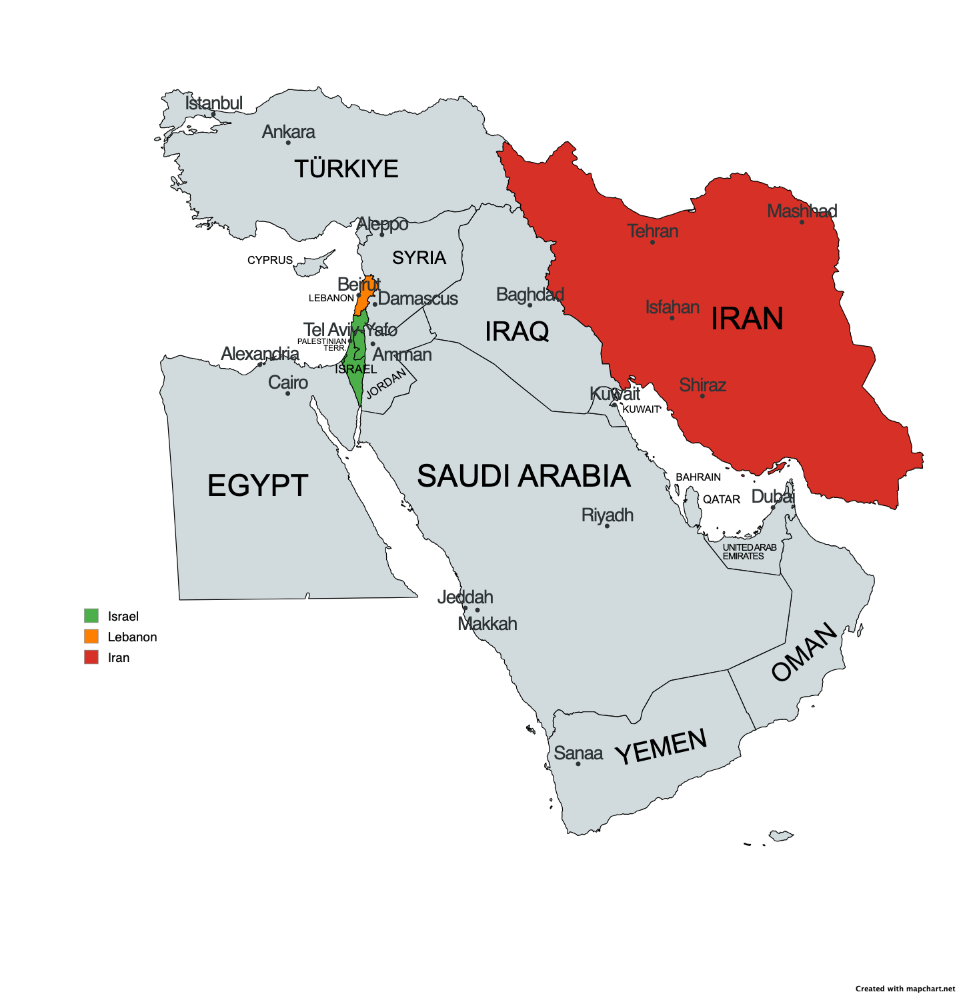
Israel = Green
Lebanon = Orange
Iran = Red
Image is licensed under the Creative Commons Attribution-Share Alike 4.0 International license and was created using MapChart (https://mapchart.net).