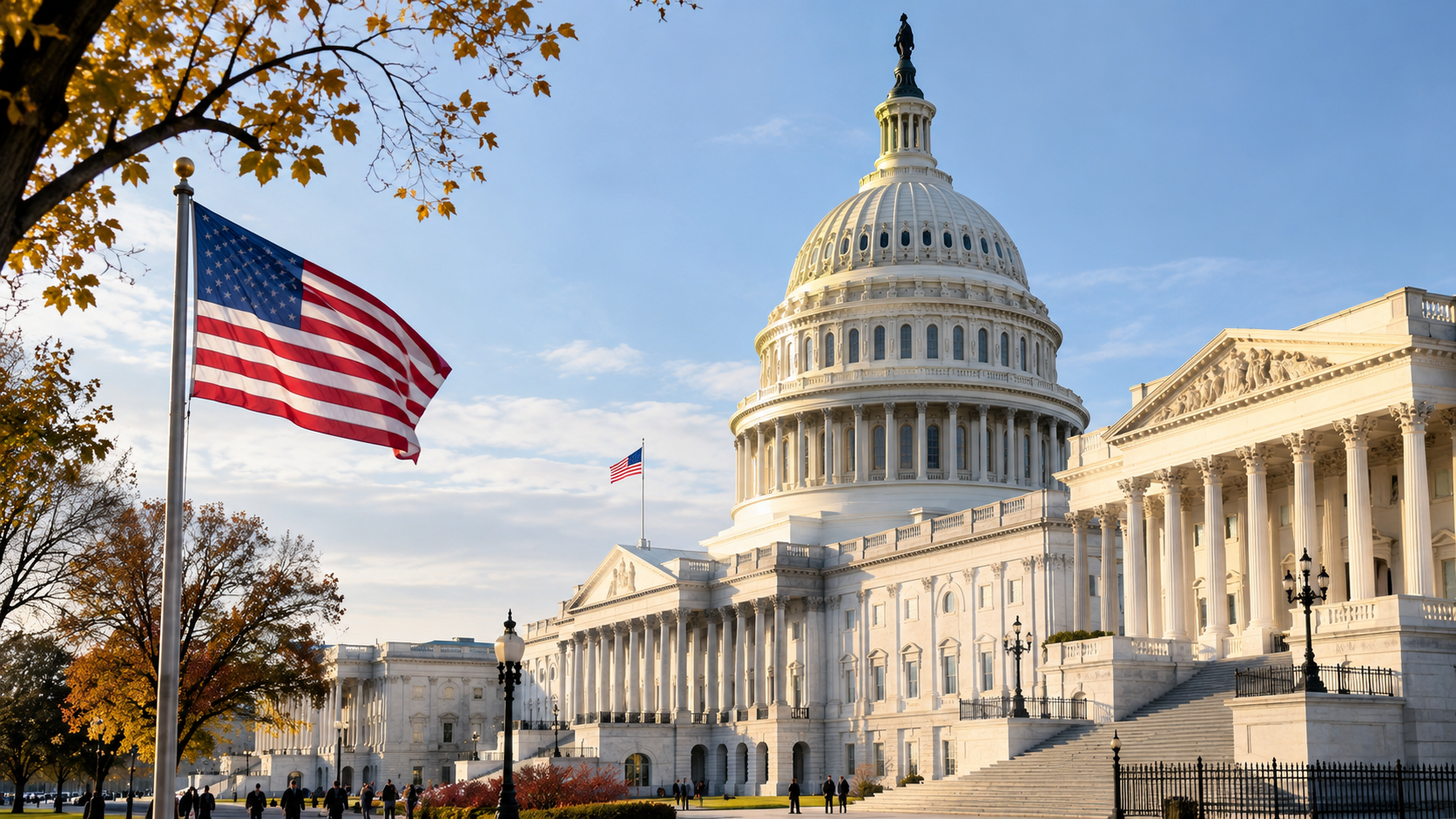
The balance of power in Washington is set to change after yesterday’s elections gave Democrats majorities in both the House of Representatives and the Senate. President Donald Trump will spend the remaining two years of his presidency with Congress controlled by the opposing party, a situation that could affect everything from federal budgets to the appointment of judges.
Tuesday’s results also changed the political landscape in several states. Republicans lost congressional seats in areas they had previously represented, while Democrats retained important seats of their own. Although the outcome of some contests was still being determined Wednesday morning, enough races had been decided to establish which party would control Congress.
One of the most immediate changes involves how Washington handles government spending. Congress decides how federal money is allocated, but legislation must still reach the president for approval. With the two branches controlled by different parties, agreements on spending bills may require more negotiations than during the first half of Trump’s second term.
Those negotiations will matter when lawmakers face deadlines for keeping federal agencies operating. Disagreements over spending could delay legislation, although neither party can determine the outcome on its own. Trump can reject bills approved by Congress, and lawmakers have the constitutional authority to override a veto if they can assemble the required two-thirds majority in both chambers.
The change in Senate leadership brings a separate set of consequences. Presidential nominees for Cabinet positions and federal judgeships must go through the Senate confirmation process. Democrats will now control that process, including hearings and votes on nominees selected by the Republican president.
A vacancy on the Supreme Court would bring the issue into sharper focus. Trump appointed three justices during his first term, when Republicans controlled the Senate. Any new nominee would face a chamber led by Democrats, who could decline to approve the appointment. No vacancy is required for the new Senate majority to exercise its authority over other federal nominations.
Republicans will still have procedural tools available in the Senate. Most legislation can face a filibuster, and ending debate generally requires 60 votes. Democrats have not secured that many seats, leaving room for Republican senators to influence which proposals advance and which do not.
Another question concerns congressional oversight. Democrats have indicated that they want to examine certain actions of the Trump administration, including matters involving government officials and the president’s business interests. Congressional committees can hold hearings and request information, though the scope and results of any investigations remain to be determined.
Impeachment is also a possibility under the constitutional powers of Congress, but removing an official from office requires more than a House vote. A conviction in the Senate needs support from two-thirds of senators present. Democrats do not have enough seats to reach that threshold without Republican votes.
The election results included several changes in Senate representation. Ohio voters returned former Democratic Sen. Sherrod Brown to Washington by electing him over Republican Jon Husted. Maine voters chose Democrat Troy Jackson instead of incumbent Republican Susan Collins, while North Carolina elected former Gov. Roy Cooper to an open seat.
Elsewhere, voters in Kansas elected Adam Hamilton, ending a long period without a Democratic senator from the state. Texas chose James Talarico over Ken Paxton, and Iowa elected Josh Turek over Ashley Hinson. South Carolina also changed parties with Annie Andrews winning its Senate contest.
The election also included races in which Democrats maintained their existing Senate representation. Georgia voters reelected Jon Ossoff, while New Hampshire’s Senate seat remained with the Democratic Party following Chris Pappas’ victory. Meanwhile, the House results included changes in districts that had previously elected Republican representatives, contributing to the Democrats’ new majority.
Trump addressed the outcome in comments to Fox News, recognizing the Democrats’ campaign performance while questioning the strength of some Republican candidates. He also connected voter concerns about gasoline prices to the war in Iran. The president has indicated that he is prepared to use his veto authority when he disagrees with legislation sent to him.
Republican congressional leaders have said they intend to continue defending policies adopted during the first two years of Trump’s second term. House Speaker Mike Johnson discussed the difficulty a president’s party faces in midterm elections, while Senate Republican leader John Thune indicated that his party would oppose Democratic proposals it considers inconsistent with Republican priorities.
Democratic leaders have outlined plans involving household expenses, federal spending and oversight of the executive branch. Chuck Schumer and Hakeem Jeffries are positioned to lead their respective chambers. Their ability to advance legislation will depend partly on whether Republicans support particular measures and whether the president agrees to sign them.
The cost of living was a recurring subject during the campaign. In the AP Voter Poll, around eight out of ten respondents reported experiencing financial pressure from inflation, and approximately three out of four gave the economy an unfavorable assessment. The survey also identified concerns about government corruption, although voters expressed mixed opinions about both major political parties.
State elections brought changes outside Washington. Democrat Amy Acton won Ohio’s governor’s race against Republican Vivek Ramaswamy, while Gina Hinojosa defeated incumbent Republican Gov. Greg Abbott in Texas. Several Democratic governors, including those in Pennsylvania, Illinois and New York, were reelected.
Election officials were still processing ballots in some contests Wednesday, including Alaska’s Senate race. Those outstanding results will determine the final size of each party’s representation when the new Congress begins its work in January.
This image is the property of The New Dispatch LLC and is not licenseable for external use without explicit written permission.