Halloween is one of those holidays where the preparations can take longer than the celebration itself. Families buy costumes, pick out pumpkins and stock up on candy, sometimes weeks before October 31. Then the evening arrives, children make their rounds through the neighborhood, and most of the activity is over within a few hours.
The celebration hasn’t always worked that way. Candy and costumes are now the things most people associate with Halloween, but the holiday’s background involves farming, religious observances, folklore and activities that were originally meant for adults as much as children.
Even the pumpkin sitting outside someone’s front door has a history of its own. It wasn’t the vegetable originally used to make the lanterns that became associated with Halloween. Those earlier versions were made from turnips and other vegetables in Ireland and Scotland.
People cut openings into the vegetables and placed lights inside. Some were given faces, and stories about wandering spirits became connected with the lanterns. One of those stories involved Stingy Jack, a figure from folklore whose name became linked with the jack-o’-lantern.
Pumpkins eventually took the place of turnips in many American celebrations. They offered more room for carving, and their larger size made it easier to create different expressions. What had once been a lantern associated with old stories became something families could make as a seasonal decoration.
The holiday’s much older background takes the story back to Celtic communities in Europe. More than 2,000 years ago, they observed Samhain, a festival associated with the period when harvesting ended and winter approached. This wasn’t simply a date on a calendar. The change in seasons affected food supplies and the work people needed to do before cold weather arrived.
Samhain also had a spiritual side. Some people believed that those who had died could return among the living during this part of the year. Fires, gatherings and certain disguises were connected with the occasion. The customs varied, and the surviving traditions don’t necessarily tell us exactly how every community celebrated.
The religious calendar later added another layer to the story. Christianity established observances at the beginning of November that focused on saints and deceased members of the community. November 1 became All Saints’ Day, with All Souls’ Day following on November 2.
Halloween’s name is tied to the older language used for the first of those observances. Saints were sometimes called hallows, and the evening associated with the approaching religious date acquired a name reflecting that connection. Over generations, ordinary speech shortened it to Halloween.
The holiday people celebrate now didn’t come from one ceremony or one particular community. Different activities became associated with the same period, and some continued even as their original purposes became less familiar.
One example is the custom of visiting other households. In medieval Europe, souling involved receiving food while offering prayers for deceased people. The activity had a religious purpose, quite different from what children usually have in mind when they knock on a neighbor’s door today.
Another practice, guising, involved appearing at someone’s home in disguise. Visitors sometimes sang or performed something for the people living there. A small amount of food or another reward might follow. The exchange was part of the activity, although it didn’t involve the packaged candy now associated with Halloween.
The American version of Halloween took shape over a long period, with different communities contributing to it. During the 1800s, Irish and Scottish newcomers continued customs they remembered from home. Their neighbors encountered some of those activities through local gatherings and celebrations. As the years passed, Halloween became less closely tied to any one immigrant community.
Early American celebrations could be fairly ordinary social occasions. People gathered for games, food and ghost stories, and some activities involved trying to predict future relationships. Dressing up wasn’t always the main event. Neither was collecting treats.
Halloween also developed a reputation for mischief. During the early twentieth century, pranks sometimes created problems in neighborhoods. Communities responded in part by arranging parties and other organized activities. Giving children something planned to do became one way of handling the evening.
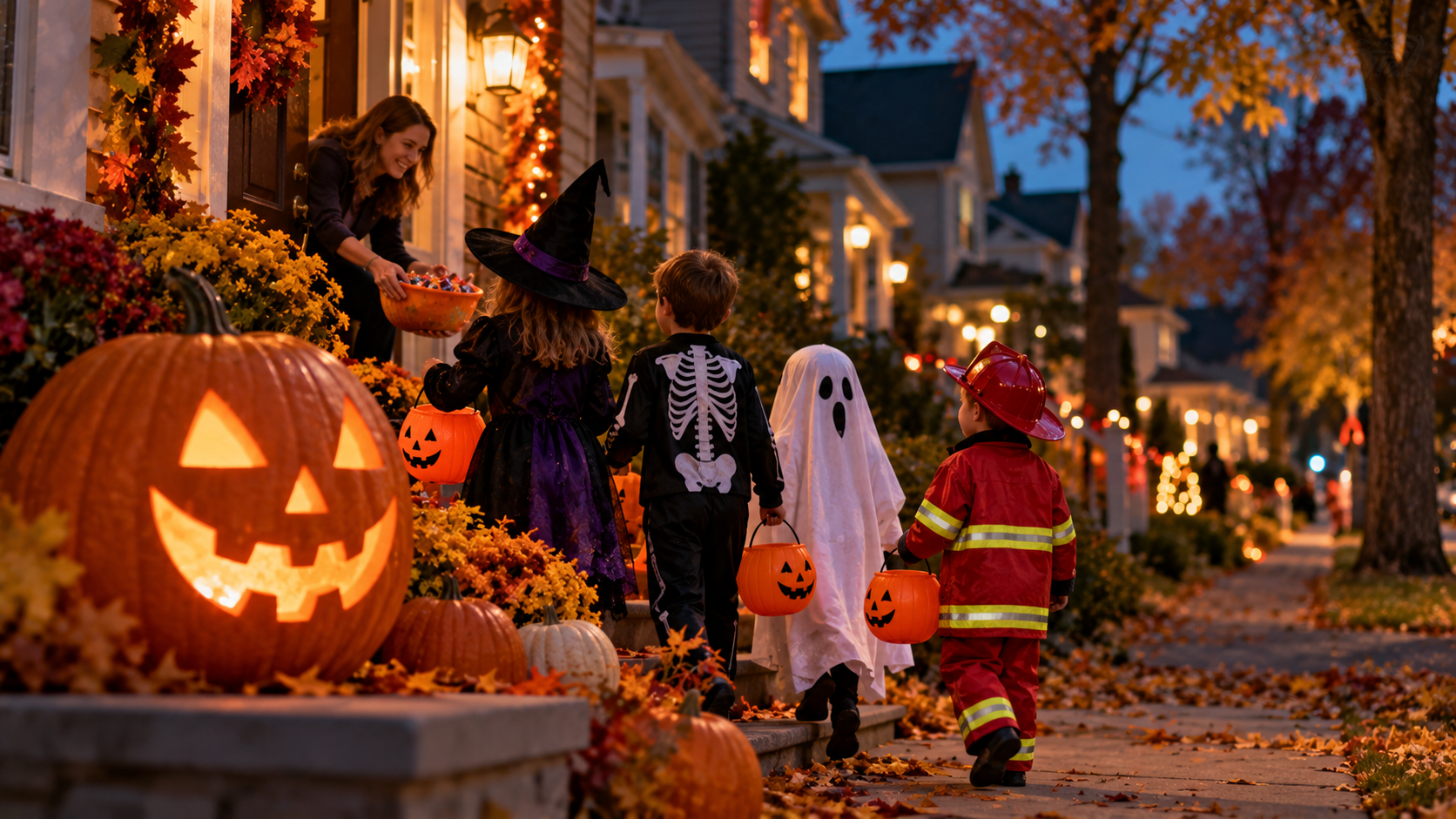
The custom of asking neighbors for treats developed into a regular children’s activity over several decades. It became especially familiar in American communities during the middle of the twentieth century. Rather than gathering in one place for a party, children could spend part of the evening visiting nearby households. The people answering the doors became participants in the celebration too.
What those households offered was not always candy. Earlier visiting customs included food and small gifts, and the modern expectation of receiving sweets developed gradually. Eventually, purchasing treats for Halloween became a regular part of shopping for the holiday.
Clothing for the occasion became more varied as well. A child might choose a ghost costume, but there was no longer any reason to limit the choice to frightening figures. Familiar entertainment characters offered other possibilities. Some families made outfits themselves, while others preferred buying something ready to wear.
Halloween grew beyond the doorstep as well. Costume parties, haunted attractions and organized events gave people other ways to take part. Adults could celebrate separately from children’s trick-or-treating, and decorations became a larger part of the season.
Today, the activities differ from one household to another. Some families spend considerable time decorating and preparing costumes, while others simply purchase a bag of candy for visitors. In neighborhoods where trick-or-treating is common, the evening still involves children moving between houses and neighbors opening their doors to greet them.
This image is the property of The New Dispatch LLC and is not licenseable for external use without explicit written permission.