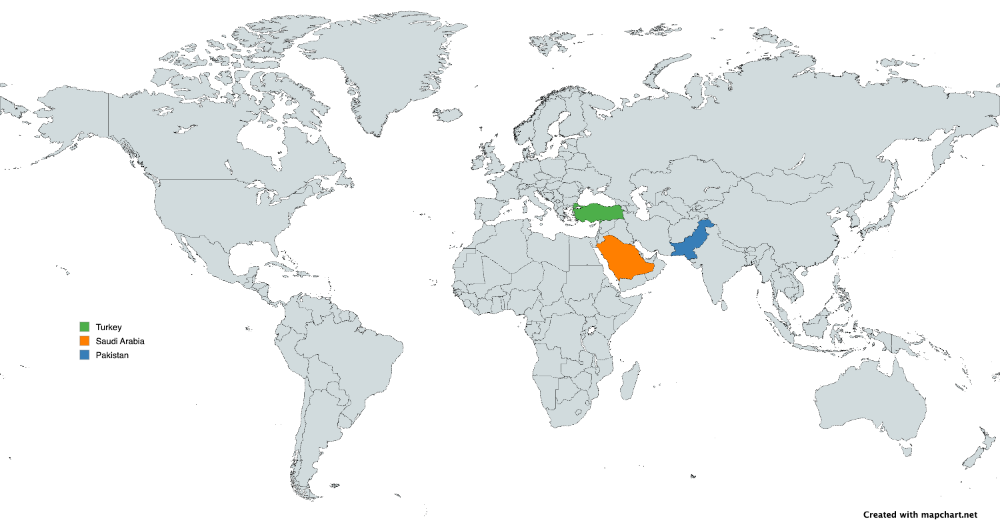
Turkey wants to bring more countries into its recently formed defense partnership with Saudi Arabia and Pakistan. Turkish Foreign Minister Hakan Fidan said the three-country arrangement could grow as other governments consider taking part.
The three countries signed the Mecca Joint Deterrence Agreement on Aug. 7 in Saudi Arabia. It creates a shared defense commitment among the countries and calls for closer military cooperation, although many details about how the agreement would work during an actual conflict have not been made public.
Under the agreement, an attack against one member would involve the other two countries. The exact response would not necessarily be automatic, since Fidan said the members would discuss what kind of assistance was needed depending on the situation.
Turkey has made clear that it does not want the partnership to stay limited to its original members. Fidan said President Recep Tayyip Erdogan supports bringing additional countries into the arrangement, and he also said some governments have already shown interest without naming them.
Egypt has been discussed publicly as a possible next member. Fidan described Cairo as a likely future participant once remaining technical matters are worked out, and Egypt already cooperates with Turkey, Saudi Arabia and Pakistan through the R4 group on regional issues.
Membership could still be a complicated decision for Egypt. Analysts said Egyptian officials may want to avoid defense obligations that could interfere with the country’s existing relationships, agreements or its ability to decide independently when its military becomes involved in a conflict.
Karim Elgendy, an associate fellow at Chatham House, said the amount of flexibility given to individual members could affect Egypt’s decision. Cairo may be more comfortable with an arrangement that allows each country to choose its response instead of automatically requiring military action.
Other countries have also been discussed as possible members. Analysts have pointed to Qatar and Kuwait as potential candidates, while Azerbaijan, Syria and Jordan have also been mentioned as countries that could possibly enter the partnership.
There has also been some support for expanding the agreement across the Gulf. Former Qatari Prime Minister Sheikh Hamad bin Jassim Al Thani has expressed hope that members of the Gulf Cooperation Council would participate, a group that includes Saudi Arabia, Qatar, Bahrain, Kuwait, Oman and the United Arab Emirates.
Each of the three current members brings different resources to the agreement. Pakistan has nuclear weapons and extensive military experience, Turkey is a NATO member with a growing defense industry, and Saudi Arabia has major economic resources and regional influence.
Saudi Arabia and Pakistan already had a separate defense agreement before Turkey joined them in the new arrangement. Their earlier deal was signed in September 2025, while the Mecca agreement creates a broader framework involving all three countries.
Officials from Turkey and Saudi Arabia have said the new partnership is defensive rather than directed at a particular government. Turkey has specifically said Iran is not a target, and officials have also maintained that the agreement does not replace the countries’ existing international partnerships.
Questions remain about what each country would actually be expected to do if another member came under attack. The complete terms have not been publicly released, even as Turkey begins discussing the possibility of bringing more countries into the group.
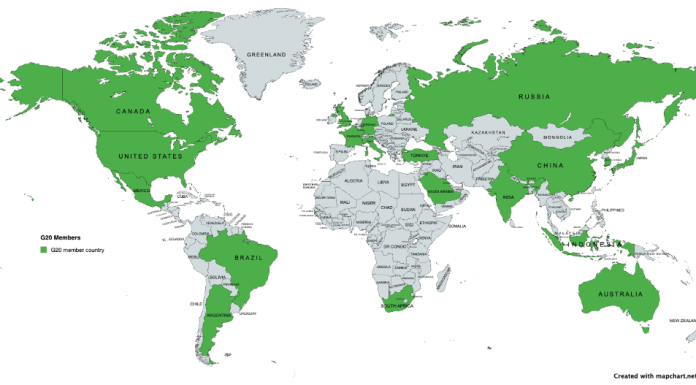
Turkey = Green
Saudia Arabia = Orange
Pakistan = Blue
Image is licensed under the Creative Commons Attribution-Share Alike 4.0 International license and was created using MapChart (https://mapchart.net).