A new round of Russian attacks has left parts of Ukraine’s capital dealing with damaged infrastructure and interruptions to everyday services. By Saturday, officials in Kyiv were reporting trouble with electricity, heating and water, with temperatures expected to fall close to freezing.
The damage was not confined to the city itself. Facilities elsewhere in Ukraine that help move electricity across the country were also affected, including equipment connected to two nuclear power stations. Ukraine’s energy ministry said the destruction was serious, while President Volodymyr Zelenskyy reported that electrical substations had been struck in five other regions.
Ukraine’s military released figures showing how extensive the overnight operation had been. Russia sent 172 drones toward Ukrainian targets, and defensive systems brought down 149 of them. The results against ballistic missiles were much different. Ukrainian forces stopped just four out of 36, leaving most of those weapons able to get through the country’s defenses.
Zelenskyy said some of the missiles used in the attack came from North Korea. He also reported that one of the country’s important energy installations had been hit. The damage has added to problems facing Ukrainian cities as colder weather begins to put greater demands on heating and electrical systems.
People were also killed and injured during the bombardment. Ukrainian authorities counted at least two deaths and roughly a dozen injuries, along with destruction affecting private homes, workplaces and other properties.
In Kyiv, the damage could be seen in residential neighborhoods. One explosion left a crater near an apartment building and threw enough soil into the surrounding area to bury a car. Residents worked to uncover the vehicle and clear away the debris.
Among those looking at the aftermath was 33-year-old Anna Raduka. She said surviving the explosion was what mattered most to her, rather than the belongings and property that had been damaged. Her comments came as neighbors continued sorting through what the attack had left behind.
Kyiv’s transportation network was affected as well. Mayor Vitali Klitschko reported that Russian missiles had damaged the Northern Bridge over the Dnipro River. Bridges have increasingly come under attack in recent weeks, making travel more difficult for people moving around the capital.
Moscow’s defense ministry said its forces had targeted Ukrainian defense-related operations along with transportation and energy facilities. Russian officials separately reported that Ukraine had attacked several areas inside Russia using drones and missiles. They described the resulting damage as minor and reported no deaths or injuries.
The latest attacks took place while Russia’s military campaign on the ground was making little progress. Air operations have continued across Ukraine, more than four and a half years after the full-scale invasion began.
Attention is also turning to Abu Dhabi, where Ukrainian and Russian representatives are scheduled to meet Tuesday and Wednesday for negotiations involving the United States. Previous diplomatic efforts have made limited progress.
Kremlin adviser Vladimir Medinsky is expected to lead the Russian delegation, which will include military and foreign ministry representatives. The discussions come after American midterm elections brought Democratic control of Congress, raising Ukrainian hopes for stronger U.S. support. Zelenskyy has asked American lawmakers to give Ukraine more attention as Russian attacks continue.
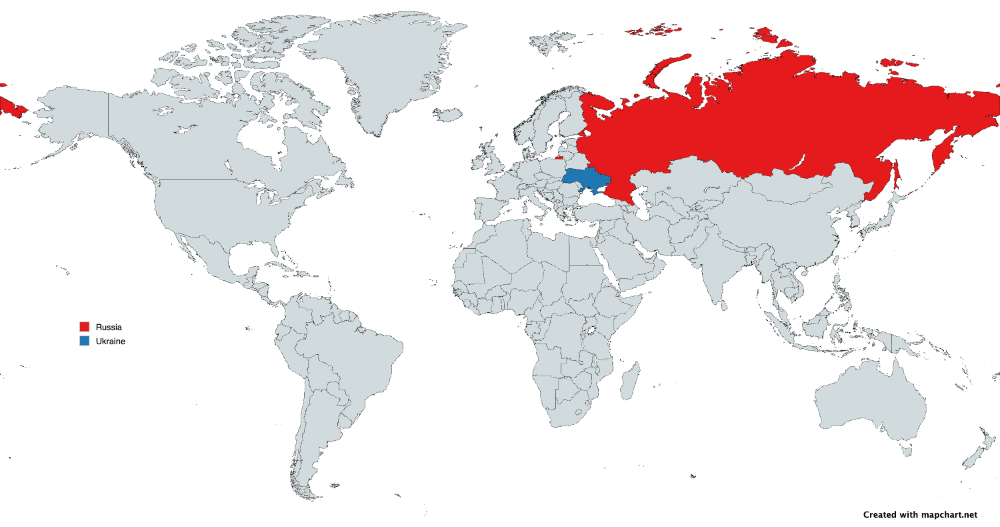
Russia = Red
Ukraine = Blue
Image is licensed under the Creative Commons Attribution-Share Alike 4.0 International license and was created using MapChart (https://mapchart.net).