The landscape of global drug trafficking is shifting as internal conflict within the Sinaloa cartel leads to an alliance with its long-time adversary, the Jalisco New Generation Cartel (CJNG). The development, first detailed in reports by the DEA and The New York Times, points to a deepening crisis within Mexico’s dominant criminal network, one that could impact trafficking patterns far beyond its borders.
Factions of the Sinaloa cartel—long considered the most influential drug syndicate in the Western Hemisphere—have been engaged in an escalating turf war since the arrest of veteran figure Ismael “El Mayo” Zambada and a son of Joaquín “El Chapo” Guzmán in El Paso, Texas, in late 2024. The detention sparked infighting between groups loyal to Zambada’s family and those aligned with the Guzmán lineage, known as Los Chapitos.
What was once a unified operation has now splintered into violent factions. The past ten months have seen the conflict claim nearly 3,000 lives through killings and disappearances. Bodies have been left in public spaces with messages and symbols designed to intimidate and signal control. In one of the most graphic incidents, twenty corpses—several decapitated—were discovered in Sinaloa, left hanging from a bridge or stuffed into a van. A note found at the scene suggested the attack was carried out by the La Mayiza group, believed to be under the direction of El Mayo’s son.
In a twist that could alter the dynamics of cartel activity, Los Chapitos have reportedly formed an alliance with the CJNG. The two groups have a history of rivalry marked by violence and territorial clashes, but experts believe shared interests may now be driving cooperation. The DEA’s 2025 annual report notes that the alliance could enable both groups to expand their territorial reach, share resources, and extend influence through corruption of officials.
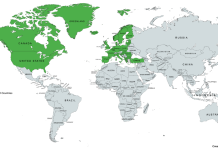
According to the DEA, CJNG is already present in over 40 countries and maintains a widespread domestic presence across much of Mexico. Their expansion into regions previously dominated by the Sinaloa cartel could lead to a merging of networks, further complicating law enforcement efforts in the U.S., Mexico, and beyond.
This alignment comes as both cartels face increasing pressure from U.S. and Mexican authorities. Mexican President Claudia Sheinbaum’s administration has pledged to intensify efforts against fentanyl trafficking. Since the start of 2024, border seizures of fentanyl have dropped by 29%, suggesting increased enforcement, altered trafficking strategies, or a shift in smuggling routes.
Still, the DEA warns that the threat remains. Cartel factions are reported to be mixing fentanyl with xylazine, a veterinary sedative, to stretch supplies and maximize profits. This combination increases overdose risks, making it more difficult for first responders to revive victims using traditional opioid-reversal drugs like naloxone.
The DEA also highlights the use of complex laundering methods by the CJNG and its financial arm, Los Cuinis. These groups rely on a mix of cryptocurrency, cash smuggling, and front companies to funnel illicit proceeds back into Mexico. This funding supports not only drug distribution networks, but also a wide range of operations—from bribery to weapons acquisition.
Adding to the challenge is the rise of technological surveillance and its exploitation by criminal actors. A recent U.S. Justice Department report revealed that a hacker working for the Sinaloa cartel used surveillance camera systems in Mexico City and phone data to track an FBI official. The intelligence gathered was reportedly used to identify and target informants. This case highlights how criminal organizations are using the same technologies law enforcement depends on to disrupt investigations and eliminate threats to their operations.
Meanwhile, cartel rivalries extend beyond Sinaloa and CJNG. Groups like La Familia Michoacana, Cárteles Unidos, and the Gulf Cartel continue to operate across various Mexican states. Each maintains its own trafficking routes and support systems, often using the same border tunnels, warehouses, and encrypted communications methods as their larger counterparts.
As the DEA intensifies its monitoring of these organizations, it remains unclear how long the uneasy partnership between Los Chapitos and CJNG will last. Cartel alliances have historically been fluid, often collapsing under the weight of distrust or competition. For now, however, the collaboration could give the CJNG access to new corridors and deepen its presence in the U.S. drug market.
The ongoing violence, the shifting alliances, and the blending of chemical substances in illicit drugs all point to an evolving crisis—one that poses growing challenges for law enforcement, border control, and public health officials on both sides of the border.
This image is the property of The New Dispatch LLC and is not licenseable for external use without explicit written permission.