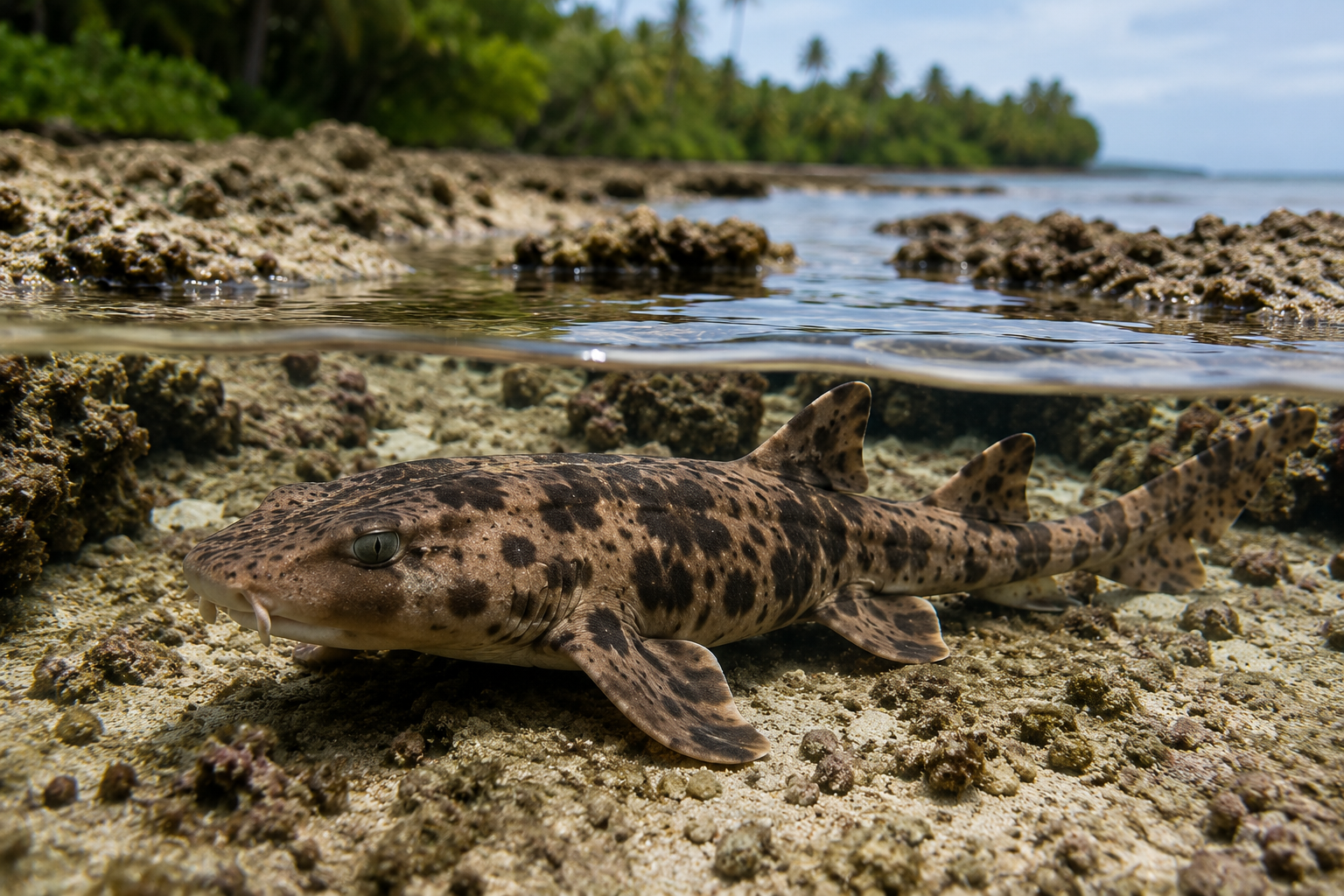
A newly identified shark species from Papua New Guinea does something most sharks cannot. Instead of relying only on swimming, it can move across the seafloor using its fins and even cross shallow pools when the tide drops.
The species, called Hemiscyllium dudgeonae, was described by researchers in a study published in the Journal of the Ocean Science Foundation. It belongs to a group known as walking sharks, small reef-dwelling sharks found only around Australia and New Guinea.
People living in southeastern Papua New Guinea were already familiar with the animal. They call it “kadedekedewa,” a local name that refers to the shark’s slow, waddling movement over reef flats during low tide.
The shark is harmless to humans and feeds mainly on small creatures that live on the seafloor. Unlike larger sharks that spend most of their time swimming in open water, walking sharks use their fins almost like feet, helping them move through tight spaces in reefs and shallow coastal habitats.
The discovery started in March 2025 when ecologist Christine Dudgeon was searching for a different type of walking shark in Milne Bay. During a late-night survey in shallow water, she noticed an individual that looked unusual. After carefully catching it, she passed it to researcher Jess Blakeway, who immediately thought its markings did not match any known species.
Researchers spent the next few days looking for more examples and found 11 additional sharks. Tissue samples and later DNA testing showed that the animals were genetically different from other members of the group, confirming that they represented a separate species.
The newly described shark was named after Dudgeon, who has spent more than two decades studying walking sharks.
Scientists think the species lives in a relatively small area around Milne Bay and nearby islands. The sharks are usually found in shallow waters with seagrass and patches of coral.
That limited range could put the species at risk. Researchers say walking sharks in Papua New Guinea already face pressures from habitat damage, coral bleaching and coastal development. Because the new species may exist only in a small region, scientists believe it could eventually qualify for a threatened conservation status.
The research team plans to return to Papua New Guinea later this year to gather more information about the shark’s population and distribution.
This image is the property of The New Dispatch LLC and is not licenseable for external use without explicit written permission.