Yesterday, Russia’s Prosecutor General’s Office officially labeled Amnesty International an “undesirable organization,” barring the London-based human rights group from operating within the country. The decision was announced through state-linked news agency Interfax and subsequently reported by Reuters and The Jerusalem Post. Authorities accused Amnesty’s headquarters of coordinating anti-Russian narratives with alleged support from international partners sympathetic to Ukraine.
This designation falls under a 2015 Russian law permitting prosecutors to block the activities of foreign groups deemed a threat to national security or the constitutional order. Russian citizens found to be cooperating with such organizations may face fines or up to five years in prison. Amnesty now joins a growing list of banned groups—including Human Rights Watch and the Carnegie Endowment—that the state considers incompatible with its domestic and foreign policy objectives.
Although Amnesty’s Moscow office had already been closed by the government in 2022, this latest action expands restrictions to criminalize any activity tied to the group, including research, advocacy, or financial support. Amnesty’s Russian-language website was blocked in March 2022, with officials citing violations related to coverage of the war in Ukraine.
Authorities claimed the group promoted what they called “Russophobic” narratives and aligned itself with Ukraine’s position on the conflict. As of the morning of May 19, Amnesty had not issued a public statement in response to the ban. Reuters and other outlets noted the absence of comment, though the organization has consistently criticized Russia’s wartime censorship laws since their adoption in 2022.
That same year, Amnesty published findings that accused Russian forces of using cluster munitions in Kharkiv—actions the organization said may violate international law. Since then, no updated report on this topic has been released.
The government’s move is the latest in a broader pattern of tightening controls over civil society. As of early 2025, Russia’s Ministry of Justice had designated more than 100 organizations as “undesirable,” although independent trackers suggest the total may exceed 200. The list is not always updated in real time, and public access to its full contents is limited.
Reaction to the ban spread quickly on social media. Journalists and advocacy groups shared news of the designation across platforms, including X (formerly Twitter). While some posts claimed that the hashtag #AmnestyBan received millions of views, that figure has not been independently verified through platform analytics or third-party monitors.
Human rights defenders expressed concern over the implications for Russian civil society. Tanya Lokshina of Human Rights Watch warned that the designation would further isolate grassroots advocates by cutting them off from international resources. Domestic organizers, already impacted by 2024 legislation allowing the state to seize property from perceived dissenters, described the decision as a further restriction on freedom of association.
Natalia Zviagina, Amnesty’s former Russia Director, had previously condemned legislation barring non-Russian-speaking migrant children from public schools. She was not available for comment on the group’s legal status in Russia at the time of the ban.
The Kremlin’s decision comes amid an ongoing war in Ukraine and sustained criticism from Western governments and human rights organizations. While Amnesty has pledged to continue documenting abuses from outside the country, the loss of on-the-ground access will likely affect its ability to provide firsthand reporting.
Under President Vladimir Putin’s leadership, Russia has increasingly relied on legal and regulatory tools to suppress dissenting voices, particularly those connected to foreign institutions. The designation of Amnesty International appears to follow that pattern, further limiting space for international human rights work inside the country.
Whether this development will impact Russia’s global relationships or prompt further diplomatic fallout remains to be seen. What is clear, however, is that the environment for civil society and independent monitoring in Russia continues to grow more restrictive.
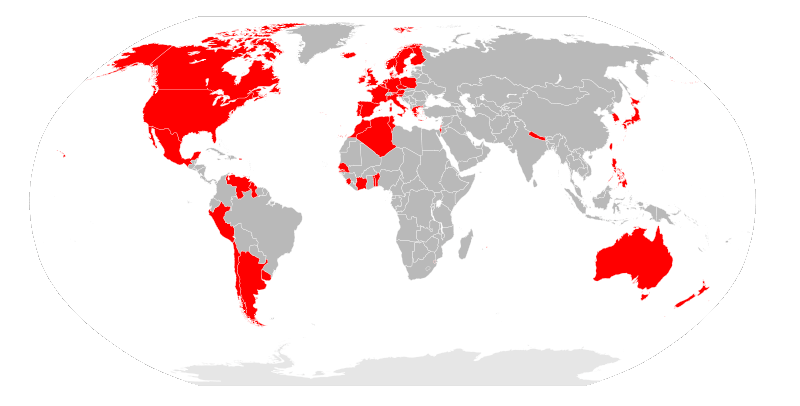
Image is licensed under the Creative Commons Attribution-Share Alike 2.5 Generic license and was created by Kumisaj.