New Zealand will spend NZ$2.7 billion (US$1.6 billion) on new helicopters and aircraft in a sweeping plan to modernize its ageing defence fleet, a move the government says is essential to respond to rising security challenges in the Pacific.
Most of the funding, around NZ$2 billion, is allocated for the purchase of five MH-60R Seahawk helicopters from the United States. A further NZ$700 million will cover two Airbus A321XLR aircraft, which will replace the Defence Force’s Boeing 757s. The current 757s, purchased secondhand more than 30 years ago, have developed a reputation for breakdowns that have stranded government leaders and disrupted overseas travel.
Defence Minister Judith Collins said the helicopter procurement would proceed through the U.S. Foreign Military Sales program rather than a wider tender, allowing the process to move more quickly. Even so, she noted that deliveries may take several years because of international demand. The Airbus aircraft will be acquired under a lease-to-own deal spanning six years, ensuring continuity while the Boeing jets are phased out.
Collins described the decision as vital to ensuring both dependability and interoperability. Because the same aircraft are already in service with allies such as Australia and the United States, New Zealand will be better able to coordinate with partners in defence operations and humanitarian missions.
Foreign Minister Winston Peters linked the investment to a broader shift in New Zealand’s security outlook. He said the government is responding to “rapidly increasing global tensions,” adding that safeguarding prosperity requires stronger national resilience. His comments were echoed in a national intelligence report released the same day, which identified espionage and foreign interference as growing threats, particularly connected to China’s activities in the Pacific.
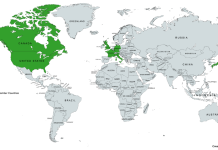
The announcement is part of the Defence Capability Plan revealed in April, which committed to boosting defence spending by NZ$9 billion over four years. Longer term, the government intends to nearly double expenditure as a share of GDP, moving from around 1% today to 2% within eight years. That goal would bring New Zealand closer to its Five Eyes partners — the United States, United Kingdom, Canada, and Australia — all of which are already spending at or above that level.
For decades, New Zealand has emphasized humanitarian and disaster-response roles for its Defence Force, with conventional combat capabilities often taking a back seat. But ministers now argue that distance is no longer a safeguard in an increasingly contested region. “Defence cannot be mothballed until the moment it is needed,” Collins said.
By selecting aircraft that are widely used among allies and investing at a scale not seen for years, the government is signaling a recalibration of New Zealand’s defence posture. The purchases are intended not only to replace worn-out hardware but also to align the country more closely with partners and to prepare for a decade in which officials expect the security environment to grow more demanding.
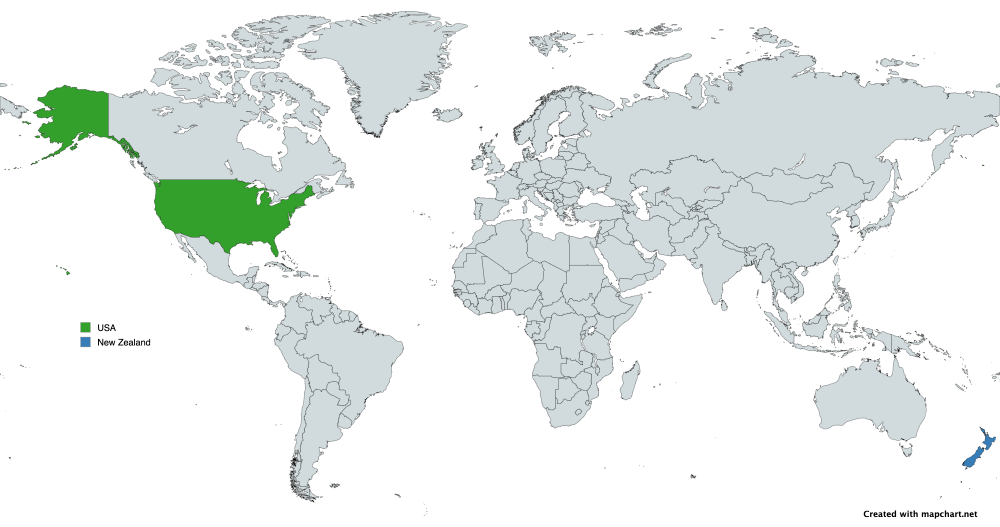
Green = USA
Blue = New Zealand
Image is licensed under the Creative Commons Attribution-Share Alike 4.0 International license and was created using MapChart (https://mapchart.net).