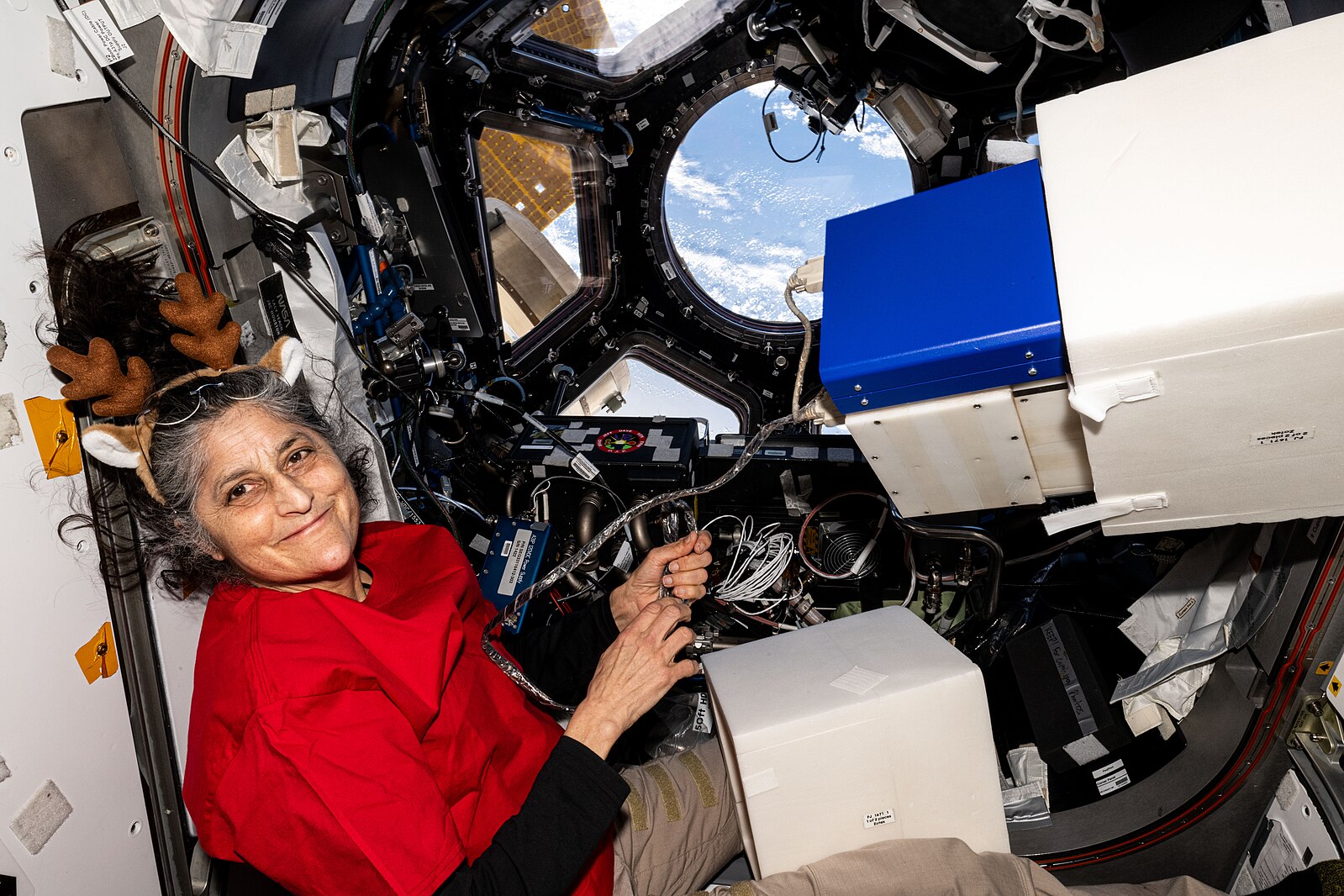
Earlier in the week, NASA astronauts Butch Wilmore and Suni Williams touched down on Earth, concluding an unexpected nine-month mission aboard the International Space Station (ISS). Their journey, originally planned as an eight-day test flight, turned into an extended stay due to technical issues with Boeing’s Starliner capsule, marking a major chapter in NASA’s commercial crew program. The duo splashed down in the Gulf of Mexico off Florida’s coast aboard a SpaceX Dragon capsule, demonstrating resilience, adaptability, and the evolving role of private space companies in human spaceflight.
Wilmore and Williams launched into space on June 5, 2024, from Cape Canaveral, Florida, aboard the Starliner, Boeing’s new spacecraft designed to ferry astronauts to the ISS. The mission was a critical milestone—the first crewed flight of the Starliner after years of delays and technical setbacks. Expectations were high for a smooth, week-long test, with the astronauts set to evaluate the capsule’s performance before returning home. However, shortly after launch, the Starliner encountered multiple issues, including helium leaks and malfunctioning thrusters, compromising its ability to safely dock with the ISS. Despite these challenges, the spacecraft reached its destination, but the problems persisted, requiring months of troubleshooting.
Over the summer of 2024, NASA determined that the Starliner was too risky for a crewed return due to persistent technical issues. The decision was finalized in late August, and the capsule was sent back to Earth empty, landing in New Mexico on September 7. This left Wilmore and Williams on the ISS for an extended stay.
Their mission became part of the ISS crew rotation, working alongside NASA’s Nick Hague and Roscosmos cosmonaut Aleksandr Gorbunov, who arrived in September as part of the Crew-9 mission. During their prolonged stay, Wilmore and Williams contributed to scientific experiments, performed maintenance tasks, and adapted to life in orbit. Williams, a veteran astronaut with prior long-duration missions, took on leadership roles aboard the station, while Wilmore, a seasoned Navy test pilot, supported ongoing research. Their extended stay—totaling over 250 days—tested their physical and mental resilience, though both insisted they were prepared for the unexpected. “We came up prepared to stay long, even though we planned to stay short,” Wilmore said during a March 4 news conference from orbit, emphasizing the inherent uncertainties of human spaceflight.
Their return became possible with the arrival of the Crew-10 mission on March 16, 2025. Launched atop a SpaceX Falcon 9 rocket from Kennedy Space Center, the four-person crew—Anne McClain, Nichole Ayers, Takuya Onishi, and Kirill Peskov—relieved Crew-9 aboard the ISS. After a brief transition, Wilmore and Williams, along with Hague and Gorbunov, boarded the SpaceX Dragon capsule Freedom on March 18. The spacecraft undocked at 1:05 AM EDT, beginning a 17-hour journey back to Earth. At 5:58 PM EDT, it parachuted into the Gulf near Tallahassee, where SpaceX recovery teams aboard the ship Megan retrieved the crew.
After spending over eight months in microgravity, Wilmore and Williams required medical support to readjust to Earth’s gravity, a standard precaution for long-duration missions. Despite the challenges, both astronauts were reported to be in good health and high spirits.
As they reunite with their families and reflect on their extended stay, their mission highlights the unpredictable nature of spaceflight and the resilience required to navigate its challenges. Their experience also underscores the importance of contingency planning in NASA’s evolving partnerships with private space companies.
Image is in the public domain and was created by the NASA Johnson Space Center.





.jpg)