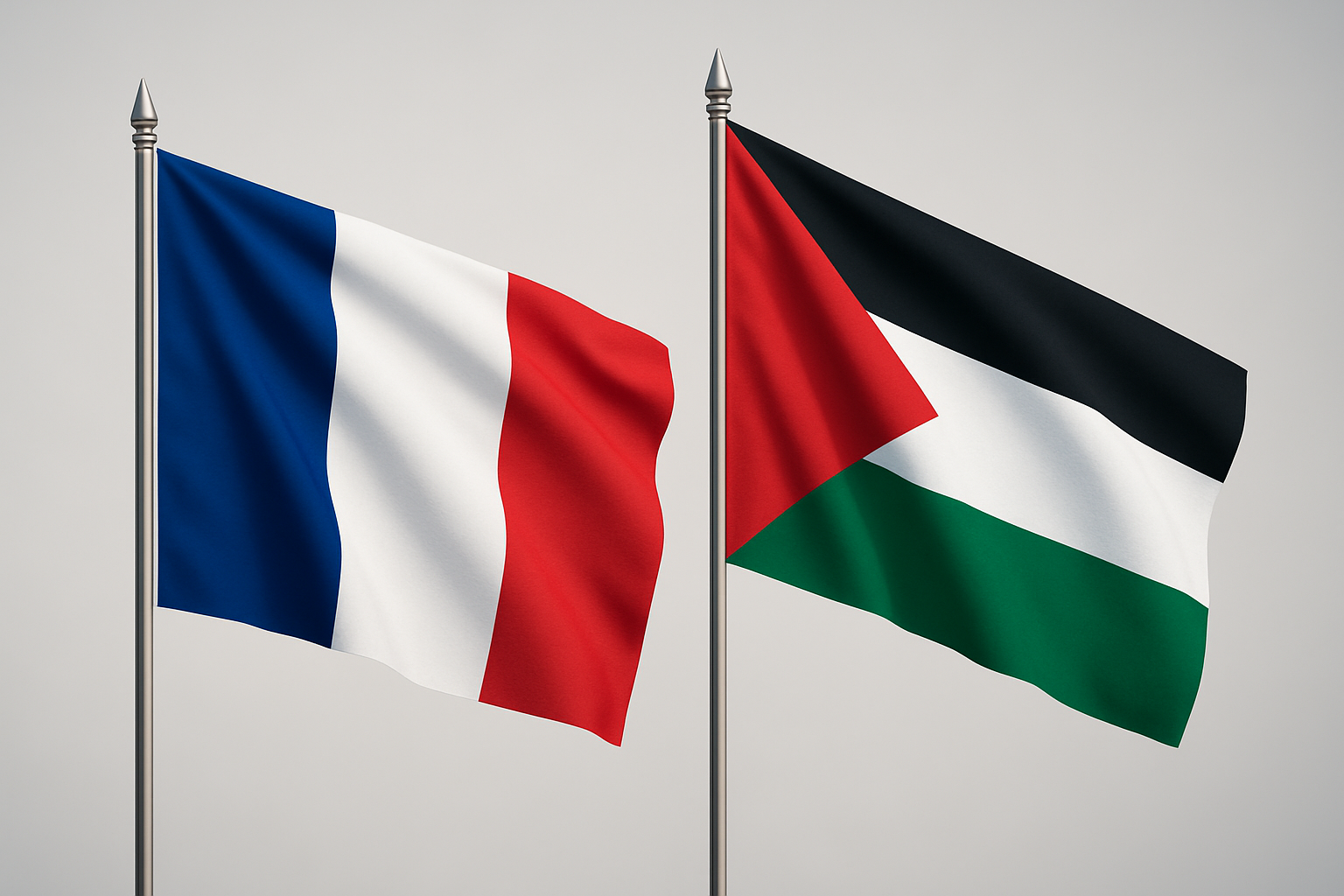
French President Emmanuel Macron announced that France will formally recognize a Palestinian state during the United Nations General Assembly in September. The decision, made public in a letter to Palestinian Authority President Mahmoud Abbas and a post on X, marks a turning point in France’s role in the Israeli-Palestinian conflict. Macron emphasized the need to support peace efforts in the Middle East and reaffirmed France’s long-standing support for a two-state solution.
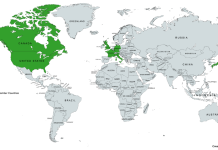
France, which has Europe’s largest Jewish and Muslim populations, becomes the most influential Western country to support Palestinian statehood to date. More than 140 UN member states already recognize Palestine, but many of France’s peers — including the United States, Germany, and the United Kingdom — have not taken the same step.
Reactions were swift and polarized. Israeli Prime Minister Benjamin Netanyahu called the move a reward for terrorism, stating that current conditions in Gaza make Palestinian statehood a threat to Israel’s security. He argued that any such state would become a launching pad for future attacks, not a peaceful neighbor. Israel’s defense minister described the decision as a capitulation to terrorism and warned of consequences for bilateral relations.
The United States echoed Israel’s disapproval. Secretary of State Marco Rubio denounced France’s plan as reckless, claiming it advances Hamas propaganda and undermines the victims of the October 7, 2023, attacks. The U.S. government also confirmed it would not attend an upcoming UN conference on the two-state solution co-hosted by France and Saudi Arabia.
Palestinian officials, on the other hand, welcomed France’s decision. Hussein Al Sheikh, vice president of the Palestinian Authority, thanked Macron and described the move as a reflection of France’s dedication to international law and Palestinian self-determination.
Macron’s announcement follows a period of rising frustration in France over the conflict in Gaza. He has previously supported Israel’s right to defend itself while also criticizing its handling of the humanitarian situation in Gaza. France and over two dozen European countries recently condemned restrictions on aid delivery and the deaths of Palestinians attempting to access food.
Diplomatically, Macron has worked behind the scenes to create momentum. The original June conference on Palestinian statehood, which France was to co-host with Saudi Arabia, was postponed due to the Israel-Iran air conflict. Now rescheduled for late July as a ministerial-level gathering, the event will lay the groundwork for a broader September summit at the UN. Around 40 foreign ministers are expected in New York for the discussions.
In Israel, officials are worried about the broader diplomatic fallout. Sources suggest that France has been warned of possible cuts in intelligence sharing and limitations on joint regional efforts. Some Israeli figures have even hinted at expanding settlements in the West Bank as a countermeasure.
Meanwhile, public calls for an immediate ceasefire are growing. Countries including Canada and the United Kingdom have pressed Israel to stop military operations and improve aid access to Gaza. Despite these appeals, ceasefire negotiations have made little progress.
France’s decision adds new pressure to an already complex conflict. Whether it leads to a broader shift in Western policy or deepens existing divides remains to be seen.
This image is the property of The New Dispatch LLC and is not licenseable for external use without explicit written permission.