Iran and the United States traded new military strikes on Saturday, sending tensions higher across the Gulf and raising more questions about whether a recently negotiated ceasefire can hold.
The latest exchange began after U.S. forces took action against Iranian targets. American officials said four Iranian drones headed toward waters near the Strait of Hormuz were destroyed before reaching the area. The U.S. military also carried out strikes against radar facilities along Iran’s southern coast, saying the sites were connected to recent threats in the region.
Iran responded later in the day. The country’s Revolutionary Guard announced that it had launched attacks against what it described as hostile military positions in nearby Gulf states.
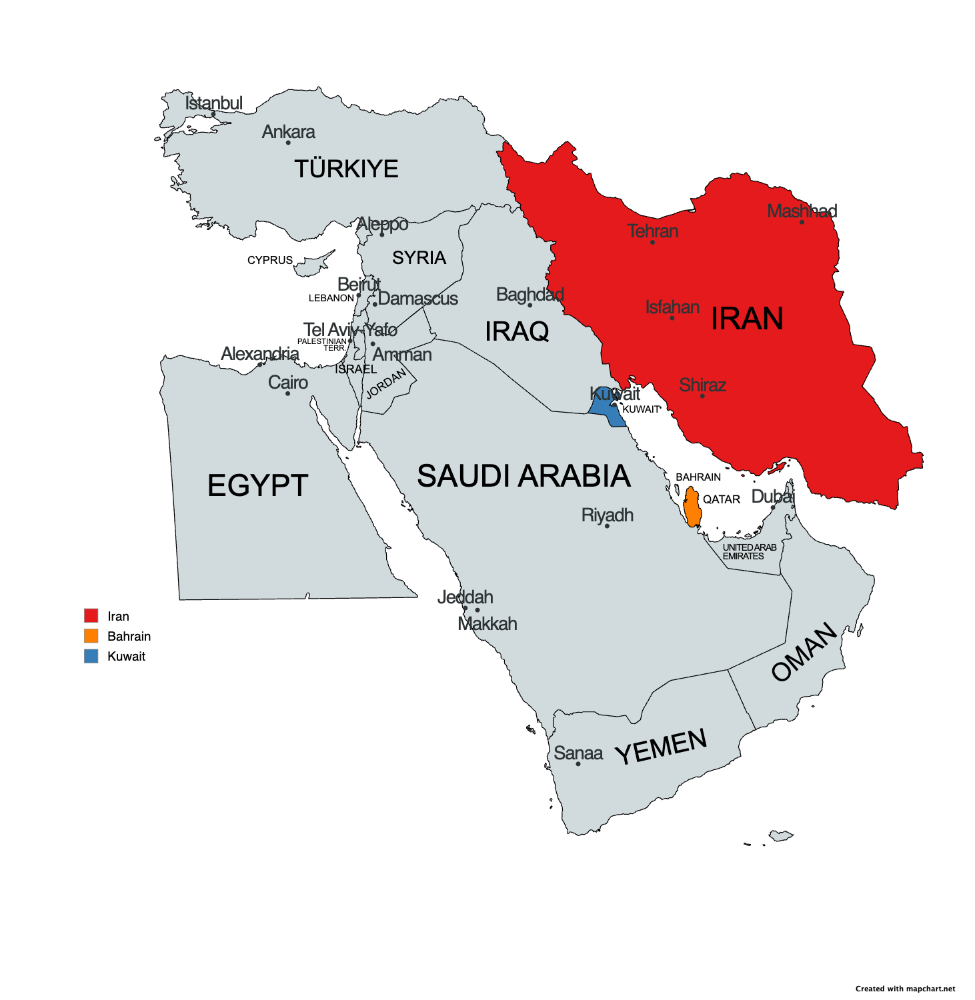
According to U.S. Central Command, Iran fired seven ballistic missiles in the direction of Kuwait and Bahrain. American forces said six were intercepted, while another failed to reach its intended destination. U.S. officials reported no injuries among military personnel.
The attacks triggered emergency measures across the region. Air raid sirens sounded in Bahrain, where authorities instructed residents to seek shelter and follow official updates. In Kuwait, military units moved to counter incoming drones and missiles.
Kuwaiti officials strongly criticized the attack. The country’s foreign ministry called the strikes an unacceptable breach of sovereignty and said Kuwait maintains the right to protect itself from further threats.
Iranian media reported that the Revolutionary Guard had targeted locations connected to U.S. military operations, including facilities in Kuwait and Bahrain. Among the sites mentioned was the Ali Al Salem Air Base in Kuwait. Iran also claimed it had targeted the headquarters of the U.S. Navy’s Fifth Fleet in Bahrain.
American officials rejected claims that any damage had been inflicted on the naval headquarters. Central Command said reports of successful Iranian strikes against the facility were false.
The back-and-forth attacks are the latest setback for efforts to extend a ceasefire that has already come under strain. Negotiators from Washington and Tehran have spent weeks discussing a possible extension of the truce and a new phase of talks focused on Iran’s nuclear program. Despite those discussions, both sides continue to disagree on key issues.
President Donald Trump expressed optimism about the negotiations on Friday. Speaking at an event in Wisconsin, he said the situation was progressing well and suggested the conflict could end through either diplomacy or stronger action if needed.
In a separate interview, Trump acknowledged that reaching an agreement has been difficult. He said Iran was facing choices it never expected to confront and estimated that the country still possessed just over one-fifth of its missile arsenal.
The conflict has also had economic consequences beyond the Middle East. The World Food Programme warned that rising energy and food costs linked to the war were increasing hardship for millions of people around the world.
Meanwhile, violence continued in Lebanon. Lebanese authorities said an Israeli strike in the south of the country killed three members of the Lebanese army, including two officers. President Joseph Aoun condemned the attack and accused Israel of violating Lebanese sovereignty.
The Israeli military said the vehicle that was struck had approached its forces in a suspicious manner in an area where Hezbollah operates. Israeli officials stated that the incident would be examined further.
The situation in Lebanon has become part of a wider dispute tied to negotiations over the regional conflict. Aoun recently accused Iran of using Lebanon as leverage during talks with the United States. Iran’s foreign minister, Abbas Araghchi, rejected that claim on Saturday.
In a statement posted online, Araghchi argued that if Lebanon had truly been a bargaining tool for Tehran, an agreement with Washington could have been reached long ago. As military activity continued across both the Gulf and Lebanon, diplomatic efforts remained stalled and the future of the ceasefire remained uncertain.
Iran = Red
Bahrain = Orange
Kuwait = Blue
Image is licensed under the Creative Commons Attribution-Share Alike 4.0 International license and was created using MapChart (https://mapchart.net).