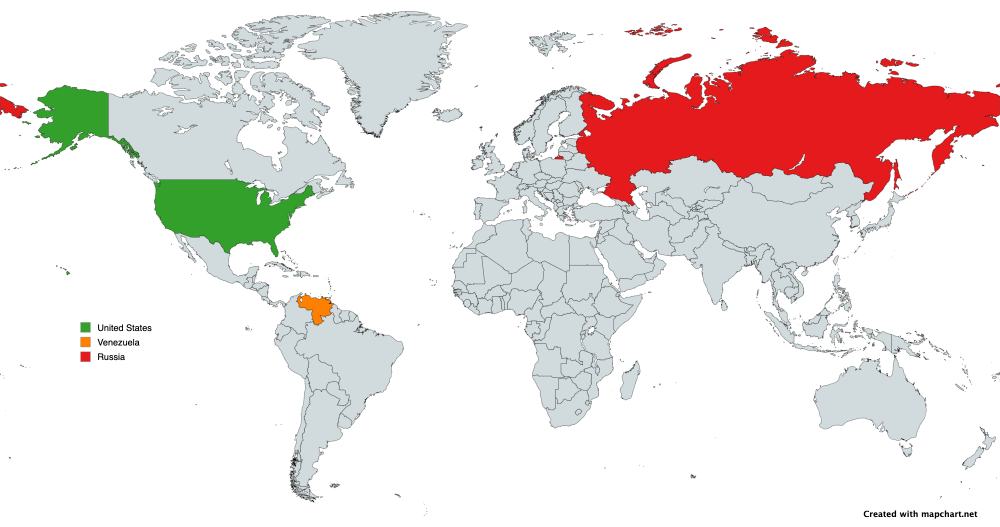
The United States has seized two oil tankers linked to sanctioned Venezuelan crude shipments, including a vessel sailing under the Russian flag, after a prolonged pursuit that stretched from the Caribbean across the Atlantic. The operation marks an escalation in Washington’s enforcement of its blockade on Venezuelan oil exports and has drawn sharp objections from Moscow.
U.S. officials confirmed Wednesday that the Russian-flagged tanker Marinera, formerly known as the Bella 1, was boarded and taken into U.S. custody in the North Atlantic after being tracked for more than two weeks. The vessel had been on the U.S. sanctions list since mid-2024 and was accused of attempting to evade authorities by changing its name, repainting its hull, and re-registering under a Russian flag while at sea.
U.S. European Command said the seizure was carried out under a federal court warrant and followed extensive tracking by the Coast Guard cutter Munro. Defense Secretary Pete Hegseth said the action demonstrated that the U.S. blockade of sanctioned Venezuelan oil shipments applies worldwide. Homeland Security Secretary Kristi Noem praised the Coast Guard crew for pursuing the tanker through rough weather and multiple attempts to avoid boarding.
Russian officials condemned the seizure, arguing that it violated international maritime law. Russia’s transport ministry said the vessel had received temporary authorization to sail under the Russian flag in late December and that communication was lost after U.S. forces boarded the ship. A senior Russian lawmaker described the action as piracy, while the foreign ministry said it was closely monitoring what it called excessive military attention directed at a civilian vessel.
The confrontation unfolded amid heightened military activity in the region. Flight-tracking data showed multiple U.S. military aircraft operating near the tanker’s last known position off the coasts of Scotland and Iceland, including maritime patrol planes and refueling aircraft. U.S. officials acknowledged that Russian naval assets, including a submarine, were operating in the broader area, though they said there were no signs of a direct military standoff.
In a related operation, U.S. Southern Command announced the seizure of a second tanker, the M/T Sophia, which it described as a stateless “dark fleet” vessel conducting illicit activity in international waters in the Caribbean. The ship is now being escorted to the United States for further legal proceedings.
The seizures come as part of a broader pressure campaign against Venezuela’s oil trade following Washington’s capture of President Nicolás Maduro during a recent U.S. operation in Caracas. U.S. officials say the campaign is aimed at cutting off revenue streams tied to sanctioned exports and dismantling networks that rely on aging tankers operating with disabled tracking systems or rapidly changing registrations.
Shipping analysts note that several other tankers operating near Venezuelan waters in recent weeks have also shifted their flags to Russia, raising concerns that similar encounters could follow. These vessels are part of a loosely connected fleet used to move oil from sanctioned states, often with limited transparency.
The Biden administration has said enforcement actions will continue, even as talks proceed over potential arrangements that could allow limited Venezuelan crude exports under U.S. oversight. For now, the seizure of the Marinera and Sophia signals that Washington intends to maintain pressure on maritime routes it believes are being used to bypass sanctions, even far from the Caribbean basin.
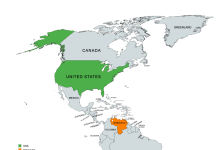
USA = Green
Venezuela = Orange
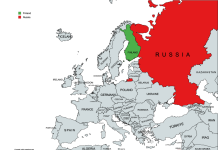
Russia = Red
Image is licensed under the Creative Commons Attribution-Share Alike 4.0 International license and was created using MapChart (https://mapchart.net).