Mexican and American authorities say they have shut down a large underground passage that investigators believe was used to move illegal drugs across the U.S.-Mexico border. The discovery led to the seizure of more than a ton of cocaine and criminal charges against four men.
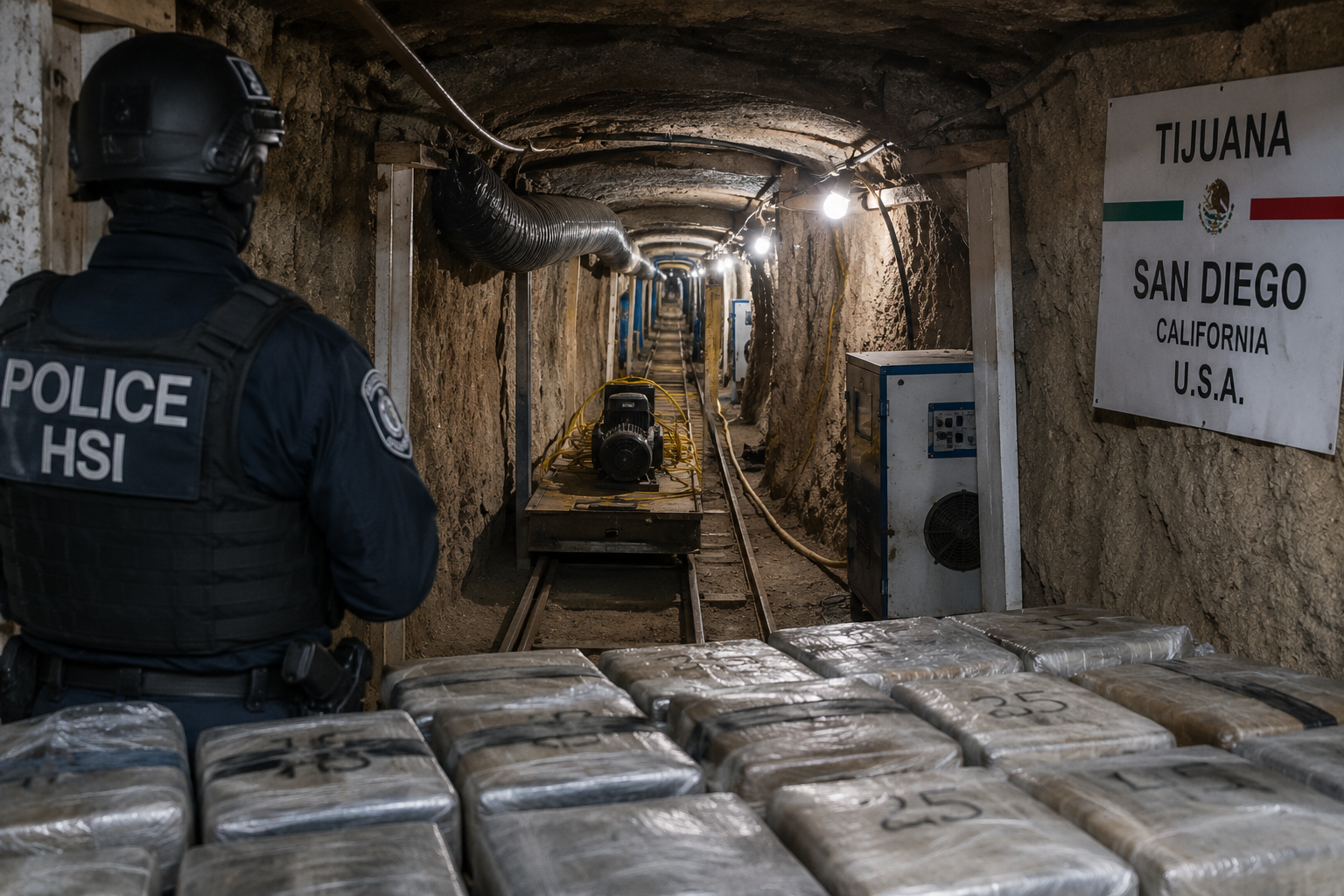
Officials said the tunnel ran between Tijuana and the San Diego area near Otay Mesa. Investigators described it as a carefully built operation that included electrical systems, airflow equipment, lighting, and a track system designed to move cargo underground. The route stretched for nearly 2,000 feet beneath the border.
The investigation resulted in the recovery of more than 2,200 pounds of cocaine. Authorities estimated the value of the drugs at roughly $45 million. Law enforcement officials believe the shipment was intended for distribution throughout the United States.
Former DEA official Mike Gannon told ABC7 Chicago that large cocaine seizures near the border often have implications far beyond California. According to Gannon, drug trafficking organizations move narcotics through national distribution networks that can reach cities across the Midwest, including Chicago.
Investigators spent months examining activity around a business near the Otay Mesa Port of Entry. Court documents say agents became suspicious after noticing unusual patterns at the location. Authorities reported seeing workers frequently moving luggage and traveling between different properties while customer activity remained limited.
The case accelerated near the end of May. Federal prosecutors allege investigators observed several suspects transporting heavy containers at a nearby auto-related business. Surveillance teams believed the activity was connected to a larger drug trafficking operation already under investigation.
Traffic stops carried out by local deputies later produced a major discovery. Authorities said narcotics detection dogs alerted officers to packages hidden inside vehicles. By the end of the operation, investigators had recovered hundreds of packages containing cocaine.
Searches of multiple properties eventually uncovered what prosecutors say was the U.S. end of the tunnel. According to court filings, the entrance had been concealed beneath a storage area floor and could be accessed using a mechanical lifting system.
Four men now face federal charges connected to the case. Prosecutors accuse them of participating in a conspiracy involving the movement and distribution of controlled substances. One defendant also faces allegations related to the use of the underground crossing and the importation of narcotics into the United States.
Authorities believe the tunnel was linked to organized criminal groups operating in Mexico. Officials on both sides of the border say such tunnels require extensive planning, engineering knowledge, and financial resources. Mexican investigators also reported finding evidence that some properties connected to the case may have been used to store drugs and other illegal materials.
Border officials say underground routes remain a challenge despite increased surveillance efforts. According to U.S. authorities, dozens of similar tunnels have been located and dismantled in the San Diego region over the years. New detection technology and closer cooperation between American and Mexican agencies have helped investigators identify more of these hidden crossings.
The tunnel’s discovery marks one of the larger recent drug seizures in the region and follows a lengthy joint investigation involving agencies from both countries. The criminal case remains ongoing as prosecutors continue pursuing charges against those accused in the operation.
This image is the property of The New Dispatch LLC and is not licenseable for external use without explicit written permission.