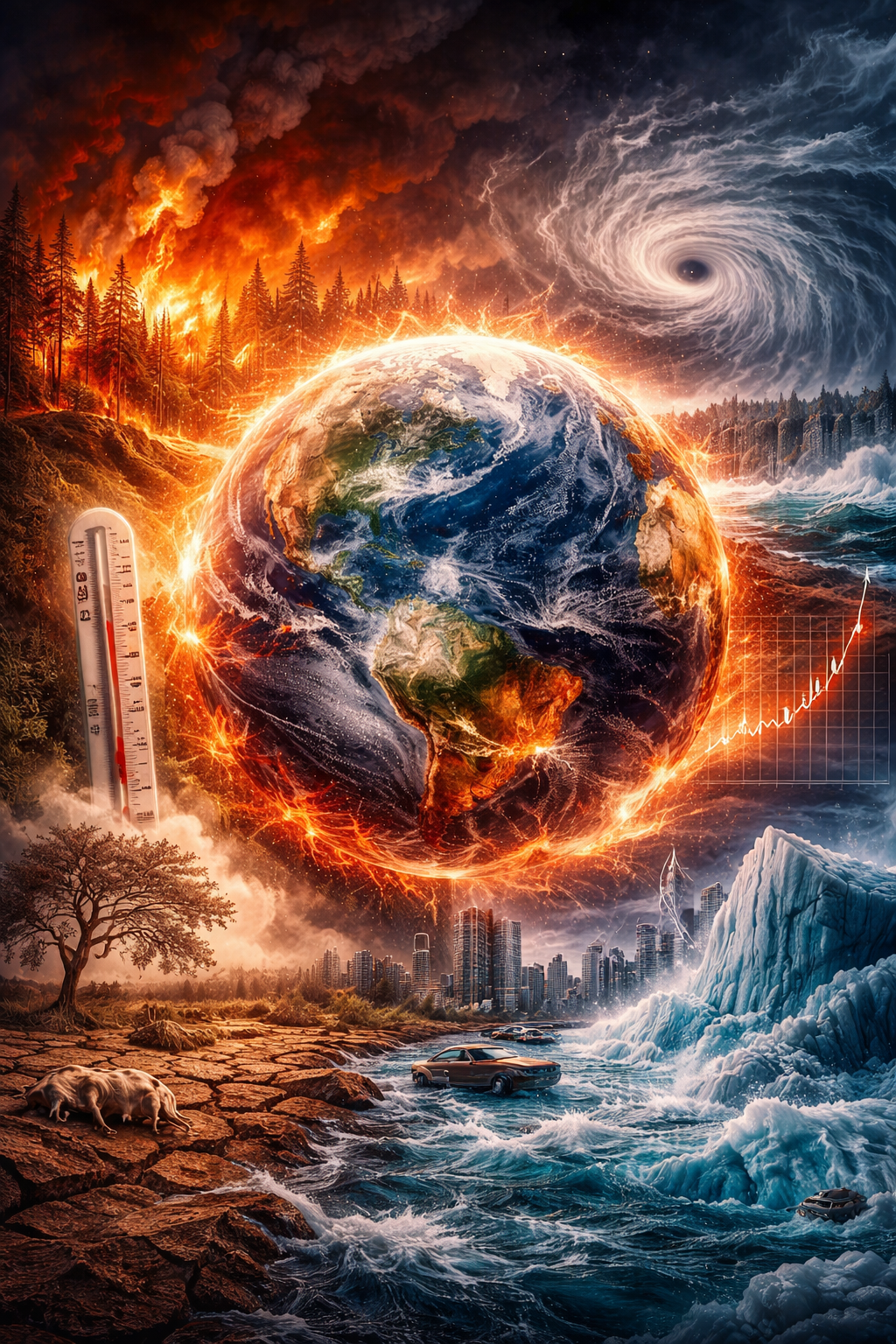
The latest State of the Global Climate report from the World Meteorological Organization paints a stark picture of a planet under mounting strain. According to the findings, Earth’s climate system is now more out of balance than at any point in recorded observations. This imbalance is driven largely by rising concentrations of greenhouse gases, which trap heat and disrupt the natural flow of energy entering and leaving the planet.
One of the clearest indicators of this shift is temperature. The period from 2015 to 2025 marks the eleven warmest years ever recorded. In 2025 alone, global temperatures were about 1.43°C above pre industrial levels, placing it among the hottest years on record. Although natural climate patterns such as La Niña can cause short term fluctuations, the long term warming trend remains unmistakable.
At the core of this issue is what scientists call Earth’s energy imbalance. Under stable conditions, the energy received from the sun is balanced by the energy radiated back into space. Today, that balance has been disrupted. Greenhouse gases such as carbon dioxide, methane, and nitrous oxide have reached levels unseen for hundreds of thousands to millions of years, reducing the amount of heat that escapes the atmosphere. As a result, excess energy is accumulating within the Earth system.
Most of this trapped energy, over 90 percent, is absorbed by the oceans. Over the past two decades, the ocean has taken in heat equivalent to roughly eighteen times the world’s annual human energy consumption each year. This has led to record breaking ocean temperatures, with each of the past nine years setting new highs. Warmer oceans contribute to stronger storms, disrupt marine ecosystems, and accelerate the melting of sea ice.
Ice loss is another visible consequence of the warming climate. Arctic sea ice has reached near record lows, while Antarctic ice levels have also declined sharply in recent years. Glaciers around the world continue to retreat, including severe losses in Iceland and along the Pacific coast of North America. As ice melts and ocean water expands due to heat, global sea levels continue to rise. Since 1993, sea levels have increased by about 11 centimeters, with the rate of rise accelerating in recent years.
These physical changes are closely linked to growing risks for human societies. In 2025, extreme weather events, including heatwaves, floods, droughts, wildfires, and tropical cyclones, caused thousands of deaths and billions of dollars in damage. Beyond immediate destruction, these events disrupt food production, strain water resources, and force people from their homes. Over the past decade, weather related disasters have displaced hundreds of millions of individuals.
The impacts also extend to human health. Rising temperatures and shifting rainfall patterns are expanding the reach of diseases such as dengue fever, now the fastest growing mosquito borne illness globally. Heat exposure is another concern, with more than one third of the global workforce facing dangerous conditions each year, particularly in outdoor industries like agriculture and construction.
The report also highlights the importance of improved forecasting and early warning systems. Integrating climate data with health and emergency planning can help communities respond more effectively to risks. While the challenges are immense, better information and preparation offer a pathway to reduce harm.
Ultimately, the findings point to a simple but urgent reality human activities are reshaping the planet’s climate system at a pace that will leave lasting consequences for generations.
This image is the property of The New Dispatch LLC and is not licenseable for external use without explicit written permission.