Tensions between Ukraine and Slovakia have escalated as Slovak Prime Minister Robert Fico warned that electricity supplies to Ukraine may be halted if the transit of Russian gas through Ukraine ends on January 1, 2025. This dispute reflects the fragile nature of energy cooperation in the region, particularly amid broader geopolitical struggles involving Russian influence in Europe.
Ukraine recently announced it would not renew its agreement with Russia for the transit of natural gas, a decision tied to ongoing conflict and efforts to reduce Moscow’s leverage. However, this move has drawn criticism from Slovakia, which relies heavily on Russian gas for its energy needs. Fico stated in a recent video address that halting the gas transit would raise energy costs across the European Union by an estimated €120 billion over the next two years, affecting competitiveness and economic stability.
In response, Ukrainian President Volodymyr Zelenskiy accused Fico of prioritizing Russia’s agenda at the expense of Slovakia’s own interests. Zelenskiy suggested that Fico’s approach risks depriving Slovakia of $200 million in annual revenue from electricity exports to Ukraine, further straining its economy. He also accused the Slovak leader of aligning with Russian President Vladimir Putin, pointing to a recent meeting between Fico and Putin in Moscow as evidence of deepening ties.
Fico defended his stance, claiming the decision to halt electricity exports would be a reciprocal measure to protect Slovakia’s energy security. He has also sought to secure long-term Russian gas contracts and has criticized Ukraine’s actions as detrimental to regional stability.
The European Union has made efforts to reduce its dependence on Russian energy since the invasion of Ukraine in 2022. However, countries like Slovakia, Hungary, and Austria remain reliant on Russian gas due to limited alternatives and existing contracts. Fico’s government has argued that alternative arrangements could sharply increase costs, estimating a €220 million rise in transit fees for Slovakia alone.
Meanwhile, Ukraine has proposed utilizing its domestic gas production to help neighboring countries transition away from Russian resources. This offer has met resistance, with Slovakia and Hungary instead urging the European Commission to intervene in the dispute. The EU, however, has declined to mediate, leaving the two nations at an impasse.
This energy conflict reflects the broader challenges facing Europe as it seeks to navigate the complexities of energy security and geopolitics. With the deadline for the gas transit agreement approaching, the stakes remain high for both Slovakia and Ukraine. A failure to resolve the dispute could lead to increased energy prices, economic strain, and further discord within the region.
As the situation unfolds, it highlights the interconnected nature of energy policies in Europe and the difficulties in balancing national interests with collective security. Both Kyiv and Bratislava face pressure to find solutions that avoid long-term damage to their economies and relationships with neighboring countries.
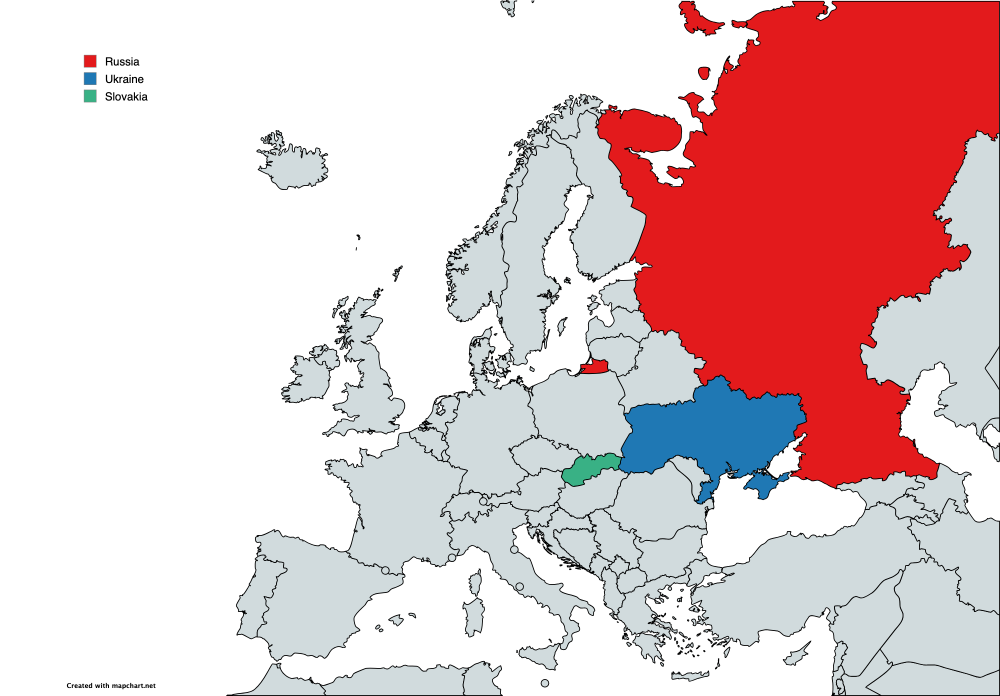
Slovakia = Green
Ukraine = Blue
Russia = Red
Image is licensed under the Creative Commons Attribution-Share Alike 4.0 International license and was created using MapChart(https://mapchart.net).