The United States military said it carried out a deadly strike on a vessel suspected of drug trafficking in the eastern Pacific Ocean, killing two people and leaving one survivor. The operation, confirmed by U.S. Southern Command, marks the first publicly known attack of its kind since U.S. forces captured Venezuelan leader Nicolás Maduro earlier this month.
According to Southern Command, intelligence showed that the vessel was moving along established narcotics trafficking routes and was actively involved in smuggling operations. The military said the strike targeted what it described as “narco-terrorists.” After the attack, U.S. authorities notified the Coast Guard to begin search and rescue efforts for a surviving individual believed to have entered the water.
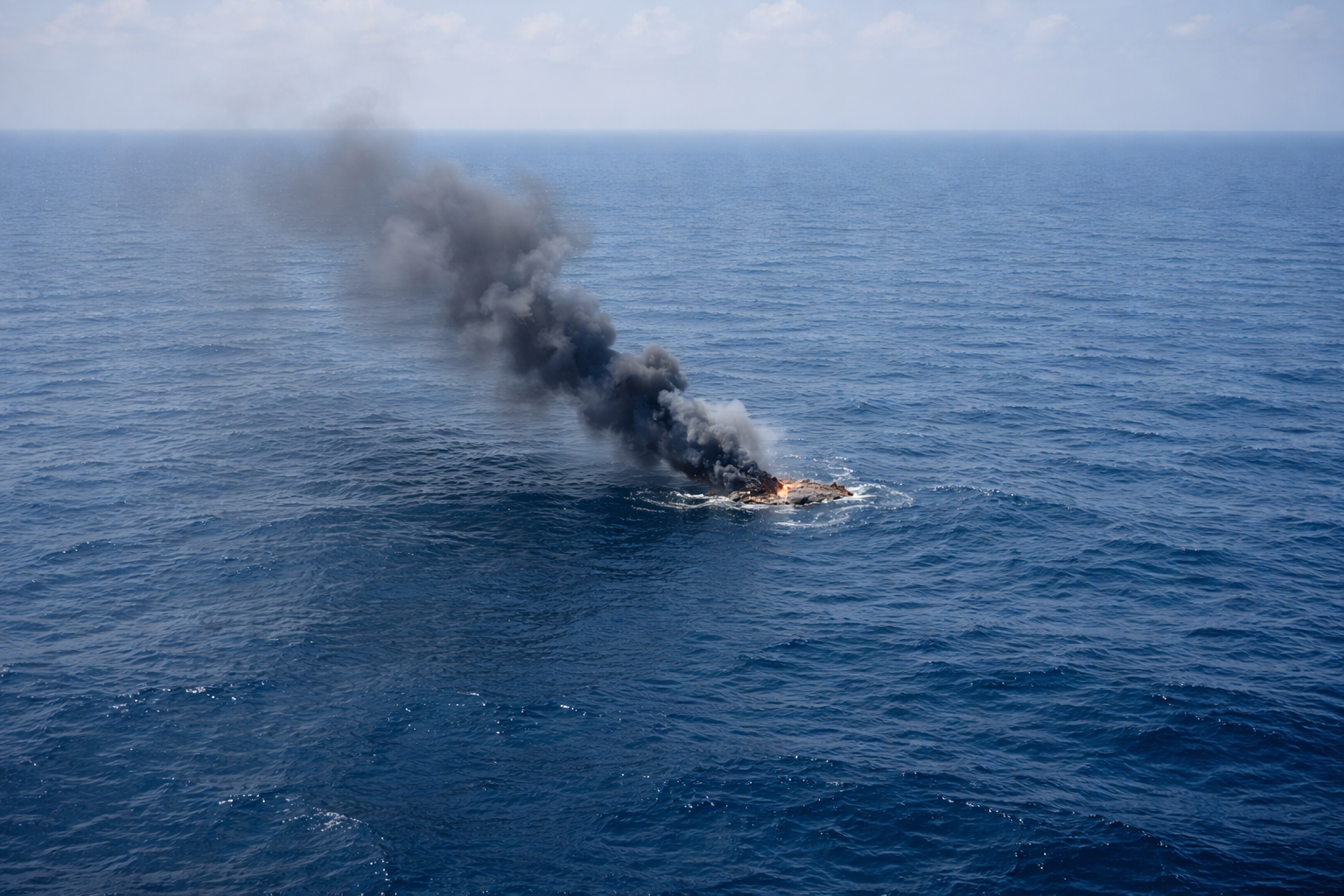
Video footage released alongside the announcement shows a small, fast-moving boat traveling through open waters before being struck by an explosion that engulfed it in flames. The video appears to show three people aboard the vessel prior to the strike, aligning with the military’s statement that two were killed and one survived.
The latest incident adds to a growing list of U.S. military actions against alleged drug-smuggling boats operating off the coasts of South America. Since early September, the United States has carried out at least 36 such strikes in the Caribbean Sea and the eastern Pacific, according to official statements and comments from President Donald Trump. Those operations have resulted in the deaths of at least 117 people, based on figures cited by the Associated Press.
The most recent strikes before Friday occurred in late December, when the military said it hit five suspected smuggling boats over a two-day period. Eight people were reported killed in those operations, while others were seen jumping into the sea. Days later, the Coast Guard ended its search for potential survivors.
While many of the strikes have targeted drug trafficking at sea, U.S. military efforts have recently expanded to include the seizure of oil tankers linked to Venezuela. This shift follows a surprise raid on January 3 in Caracas, during which U.S. special forces captured Maduro and his wife. The pair were flown to New York to face federal drug trafficking charges.
The Trump administration has since taken steps aimed at controlling Venezuela’s oil exports and revenues. President Trump announced an agreement with Venezuela’s interim leadership that would allow up to 50 million barrels of crude oil to be supplied to the United States. He also signed an executive order directing that Venezuelan oil revenues be held in U.S.-controlled accounts.
Before his capture, Maduro accused the United States of using military and law enforcement actions as a pretext to remove him from power. The White House, however, has framed the operations as part of a broader campaign against drug trafficking networks operating by sea.
Speaking this week at the World Economic Forum in Davos, Trump said the maritime strikes were sharply reducing the flow of drugs into the United States. He claimed that drug shipments arriving by water had been “almost entirely” halted as a result of the ongoing military campaign.
This image is the property of The New Dispatch LLC and is not licenseable for external use without explicit written permission.