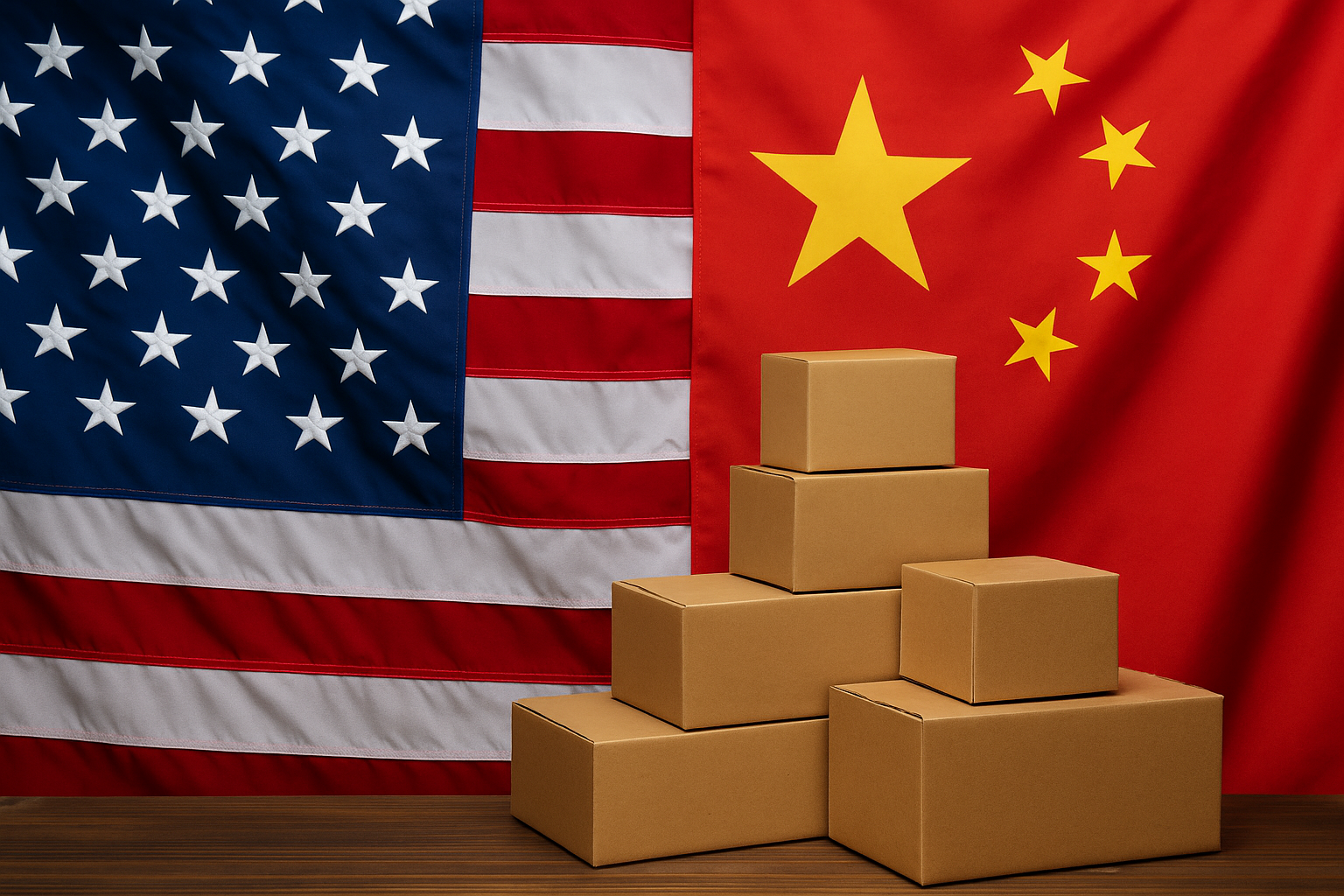
Last week, the United States officially ended the use of the de minimis exemption for low-value shipments originating from China and Hong Kong. The move, initiated through a series of executive actions by President Donald Trump, is part of a broader strategy to address synthetic opioid trafficking, reduce trade imbalances, and protect domestic manufacturing. The policy change now subjects shipments valued at $800 or less to new tariffs and fees, overturning longstanding practices under Section 321 of the Tariff Act of 1930.
Previously, goods under that threshold were allowed duty-free entry and streamlined processing through U.S. Customs and Border Protection (CBP). As of 12:01 a.m. EDT on May 2, packages from China and Hong Kong are now subject to a 120% ad valorem tariff or, in the case of postal shipments, a flat fee of $100 per item. That postal surcharge is set to double to $200 per item beginning June 1. The changes were first announced in early April and finalized after interagency coordination throughout the month.
The action directly affects e-commerce platforms such as Shein and Temu, which have been major beneficiaries of the de minimis rule. According to a 2024 report by the House Select Committee on the Chinese Communist Party, roughly 1.4 billion packages entered the U.S. duty-free under the exemption that year, with a substantial portion originating from China. CBP data from 2024 estimated that over 4 million low-value shipments were processed each day, about 40% of which came from China.
The de minimis threshold had been increased from $200 to $800 in 2016 to simplify customs procedures and reduce administrative burdens. However, critics across the political spectrum argued that the rule allowed lightly regulated goods—including components used in synthetic opioid production—to enter the U.S. without sufficient oversight, while also enabling foreign sellers to undercut American manufacturers on price and evade tariffs.
A prior attempt to revoke the exemption in early February 2025 was delayed after logistical issues halted mail flow from China, forcing a temporary reinstatement. The U.S. Postal Service and private carriers reported difficulties adapting to the abrupt change. By April, Commerce Secretary Wilbur Ross confirmed that CBP systems and industry carriers were prepared for implementation.
The new requirements include stricter customs protocols. Non-postal shipments must be processed as formal or informal entries—often under Entry Type 11—using CBP Form 7501 through the Automated Commercial Environment (ACE) system. These entries must include full 10-digit Harmonized Tariff Schedule (HTS) codes. For postal shipments, U.S. Customs will apply the flat fee or tariff directly, with express carriers such as FedEx and UPS responsible for compliance and reporting.
Economically, the impact is expected to be substantial. Shein and Temu announced pricing adjustments beginning April 25 in anticipation of the policy change. Trade analysts from the Transport and Logistics Group estimate the changes could lead to a sharp decline in inbound air cargo from China. Although figures vary, reductions of up to 75% have been discussed in industry reports. Consumers—especially price-sensitive households—may face higher costs for fast fashion and low-cost electronics. Yale economist Amit Khandelwal noted the policy disproportionately affects lower-income shoppers who rely on inexpensive imports.
The move has also triggered online debate. On social media platform X, the hashtag #DeMinimisBan drew millions of posts. Some praised the decision as a long-overdue correction to trade loopholes, while others expressed concern about inflationary effects and supply chain disruptions. Industry voices like ShipHero’s Aaron Rubin expect short-term volatility in e-commerce pricing. Some international sellers may explore alternate routing strategies, including transshipment through Mexico, though experts caution that such “Tijuana two-step” workarounds will likely face regulatory scrutiny.
While the de minimis reform enjoys bipartisan support in Washington, it introduces new compliance burdens for businesses and new costs for consumers. A 90-day report from the Department of Commerce is expected to evaluate the policy’s effects and assess whether similar restrictions should be applied to other jurisdictions, including Macau.
The end of the de minimis exemption for China and Hong Kong signals a new era of trade enforcement—one aimed at recalibrating economic and security priorities in an increasingly competitive global landscape.
This image is the property of The New Dispatch LLC and is not licenseable for external use without explicit written permission.