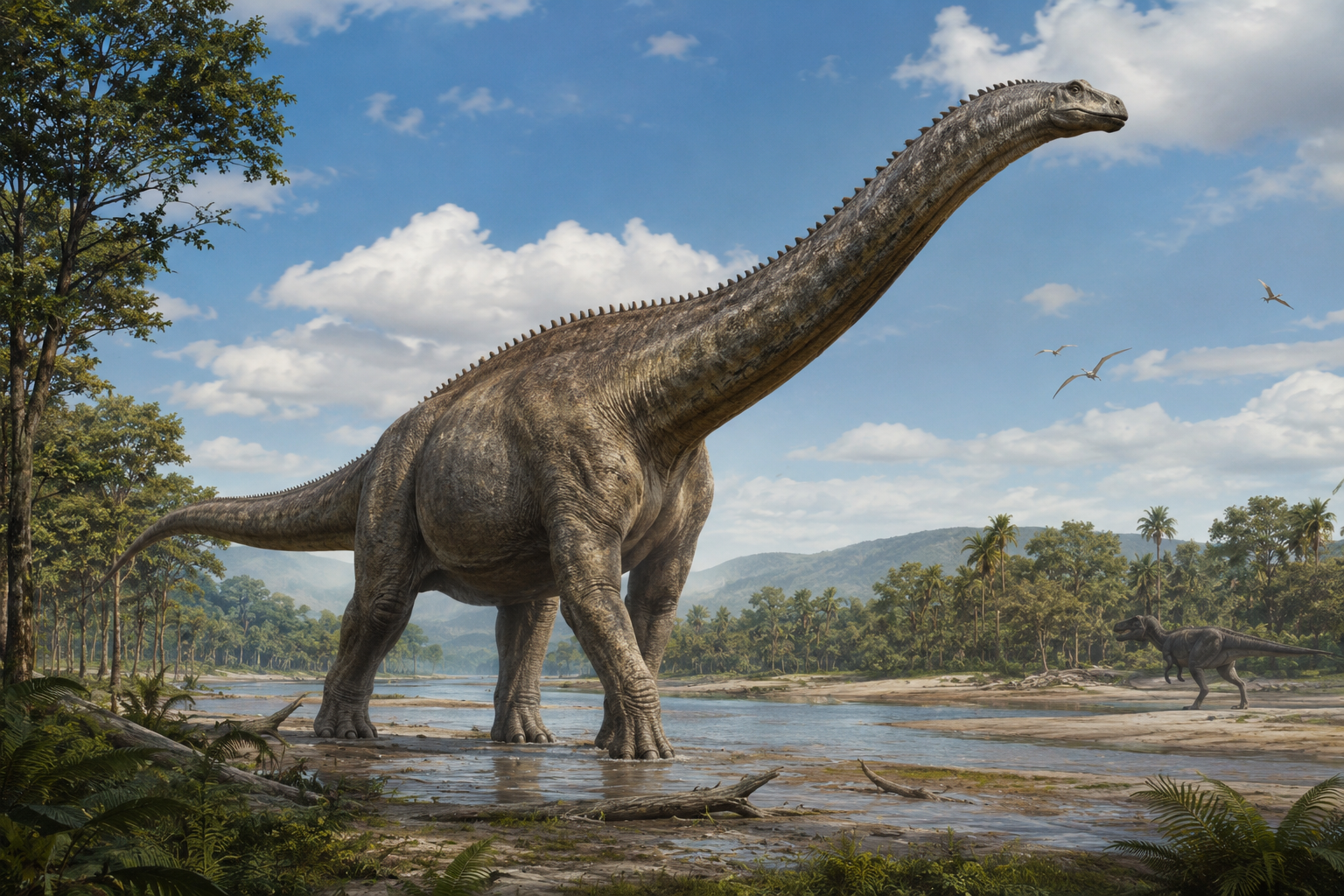
Scientists have identified a giant new dinosaur species from fossils uncovered in northeastern Thailand, calling it the largest dinosaur ever found in Southeast Asia. The species, Nagatitan chaiyaphumensis, lived around 100 million to 120 million years ago during the Early Cretaceous period.
The discovery was described in the journal Scientific Reports. Researchers estimated the dinosaur measured close to 90 feet long and weighed about 27 metric tons. It was a sauropod, the group of giant plant-eating dinosaurs known for long necks, long tails, and huge bodies supported by thick legs.
Fossils from the animal were first noticed about a decade ago near a pond in Chaiyaphum province. Local residents reported the bones, and excavation teams later began digging at the site. Work slowed for several years before continuing again in 2024.
Scientists recovered vertebrae, ribs, hip bones, and parts of the legs. One of the front limb bones measured nearly six feet long. Researchers used those remains to estimate the dinosaur’s overall size and compare it with other known sauropods.
The research team included paleontologists and museum specialists from Thailand and the United Kingdom. After examining the fossil structure in detail, the group determined the bones belonged to a species that had never been formally identified before.
Lead author Thitiwoot Sethapanichsakul said the dinosaur outweighed the well-known Diplodocus skeleton cast called “Dippy” by more than 10 tons. He also described the discovery as one of the biggest dinosaur finds ever made in the region.
The dinosaur’s name combines references from different traditions. “Naga” comes from serpent-like beings that appear in several Asian cultures, while “titan” refers to giant figures from Greek mythology. The species name points to Chaiyaphum province, where the fossils were uncovered.
Researchers said the landscape of northeastern Thailand looked very different during the dinosaur’s lifetime. The fossil site is believed to have once been part of a river environment. Remains of fish, crocodiles, and freshwater sharks have also been found nearby.
Large meat-eating dinosaurs lived in the same ecosystem. One predator related to Carcharodontosaurus may have reached around 26 feet long. Even so, scientists think a fully grown Nagatitan would have been extremely difficult for predators to bring down because of its size alone.
The researchers nicknamed the animal “the last titan” because the rock formation where it was found is among the youngest in Thailand known to contain dinosaur fossils. According to the team, the area later became covered by shallow seas, reducing the chances that giant land dinosaurs continued living there afterward.
Thailand has produced a steady number of dinosaur discoveries since the 1980s. Nagatitan is now the 14th dinosaur species formally named in the country. Researchers involved in the study said there are still many fossils from the region that have not yet been fully examined, and more unknown species could still be waiting in museum collections or underground excavation sites.
This image is the property of The New Dispatch LLC and is not licenseable for external use without explicit written permission.