Reports from several major news outlets say Saudi Arabia and the United Arab Emirates carried out secret military operations inside Iran during the recent fighting in the Middle East. The claims were based on comments from U.S., Western, and Iranian officials, though neither Gulf country publicly confirmed the attacks.
The reports suggest it was the first known time Saudi Arabia directly used military force on Iranian territory. Details about the operations remain unclear. Officials cited by Reuters and The New York Times did not describe exactly what was targeted or how much damage was caused.
The strikes reportedly came after weeks of Iranian missile and drone attacks across the Gulf region. During the conflict involving Iran, Israel, and the United States, Iran launched attacks against military facilities, airports, oil sites, and other locations in Gulf countries. American military bases in Saudi Arabia and the UAE were also considered possible targets during the war.
Saudi Arabia was said to have launched several air attacks in late March. Reuters, citing Western and Iranian officials, reported the missions were intended as retaliation after Iranian attacks inside the kingdom. One official described the operations as direct responses after Saudi territory had been hit earlier in the conflict.
Saudi officials did not clearly deny the reports when asked for comment. Iran’s foreign ministry also stayed silent publicly on the accusations.
The UAE was linked to separate attacks inside Iran as well. Bloomberg and The Wall Street Journal reported that Emirati forces carried out covert strikes before and after the ceasefire announced in April. One operation was reportedly tied to an earlier Iranian attack on the Borouge petrochemical facility in the UAE.
According to people familiar with the matter, the UAE and Israel increased security coordination during the fighting. The cooperation reportedly included intelligence sharing and missile defense efforts. Some sources claimed the two countries also discussed possible Iranian targets together, though officials did not publicly confirm that either.
The Emirati defense ministry said Iran launched hundreds of missiles and thousands of drones toward the country during the war. The UAE described itself as one of the most heavily attacked states in the region during that period.
Saudi Arabia and Iran have spent years competing for influence across the Middle East. Their rivalry has played out through regional conflicts and political tensions tied to Sunni and Shiite power centers. Relations between Iran and the UAE have also remained tense at different points, especially after the UAE established ties with Israel.
At the same time, Saudi Arabia appeared to continue diplomatic communication with Tehran even while military tensions were rising. Reuters reported that Saudi officials informed Iran after the retaliatory strikes took place. Officials from both sides then held talks aimed at preventing the conflict from spreading further.
Ali Vaez of the International Crisis Group said the exchanges suggested both governments understood the danger of allowing the war to expand across the region. He said the situation reflected a mutual effort to place limits on the confrontation before it became harder to control.
Numbers released by Saudi defense officials appeared to show a drop in attacks after those diplomatic contacts increased. Reuters reported that more than 100 missile and drone attacks were recorded against Saudi Arabia during one week in late March, while the number later decreased sharply in early April.
Even after the broader ceasefire between Washington and Tehran began on April 7, attacks in the region did not completely stop. Saudi Arabia later reported additional drones and missiles entering its airspace during the first days after the ceasefire announcement.
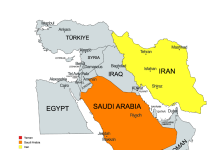
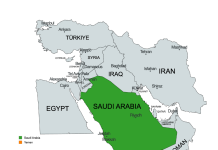
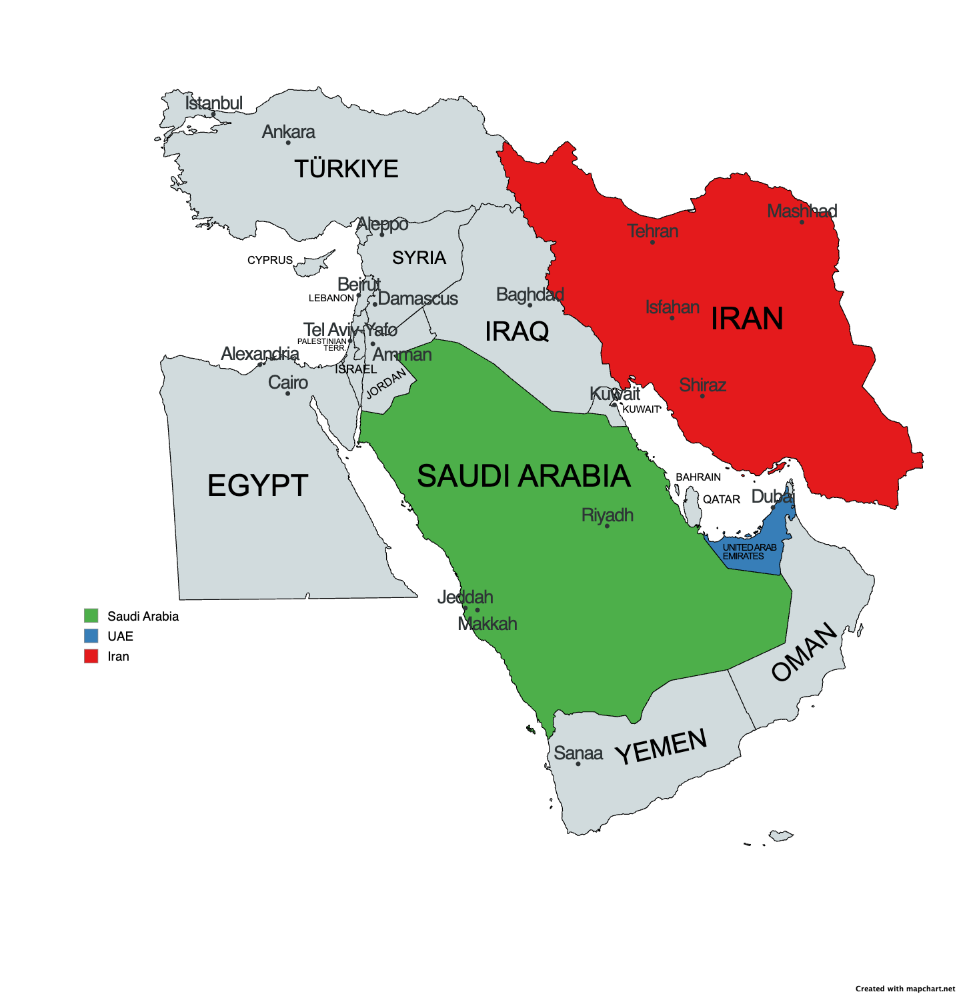
Saudi Arabia = Green
UAE = Blue
Iran = Red
Image is licensed under the Creative Commons Attribution-Share Alike 4.0 International license and was created using MapChart (https://mapchart.net).