Pakistan and Afghanistan moved closer to direct conflict this week after cross-border strikes, retaliatory attacks and increasingly harsh rhetoric from officials on both sides raised fears of a prolonged confrontation along their shared frontier.
Afghanistan’s Taliban government said Friday it was open to negotiations after Pakistan carried out airstrikes in several Afghan cities, including Kabul and Kandahar, targeting what Islamabad described as militant infrastructure and Taliban military positions. Taliban spokesman Zabihullah Mujahid said civilian casualties had occurred but did not provide detailed figures. Witnesses in Kabul reported loud explosions, thick smoke rising from strike locations and ambulances rushing through the streets as residents fled damaged buildings.
Pakistan said the bombings were a response to Afghan drone and artillery attacks launched late Thursday against military installations in northwestern Pakistan. Officials in Islamabad accused Taliban authorities of allowing Tehreek-e-Taliban Pakistan (TTP) fighters to operate from Afghan territory, allegations Kabul has repeatedly denied. Afghan leaders argue Pakistan is blaming Afghanistan for its own internal security challenges.
The escalation follows months of rising tension that had already strained relations between the neighbors after a fragile ceasefire ended earlier rounds of fighting last year. Pakistani Defence Minister Khawaja Muhammad Asif declared the situation an “open war,” saying Pakistan’s patience had run out following repeated cross-border violence.
Both governments released sharply different casualty claims that could not be independently verified. Pakistani officials said hundreds of Taliban fighters were killed during the strikes, while Afghan authorities said dozens of Pakistani soldiers died in retaliatory operations. Pakistan confirmed the deaths of 12 of its soldiers, while Afghanistan acknowledged losing 13 Taliban fighters.
Taliban officials described their response as a defensive operation against what they called repeated provocations. Mujahid said Afghan forces launched drone attacks against Pakistani military targets along the border, though Pakistan reported intercepting several of the devices before they caused major damage.
International leaders quickly called for restraint as concerns grew about the humanitarian consequences of further fighting. United Nations Secretary-General Antonio Guterres expressed deep concern over the impact on civilians and urged both sides to halt hostilities and pursue diplomacy. Nearly half of Afghanistan’s population already relies on humanitarian aid, according to the U.N., and aid agencies warn renewed conflict could worsen shortages of food and medical supplies.
The United States voiced support for Pakistan’s right to defend itself against militant attacks, accusing the Taliban of failing to meet counterterrorism commitments. European Union foreign policy chief Kaja Kallas also urged dialogue, stressing that Afghan territory should not be used as a base for attacks against neighboring countries.
Regional mediators have begun quiet diplomatic efforts to calm tensions. Afghan Foreign Minister Amir Khan Muttaqi spoke with Qatar’s junior foreign minister, Mohammed bin Abdulaziz Al-Khulaifi, whose government previously helped broker talks between the two sides. Turkey and Saudi Arabia were also involved in earlier negotiations that ended clashes last October.
Despite Pakistan’s superior conventional military power, analysts note that Taliban fighters have decades of guerrilla warfare experience gained during conflicts with U.S.-led forces before returning to power in 2021. With both governments exchanging threats and military actions continuing along their 2,600-kilometer border, diplomats warn that without swift negotiations the crisis could deepen, increasing risks for civilians and destabilizing an already fragile region.
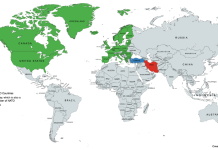
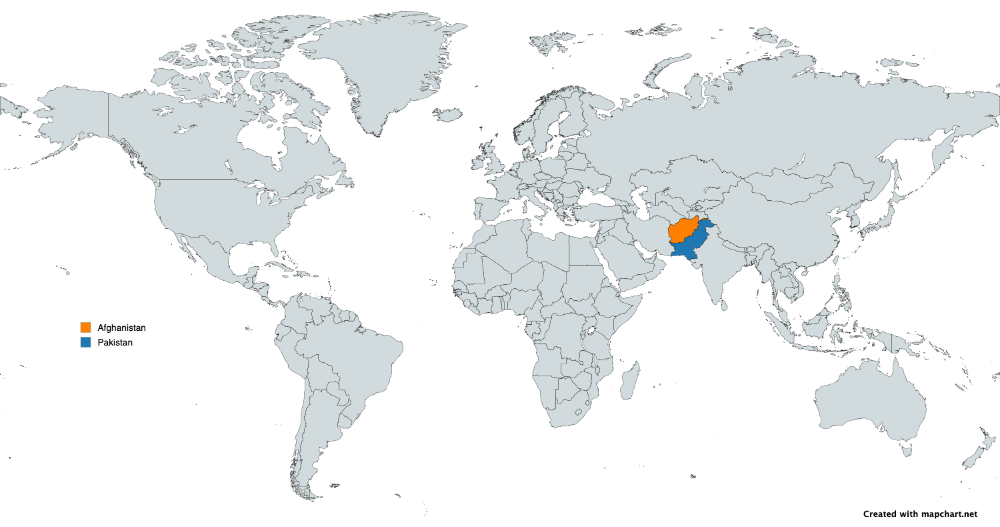
Afghanistan = Orange
Pakistan = Blue
Image is licensed under the Creative Commons Attribution-Share Alike 4.0 International license and was created using MapChart (https://mapchart.net).