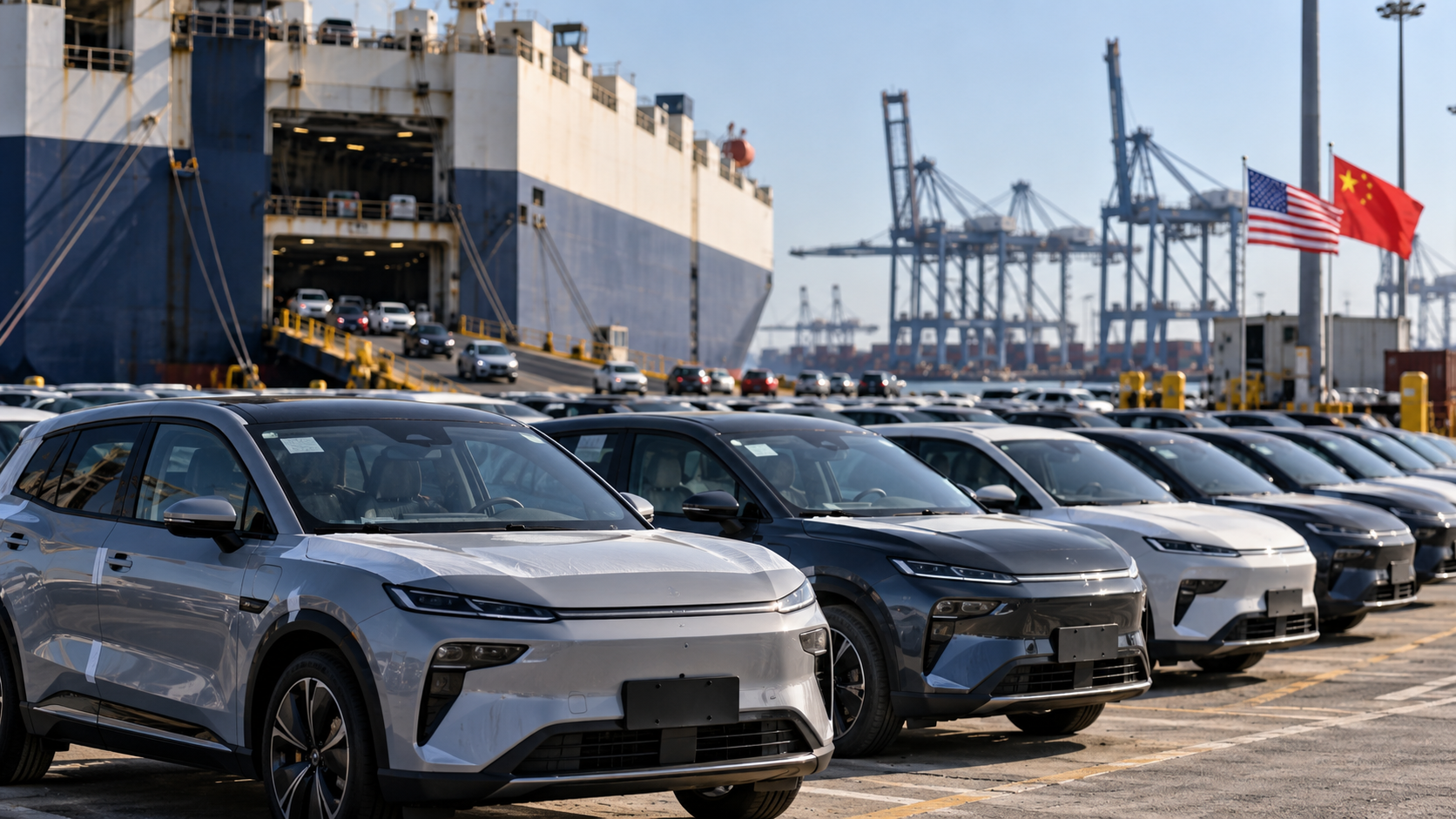
A bipartisan effort in Congress to permanently block Chinese vehicles from the U.S. market is gaining support as President Donald Trump prepares to meet with Chinese President Xi Jinping this week.
Sens. Elissa Slotkin, D-Mich., and Bernie Moreno, R-Ohio, are leading the Senate effort and are seeking unanimous consent to approve the legislation this week. The bill has 51 Senate supporters, while a House version has more than 100 cosponsors.
The legislation would turn existing restrictions on Chinese vehicles into law and prevent the White House from granting waivers that would allow Chinese vehicles to be sold in the United States.
There could still be resistance. A congressional aide said a couple of Republican senators have raised concerns about the proposal, although it remains unclear whether they will formally object.
The push comes after Trump said earlier this month that he would be open to Chinese automakers building vehicles in the United States. That statement drew concern from lawmakers and auto industry groups that want the current restrictions kept in place.
Slotkin said allowing Chinese automakers into the country could threaten U.S. auto manufacturing. She described the issue as one that crosses party lines, saying Democrats and Republicans share concerns about Chinese vehicles entering the American market.
Automakers, suppliers and dealers have also urged Trump to keep Chinese companies out of the U.S. market. Six industry groups representing companies including General Motors, Toyota, Volkswagen, Ford, Hyundai, Stellantis and Tesla sent a letter calling for existing policies to remain in place.
The groups argued that Chinese investment would shift jobs away from manufacturers that have already made major investments in the United States and toward companies owned and operated by the Chinese government.
Current restrictions date to a regulation imposed during former President Joe Biden’s administration in early 2025. The rule effectively blocked Chinese automakers from selling or building passenger vehicles in the United States because of concerns that connected vehicles could collect sensitive information and send driver data to China.
The rules cover technology including Bluetooth, Wi-Fi, cellular connections and some satellite communications. The United States also maintains tariffs of more than 100% on Chinese electric vehicles.
A separate group of 27 Democratic lawmakers, led by Rep. Debbie Dingell of Michigan, has asked Trump to maintain the restrictions. They called for protections against Chinese automobiles and connected vehicle technology, including attempts to enter the market through direct imports or manufacturing inside the United States.
Dingell has also raised concerns about the amount of information modern vehicles can collect and transmit. She said connected vehicles could gather personal information as well as data while traveling near military installations or businesses, making the issue a national security concern as well as an economic one.
The debate comes as Chinese automakers continue expanding outside their domestic market, particularly in Europe and Central and South America. Chinese brands increased their global market share by nearly 70% between 2020 and 2025, according to information provided by market research firm GlobalData.
Trump is scheduled to meet with Xi on Thursday in Washington. Trade, artificial intelligence and the conflicts in Ukraine and the Middle East are among the issues expected to be discussed.
China has opposed the existing U.S. vehicle restrictions and congressional efforts to make them permanent. The legislation is moving through Congress as lawmakers and auto industry groups press to keep those restrictions in place.
This image is the property of The New Dispatch LLC and is not licenseable for external use without explicit written permission.