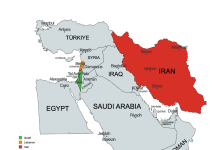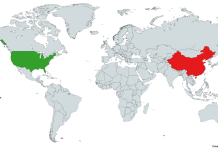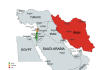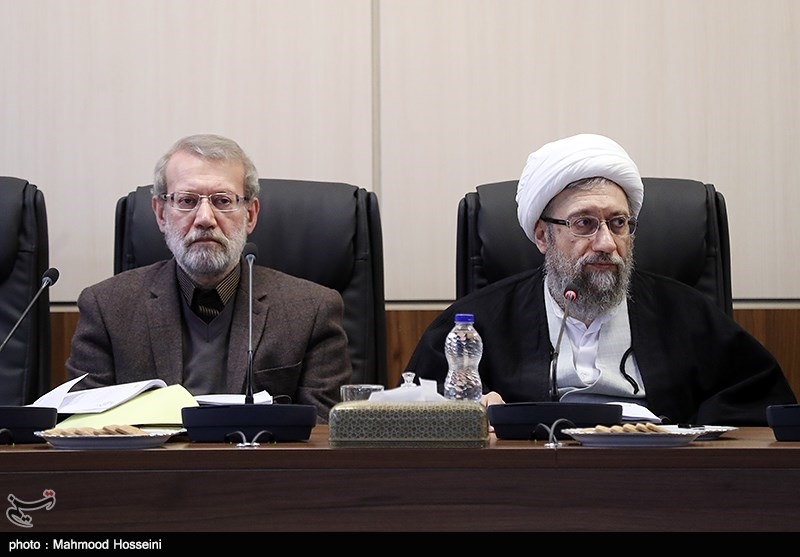
The widening conflict between Israel and Iran has entered a new and dangerous phase following Israeli strikes that reportedly killed two senior Iranian officials, further intensifying a war already spreading across the Middle East. According to Israeli officials, Ali Larijani, secretary of Iran’s Supreme National Security Council, and Gen. Gholam Reza Soleimani, leader of the Basij militia, were targeted in overnight operations. Iran has not formally confirmed their deaths, but the developments signal a deepening effort by Israel to weaken Iran’s leadership structure during active hostilities.
Larijani had risen to become one of the most influential figures in Iran after the death of Supreme Leader Ayatollah Ali Khamenei earlier in the conflict. Known for his long career in Iranian politics, including serving as parliamentary speaker and nuclear negotiator, Larijani played a central role in shaping Iran’s strategic direction. Soleimani, meanwhile, commanded the Basij, a volunteer force often deployed to suppress dissent and maintain internal control. Both men were closely tied to the government’s response to protests earlier in the year, making them key pillars of the current system.
The strikes come as Israel expands its military campaign, with reports of attacks on Tehran and operations against Hezbollah fighters in Lebanon. Israeli leaders have openly stated that their objective is to weaken Iran’s governing system, framing the campaign as an opportunity for internal change within Iran. However, there is little indication that such change is imminent, as the war has largely driven people indoors and reduced visible protest activity.
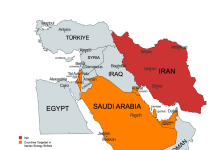
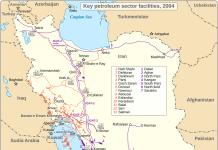
Iran has responded forcefully, launching missiles and drones not only toward Israel but also toward Gulf Arab states hosting U.S. military facilities. These attacks have hit energy infrastructure and raised alarm across the region. In the United Arab Emirates, missile debris caused civilian casualties, while Saudi Arabia and Qatar reported intercepting incoming threats. The conflict has also reached Iraq, where drones linked to Iranian groups struck near the U.S. Embassy in Baghdad.
One of the most pressing global concerns is the impact on energy markets. Iran’s control over the Strait of Hormuz—a narrow passage through which roughly a fifth of the world’s oil supply travels—has become a focal point. While Iran has stated that the waterway remains technically open, it has restricted access for the United States and its allies. Attacks on commercial vessels and disruptions to shipping have already pushed oil prices higher, raising fears of broader economic consequences.
Efforts by the United States to rally international support for securing the strait have met resistance. Several allies, including members of the European Union, have expressed reluctance to become directly involved in a conflict without a clear resolution strategy. France has indicated willingness to assist under certain conditions, but only if active bombardment subsides.
Meanwhile, political tensions are rising داخل the United States. A senior counterterrorism official resigned in protest, citing concerns about the rationale for the war. The departure reflects divisions within the government and among political supporters, particularly as the conflict begins to affect domestic issues such as fuel prices.
As the war continues, casualties are mounting across multiple देशों, and millions have been displaced. With no clear path toward de-escalation, the situation remains volatile, carrying risks not only for the region but for the global economy and international security.
Image is licensed under the Creative Commons Attribution 4.0 International license and was created by Mahmood Hosseini.