The American Thanksgiving holiday took shape over several centuries. While its origins are often connected to a harvest celebration in Massachusetts, the decision to set aside a specific day each November came much later. Even after presidents began issuing Thanksgiving proclamations, there were disagreements about when the holiday should take place.
Giving thanks for food and successful harvests was already practiced by Indigenous communities before Europeans arrived in North America. Settlers brought similar customs from their home countries, often setting aside time for religious observances. Some of these gatherings occurred in Maine and Virginia during the early years of European settlement.
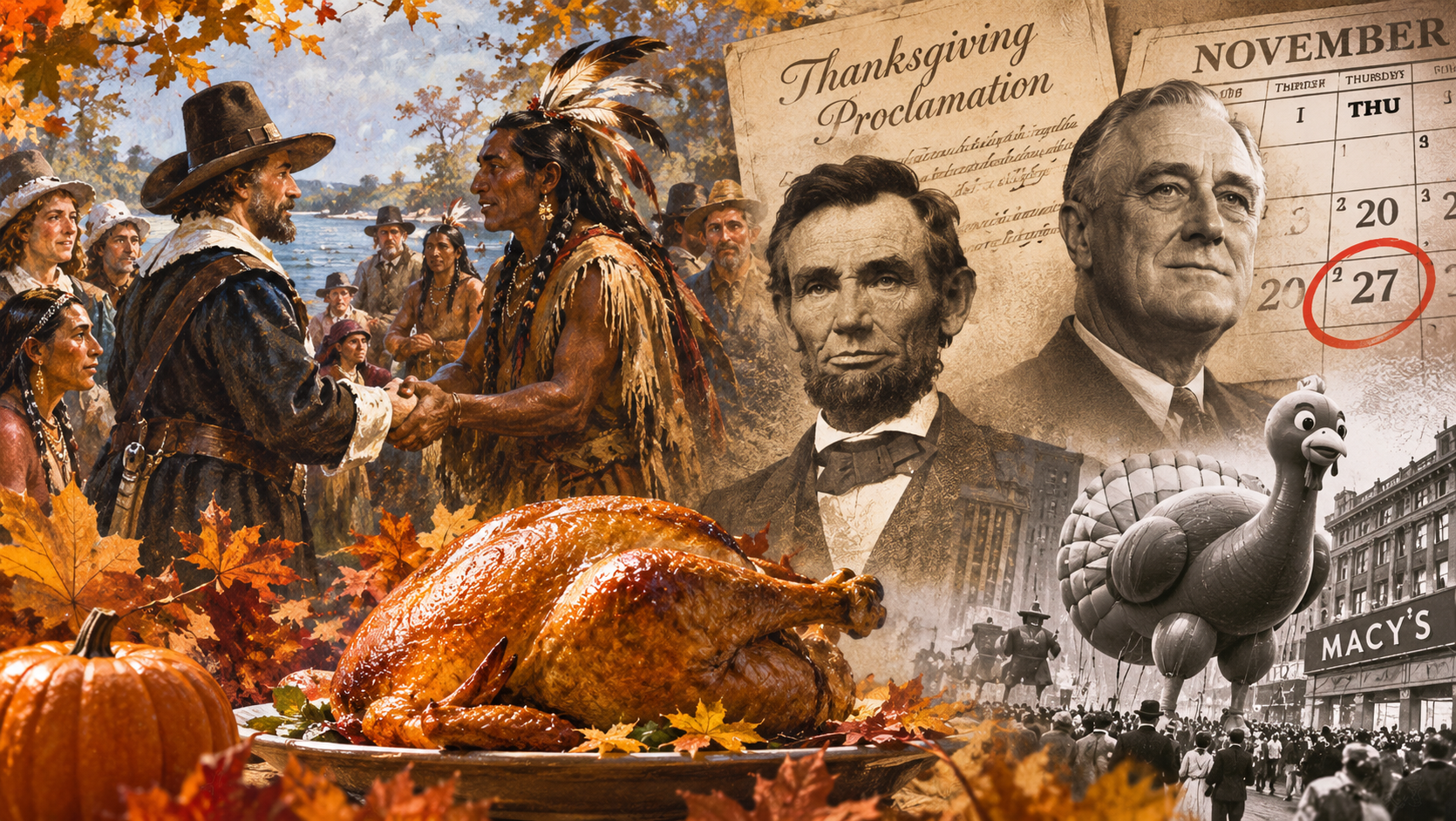
The event most closely associated with Thanksgiving happened in Plymouth during the autumn of 1621. Following a difficult period for the English settlers, they had managed to produce a harvest. A gathering involving approximately 52 colonists and at least 90 Wampanoag people took place over three days.
Members of the Wampanoag community had assisted the newcomers with growing food and surviving in unfamiliar surroundings. Cooperation between the communities eventually gave way to conflict. Over time, European settlement came at the expense of Native American lands and independence.
Records from the Plymouth celebration are limited. Many of the familiar images and stories surrounding the occasion appeared long after the people who attended it had died.
By the time George Washington became president, Americans were already observing days of thanksgiving in various parts of the country. Washington chose November 26 for one such observance in 1789. There was still no regular date, and presidential announcements concerning thanksgiving varied over the following years.
During the 19th century, magazine editor Sarah Josepha Hale began pushing for a holiday that Americans across the country could observe together. She started promoting the idea in 1827 and kept at it for decades. Government officials received letters from Hale, and she used her publications to encourage the practice among readers.
Her efforts continued into the Civil War. In September 1863, she contacted Abraham Lincoln about establishing an annual observance. Lincoln issued a proclamation the following month, selecting November’s last Thursday as a day of thanksgiving.
New traditions developed as the holiday became more widely observed. New York City saw the beginning of the Macy’s Thanksgiving parade in 1924. Football games also became a regular part of the celebrations.
In 1939, the date itself became a problem. Franklin D. Roosevelt moved the holiday forward by a week, hoping that a longer Christmas shopping season would help retailers during the country’s economic recovery. Some states accepted the change, but others refused.
For a period, there were effectively two Thanksgiving dates in the United States. Sixteen states continued observing the holiday according to the previous schedule, while 32 adopted Roosevelt’s date.
Lawmakers took up the calendar dispute in 1941. Part of the difficulty was that November occasionally contained five Thursdays instead of four. Congress settled on counting four Thursdays from the beginning of the month, regardless of whether another one followed. Roosevelt approved the legislation on December 26 of that year, ending the disagreement over the holiday’s annual placement on the calendar.
This image is the property of The New Dispatch LLC and is not licenseable for external use without explicit written permission.