Today, Americans nationwide observe Memorial Day, a federal holiday dedicated to honoring the nation’s military personnel who died in service. Celebrated on the last Monday of May, this day of remembrance brings families to cemeteries, parades to streets, and flags to half-staff, reflecting a tradition rooted in the Civil War’s aftermath and shaped by over 150 years of evolving national memory. As we gather today, Memorial Day’s history reveals a profound commitment to commemorating sacrifice, blending solemn tribute with communal gratitude.
Memorial Day began as Decoration Day, emerging in the wake of the Civil War (1861–1865), which claimed over 620,000 lives. In 1865, freed African Americans in Charleston, South Carolina, held one of the earliest recorded commemorations, reburying Union soldiers and decorating their graves with flowers, according to historian David Blight. By 1868, General John A. Logan, head of the Grand Army of the Republic, formalized May 30 as Decoration Day. The date was likely chosen for its lack of association with any specific battle and because it coincided with seasonal blooms across the country. Communities gathered to adorn graves—a practice that echoed longstanding traditions of floral remembrance for the dead.
The holiday initially focused on Civil War dead, with Northern states leading observances. Southern states, honoring Confederate losses, often held separate events—such as Confederate Memorial Day in April—until reconciliation efforts in the early 20th century led to broader national participation. By the time of the Spanish-American War (1898) and World War I (1914–1918), Decoration Day had expanded to include all U.S. war dead. In 1882, the term “Memorial Day” began appearing in use, although it did not become widespread until after World War II. The name was officially recognized in 1967 by federal law.
A turning point came with the Uniform Monday Holiday Act of 1968, which took effect in 1971. It moved Memorial Day to the last Monday in May to create a standardized three-day weekend across federal holidays. While this decision increased convenience and travel, some veterans’ groups—like the Veterans of Foreign Wars—criticized the change, saying it risked diminishing the day’s solemn intent by turning it into a commercial summer kickoff.
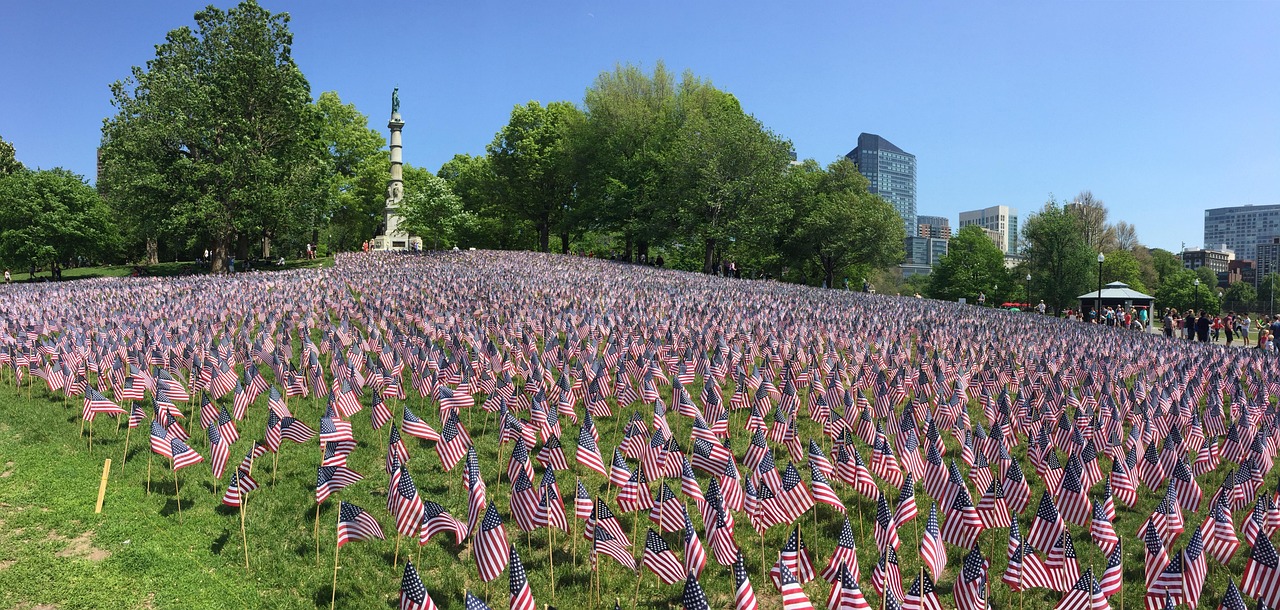
Despite such concerns, many traditions remain firmly in place. At 3 p.m. local time, Americans are encouraged to pause for the National Moment of Remembrance, a practice established by Congress in 2000. In Washington, D.C., the president lays a wreath at the Tomb of the Unknown Soldier at Arlington National Cemetery, where tens of thousands of graves are decorated with American flags by volunteers in the annual “Flags-In” ceremony, led by the U.S. Army’s Old Guard.
Symbols such as poppies and flags continue to carry deep meaning. The American Legion adopted the red poppy in 1920 to honor those who died in World War I, inspired by John McCrae’s 1915 poem In Flanders Fields. Proceeds from poppy sales support programs for veterans and their families. Today, the tradition endures, serving as a visual reminder of the cost of war and the importance of remembering those who served.
According to the Defense Casualty Analysis System and other government records, over 1.4 million U.S. military personnel have died in wartime, from the Civil War through recent operations in Iraq and Afghanistan. In 2025, amid global tensions and ongoing military service around the world, Memorial Day offers an opportunity for Americans to reflect on those sacrifices, attending parades, visiting historical battlefields such as Gettysburg, or participating in local ceremonies.
The legacy of Memorial Day is one of remembrance, resilience, and reverence. As Americans gather with family or stand in silent tribute, the holiday reminds us that the freedoms enjoyed today were secured through the lives and service of those who came before.
Image is in the public domain and is licensed under the Pixabay Content License.