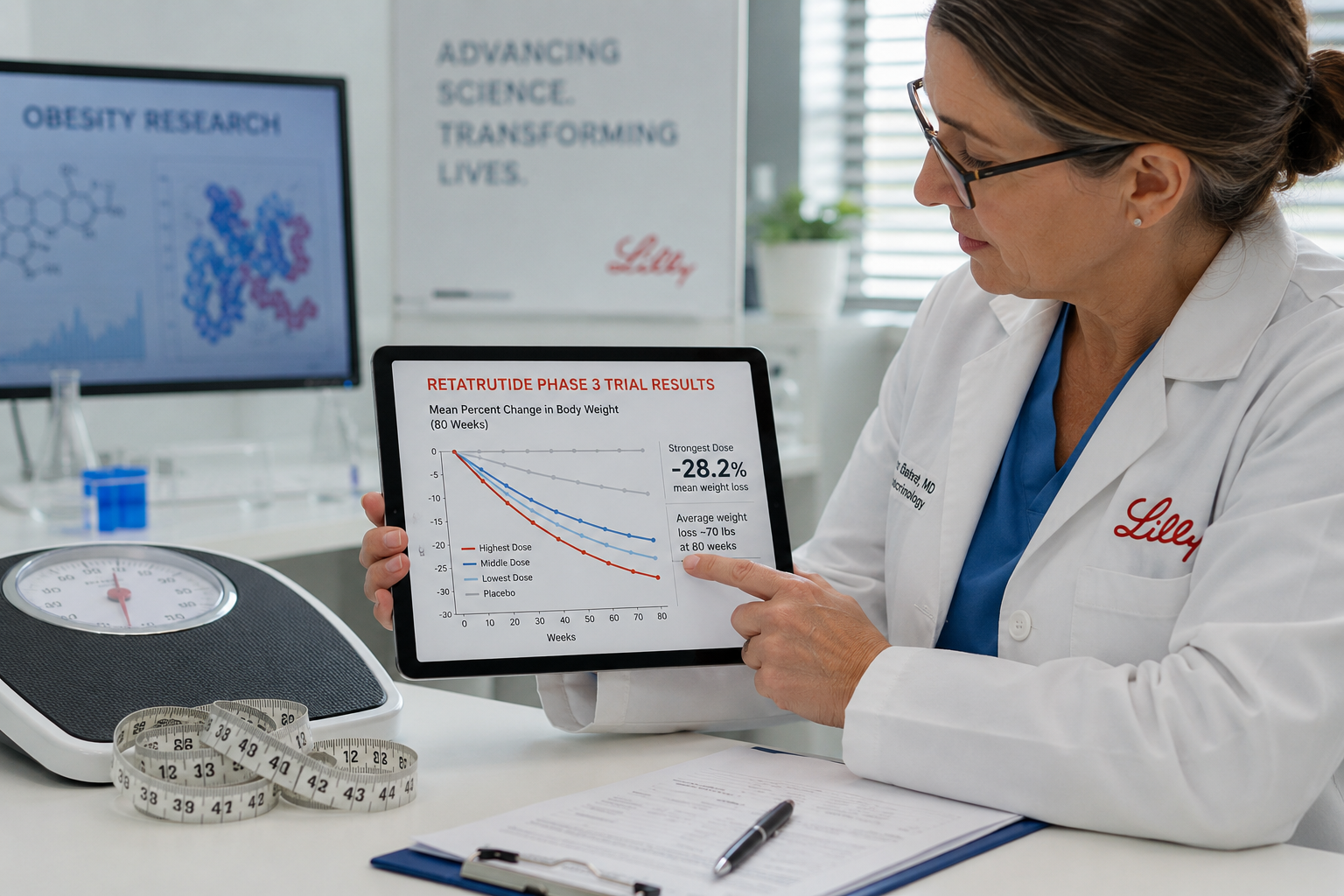
Eli Lilly released new trial results Thursday showing its experimental obesity drug, retatrutide, led to large amounts of weight loss in patients over more than a year of treatment.
The company said people in the study who received the strongest dose lost a little over 28% of their body weight on average after 80 weeks. Lilly said many patients lost around 70 pounds during that time. A smaller group that remained on the medication longer, for about two years, averaged close to 85 pounds lost.
The drug is still being reviewed and has not been approved by the Food and Drug Administration. Lilly has said it plans to submit the treatment for approval soon.
Retatrutide is part of a newer wave of obesity medications built around hormone-related treatments. The drug acts on three different hormone receptors connected to appetite, blood sugar and how the body uses energy. Existing medications like Wegovy and Zepbound target fewer of those systems.
Doctors who follow obesity medicine said the trial numbers were unusually high for a drug study. Some compared the weight-loss levels to results often seen after bariatric surgery, which can reduce body weight by around 25% to 35% over time.
Dr. Susan Spratt of Duke Health, who was not involved with the study, said the data showed larger reductions than doctors have typically seen with obesity medications in the past.
The late-stage trial included more than 2,000 adults who were obese or overweight. Lilly shared the findings in a company announcement Thursday, though full study details have not yet been published in a medical journal.
Researchers also tested different dose levels during the trial. Patients taking a lower dose lost less weight overall, though Lilly said fewer people stopped treatment because of side effects at that level. That balance between effectiveness and tolerability is something drug companies keep watching closely with obesity treatments.
Common side effects reported in the study included nausea, diarrhea and constipation. Some patients also experienced urinary tract infections and dysesthesia, which causes uncomfortable skin sensations. Earlier studies of retatrutide had raised questions about that side effect in particular.
Lilly said about 11% of participants taking the highest dose stopped using the drug because of side effects. The company added that researchers did not see major heart or liver safety problems during the trial.
The results arrive during rapid growth in the obesity drug market, where Lilly and Novo Nordisk have both been developing newer treatments aimed at producing larger weight reductions. Analysts have been paying close attention to retatrutide because it appears stronger than several currently available medications in separate studies, though the drugs have not been tested directly against each other in the same trial.
This image is the property of The New Dispatch LLC and is not licenseable for external use without explicit written permission.