Chinese military researchers have been turning to advanced U.S. artificial intelligence models while building their own AI systems, according to a Reuters review of more than 80 academic papers and patents. The documents describe work connected to military and security organizations in China and show that researchers have used outputs from AI models developed by OpenAI and Anthropic during the training process.
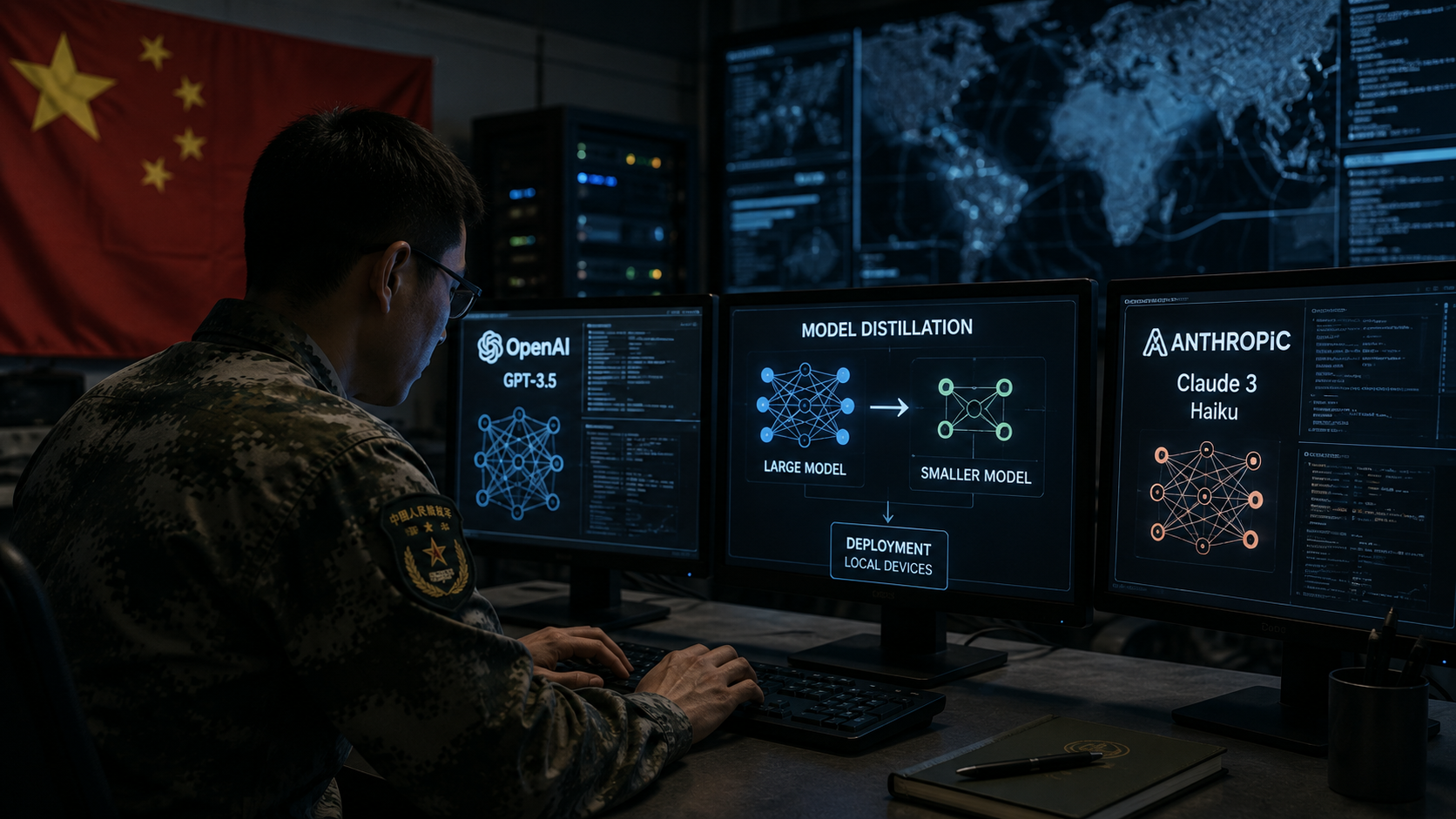
Rather than creating every system from the ground up, many of the projects relied on a technique called model distillation. The basic idea is to use a larger AI model to help train a smaller one. Those smaller systems need much less computing power, so they can be run on local devices instead of expensive, high-performance computers. That has become especially useful as China continues developing AI while facing U.S. restrictions on access to advanced chips.
Reuters said the papers it reviewed, along with research gathered by the Jamestown Foundation, point to widespread use of this method by researchers connected to the People’s Liberation Army. The studies suggest that advanced American AI models are being treated as a source of technical knowledge that can help improve Chinese systems without requiring the same amount of computing resources.
One project described in the papers involved researchers from PLA Unit 96941 in Beijing. They used GPT-3.5 to summarize software code before training a separate Chinese model that could run inside military networks. The researchers explained that outside AI systems were not suitable for working directly with classified material, so the final model was designed to operate within their own secure environment. Reuters reported that several governments and organizations contacted for comment did not respond.
The review also found that distillation has been applied in several other areas. Researchers at the North University of China used Anthropic’s Claude 3 Haiku while creating training data for a project related to online content analysis. Other studies focused on making AI models small enough to run on military equipment. One paper described an image-processing system designed for unmanned aerial vehicles, while another discussed target recognition during simulated exercises involving drones, ships, and unmanned submarines.
The issue has become part of the larger competition between the United States and China over artificial intelligence. U.S. officials argue that some Chinese organizations have used distillation to obtain capabilities from American AI models, raising concerns about export controls and intellectual property. China has rejected those accusations and said the United States is attempting to maintain an advantage in AI development. Chinese company Moonshot has also denied claims that one of its AI models depended on distillation from foreign systems.
The papers did not present distillation as a perfect solution. Researchers acknowledged that smaller models can inherit only part of the abilities of larger systems and cannot fully match their overall performance. Some studies also examined whether the same techniques could be used to copy AI capabilities without direct access to a model, leading researchers to explore ways to protect their own systems from that possibility. Even with those limits, the research shows that smaller AI models remain an active area of development for Chinese military institutions.
This image is the property of The New Dispatch LLC and is not licenseable for external use without explicit written permission.