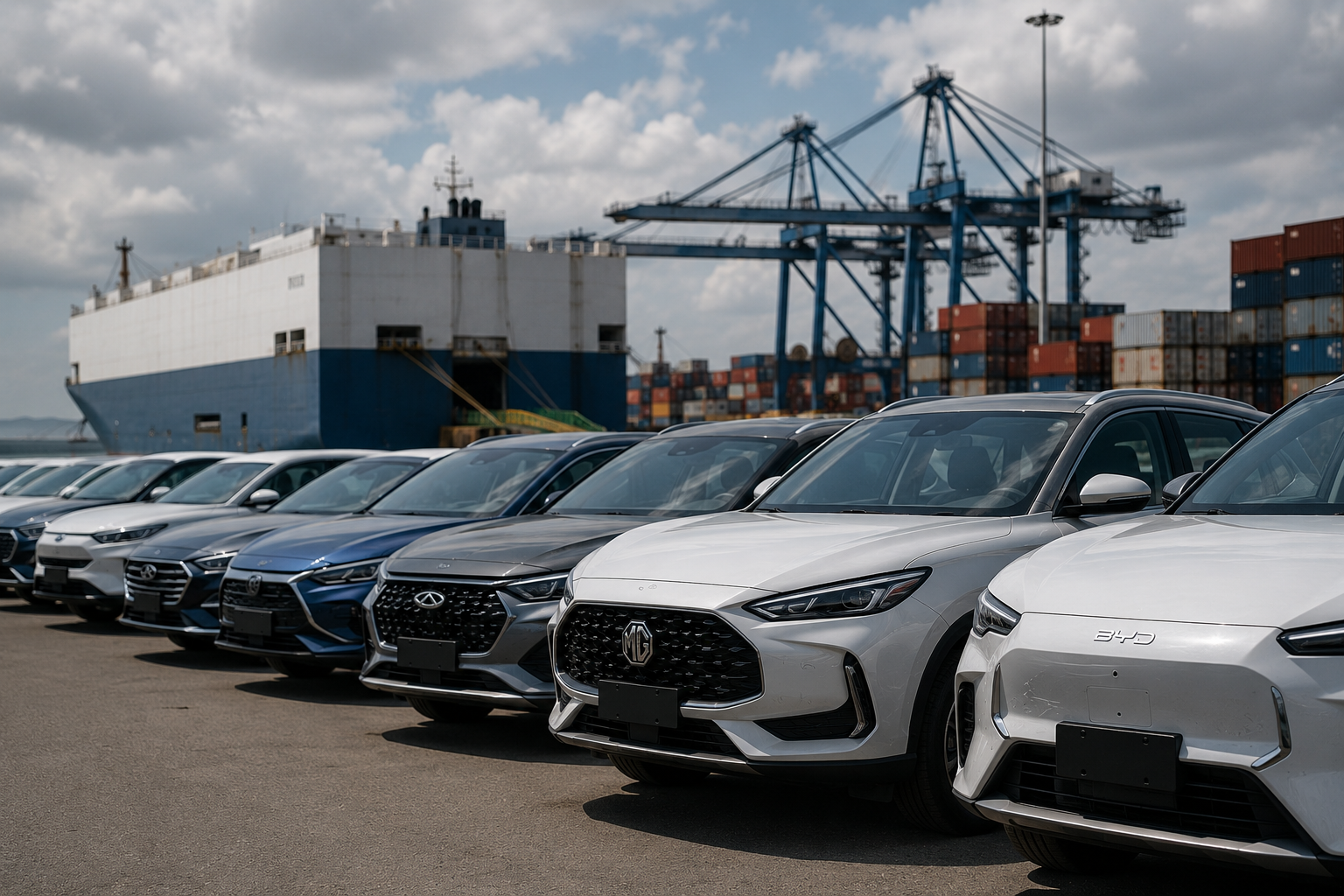
Mexico’s effort to slow the flow of Chinese vehicles into the country is producing mixed results. While imports have dropped sharply since new tariffs were introduced at the beginning of the year, buyers are still purchasing Chinese cars in large numbers.
Data from the Mexican Association of Automobile Distributors shows Chinese manufacturers sold 137,525 vehicles in Mexico during the first half of the year. That figure is nearly 30% higher than the same period last year and gives Chinese brands a 17% share of the country’s new car market.
Mexican officials argue those sales numbers don’t tell the whole story. Deputy Foreign Trade Minister Luis Rosendo Gutierrez said many companies increased shipments before a 50% tariff on vehicles from China and other Asian countries took effect in January, leaving dealers with plenty of stock to sell over the following months.
Because of that, Gutierrez said import figures provide a better picture of what has happened since the policy change. Imports of Chinese-brand vehicles into Mexico were down 43% during the first five months of the year compared with the same stretch in 2025, according to the government.
The debate over Chinese cars has become part of larger trade discussions across North America. Mexico and the United States are preparing for another round of talks over regional trade issues, with the automotive sector remaining a major point of attention. American officials have raised concerns that Mexico could eventually serve as an entry point for Chinese companies hoping to expand their reach across the border.
Chinese automakers have steadily gained ground in Mexico over the last several years. Their presence in the market was barely noticeable in 2020, accounting for less than 1% of sales. By 2022, that number had climbed to 7%. This year, it has reached 17%.
Some brands have expanded faster than others. Geely recorded the biggest increase in sales during the first six months of the year, while MG Motor, Changan, and Chirey also posted gains. BYD continued to sell more vehicles in Mexico than any other Chinese manufacturer, although its sales dipped slightly to 33,969 units from 34,606 a year earlier.
People in the industry expect Chinese companies to remain competitive despite the added costs. Guillermo Rosales, who leads the automobile distributors’ association, said many manufacturers appear willing to absorb the higher expenses rather than lose customers in a market as large as Mexico’s.
He also said the growing number of brands competing for buyers has started to crowd the market. Some automakers are already seeing sales decline, even as Chinese companies continue to expand their presence across dealerships in the country.
This image is the property of The New Dispatch LLC and is not licenseable for external use without explicit written permission.