Health officials in Kenya are monitoring more Ebola patients after another person tested positive for the virus on Sunday. The country now has eight confirmed infections, with most of the patients connected to a man who arrived from the Democratic Republic of the Congo earlier this month.
The newest patient is 49 years old and worked as an attendant responsible for cleaning hospital items, including dishes and bedding. He began experiencing a fever, muscle aches and headaches before his infection was confirmed.
Kenya’s health director-general, Patrick Amoth, said the positive result came from a group of 38 people tested that day. Authorities believe the man came into contact with the first Ebola patient while carrying out his hospital duties.
The announcement followed another round of positive tests on Saturday, when four people were diagnosed. Three worked in healthcare, while the fourth was related to the original patient. These infections brought the country’s total to seven before Sunday’s announcement.
The infected medical workers are two men, ages 29 and 35, and a woman, 32. They were involved in caring for the first patient during October 3 and 4. By October 9, all three had been isolated as a precaution.
The infected relative had entered quarantine even earlier, on October 6. None of Saturday’s four patients were outside quarantine when their symptoms appeared.
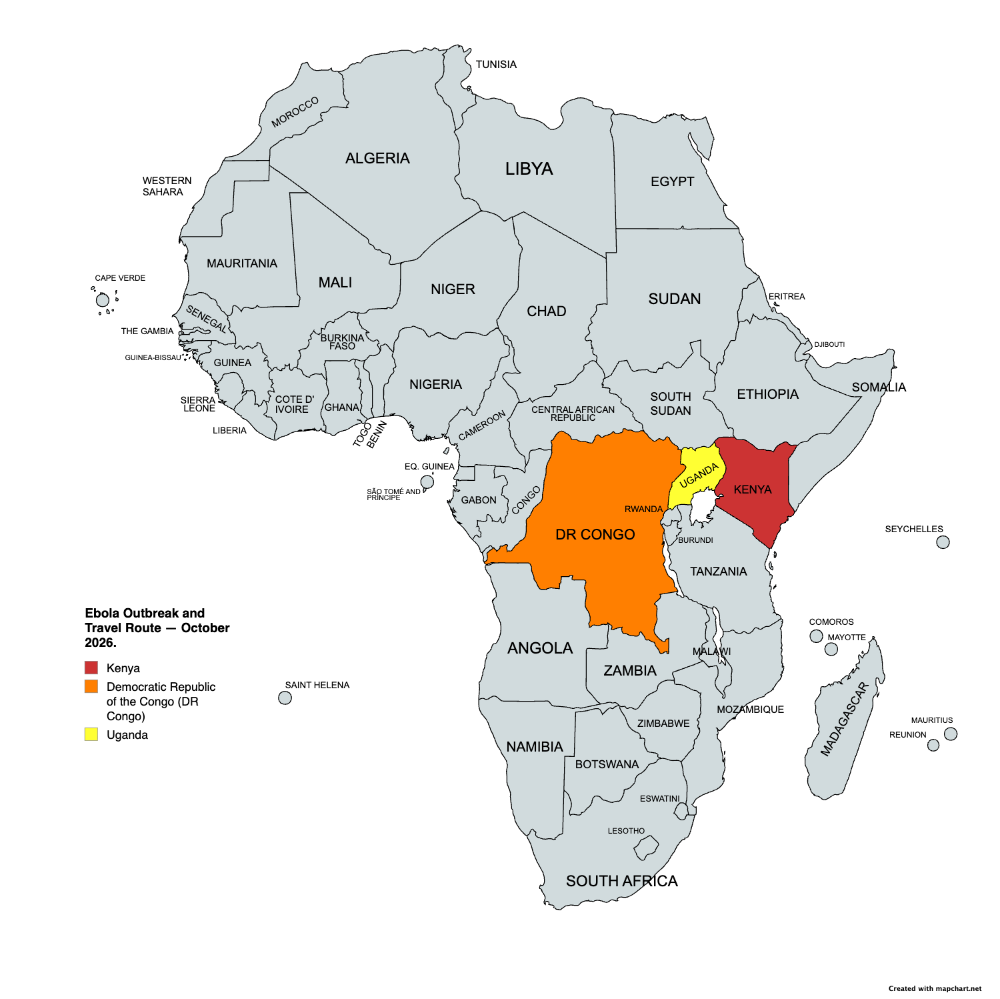
The first person diagnosed with Ebola in Kenya had already been experiencing symptoms while living in Congo. His illness had lasted about a month before he made the journey to Kenya, entering Uganda by road and later boarding a flight to Nairobi. He arrived on October 3 and died on October 5.
Questions have since been raised about how he passed through border and airport screening while sick. Kenya has tightened its health checks and set up a telephone hotline for people concerned about possible exposure.
Finding everyone who encountered the first patient has been a major part of the response. Authorities identified 130 contacts and had located 128 of them by Saturday. Those individuals were placed in quarantine, leaving two people still being sought.
According to the Health Ministry, the tracing rate had reached 98.5 percent. Officials said that exceeded the 85 percent level used as a target for stopping further infections.
The government has not reported evidence of the disease circulating more widely among the public. Businesses, public events and travel have been allowed to continue without new restrictions.
Amoth also reported that the six surviving patients identified before Sunday’s latest diagnosis were in stable condition. They had been receiving supportive medical care.
Across the border in Congo, the situation continues to affect more areas. Officials there reported infections in Nord-Ubangi, making it the eighth province affected. Two people were diagnosed in that province, and one died.
Congo’s outbreak has involved at least 9,400 cases and more than 4,500 deaths since May. The Bundibugyo virus responsible for the infections has no approved vaccine or specific treatment, though potential vaccines are being studied.
The disease can pass between people through infected bodily fluids or objects contaminated by them. Patients may develop fever, tiredness, muscle pain, diarrhea or vomiting, and some experience bleeding.
Kenya = Red
Democratic Republic of the Congo (DR Congo) = Orange
Uganda = Yellow
Image is licensed under the Creative Commons Attribution-Share Alike 4.0 International license and was created using MapChart (https://mapchart.net).