Health officials are investigating a rise in cyclosporiasis cases after thousands of infections were reported across the country this summer. Based on information from the Centers for Disease Control and Prevention (CDC) and state health departments, at least 2,944 cases had been identified in 32 states by Friday(7/10/26). The CDC also says many infections are never reported because some people recover without visiting a doctor or being tested.
Michigan has seen the largest increase. The state has confirmed 1,562 cases and at least 44 hospitalizations. That is much higher than usual. According to the Michigan Department of Health and Human Services, the state normally records only about 50 cases during an entire year. Investigators believe contaminated food is the most likely explanation, but they have not linked the illnesses to a specific produce item or supplier.
Other states have also reported large numbers of infections. New York has recorded 470 cases since May 1, while Ohio has reported 364. Illinois and Florida have each confirmed more than 100 cases. Health officials say additional cases may exist in states where infections have not yet been identified because not everyone with symptoms is tested.
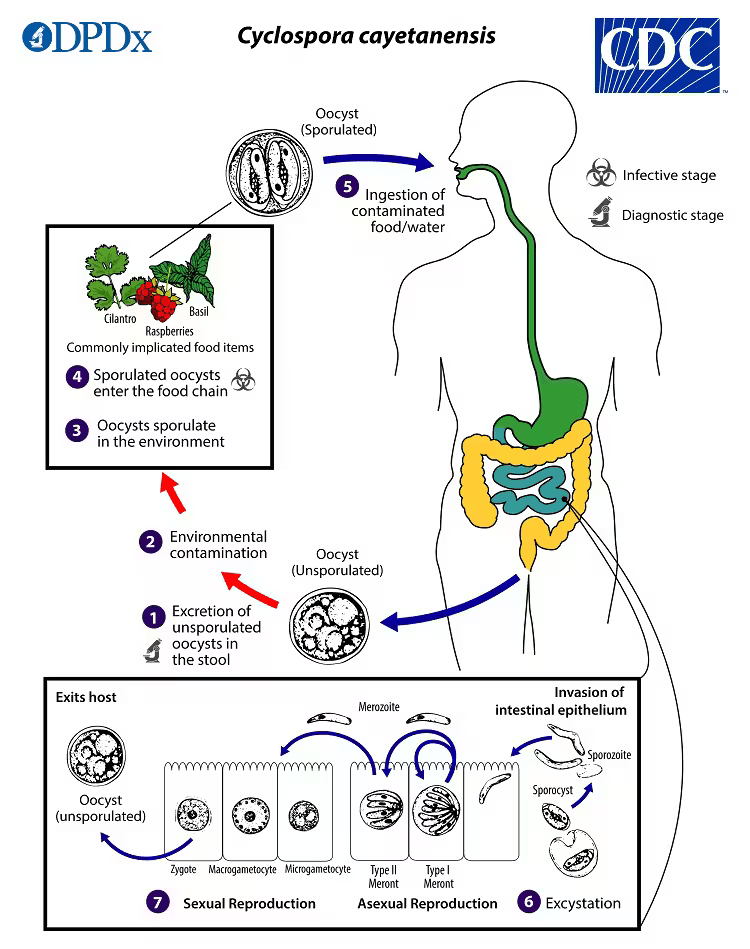
Cyclosporiasis is an illness caused by the parasite Cyclospora. People become infected after consuming food or water that has been contaminated. Fresh fruits, vegetables, and herbs have been connected to previous outbreaks, including cilantro, basil, raspberries, snow peas, and mixed salad greens. At this point, investigators have not determined whether any of those foods are responsible for this year’s illnesses.
Tracking the outbreak has been difficult because symptoms usually do not appear immediately. Most people become sick about one week after exposure, although the illness can develop anywhere from two days to two weeks later. By then, many patients cannot clearly remember everything they ate, making it harder for investigators to identify a shared source.
Watery diarrhea is the symptom reported most often and may be severe. Some patients also experience nausea, vomiting, stomach cramps, bloating, or a reduced appetite. Without treatment, the illness can continue for several weeks. Dehydration is one reason some patients require hospitalization.
Doctors generally treat the infection with the antibiotic trimethoprim-sulfamethoxazole, which is sold under several brand names, including Bactrim, Septra, and Cotrim. Treatment typically lasts 10 days.
The CDC says people can lower their risk by carefully washing fruits and vegetables before eating or preparing them, removing damaged portions of produce, and refrigerating cut fruits and vegetables. The agency also recommends washing hands thoroughly with soap and water before handling fresh produce.
Officials are still working to determine whether the outbreaks reported in different states are connected. Until investigators identify the source, health departments continue to monitor new cases while encouraging safe food-handling practices for both consumers and businesses that prepare fresh produce.
Image is in the public domain and was created by the CDC.