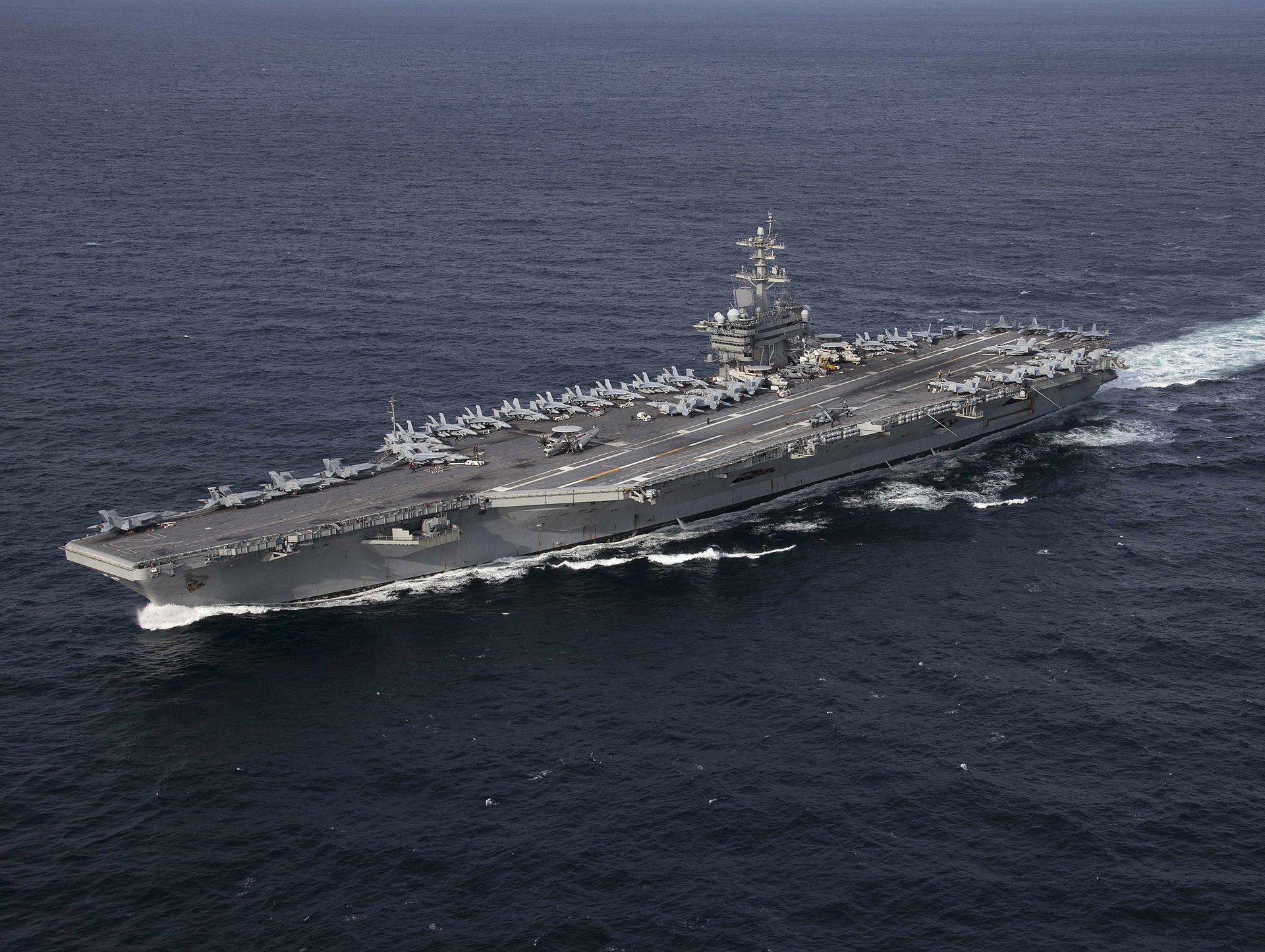
An encounter at sea this week added fresh strain to relations between the United States and Iran after American forces brought down an Iranian unmanned aircraft near a US Navy carrier operating in the Arabian Sea. US Central Command said the drone moved toward the aircraft carrier USS Abraham Lincoln while the ship and its escorts were sailing in international waters.
Military officials explained that the Iranian Shahed 139 drone continued flying in the direction of the carrier despite warnings and other actions meant to signal caution. After those efforts failed, a fighter aircraft launched from the carrier destroyed the drone to protect the ship and personnel on board. The US military said no sailors or aircrew were hurt and no equipment was lost during the episode.
The shootdown came as Washington has increased the number of forces it has positioned across the Middle East. The Abraham Lincoln strike group recently arrived in the region with additional warships and aircraft, joining other US naval and air units already stationed nearby. Defense officials say the buildup is intended to deter threats to American forces and international shipping while diplomatic options remain under consideration.
Iranian outlets tied to the Islamic Revolutionary Guard Corps rejected the US version of events. They described the drone as carrying out a lawful monitoring mission over open waters and said it had already transmitted its collected imagery before contact was lost. Iranian authorities said they were examining why the drone stopped communicating, while Iran’s mission to the United Nations did not issue an immediate response.
Soon after the drone incident, another confrontation unfolded in the Strait of Hormuz, a narrow passage that handles a large share of the world’s oil shipments. According to the US military, Iranian Revolutionary Guard boats, supported by an unmanned aircraft, approached the US flagged tanker Stena Imperative as it transited the strait. The vessels reportedly moved quickly and issued commands that suggested an attempt to take control of the ship.
A nearby US Navy destroyer moved in to accompany the tanker and provide protection, with additional air support standing by. Central Command said the presence of US forces helped calm the situation and the merchant vessel continued its voyage without further interference.
These developments occurred as officials on both sides discussed the possibility of renewed talks. President Donald Trump said discussions with Iran were already taking place and indicated that Washington preferred a negotiated outcome. At the same time, he warned that the United States was prepared to act if diplomacy failed and threats to its forces continued.
In Tehran, President Masoud Pezeshkian signaled openness to dialogue by instructing his foreign minister to pursue talks described as fair and balanced. Iranian officials said details such as timing and location were still under review, with several regional states offering to host the meetings.
Financial markets responded quickly to the news, with oil prices moving higher amid concern about stability in the Gulf. The recent incidents highlight how easily military encounters and political negotiations can intersect, leaving both sides balancing pressure at sea with cautious engagement at the table.
Image is in the public domain and was taken by the U.S. Navy photo by Mass Communication Specialist 3rd Class Clint Davis.










_underway_in_the_Atlantic_Ocean_on_30_January_2019_(190130-N-PW716-1312).JPG)