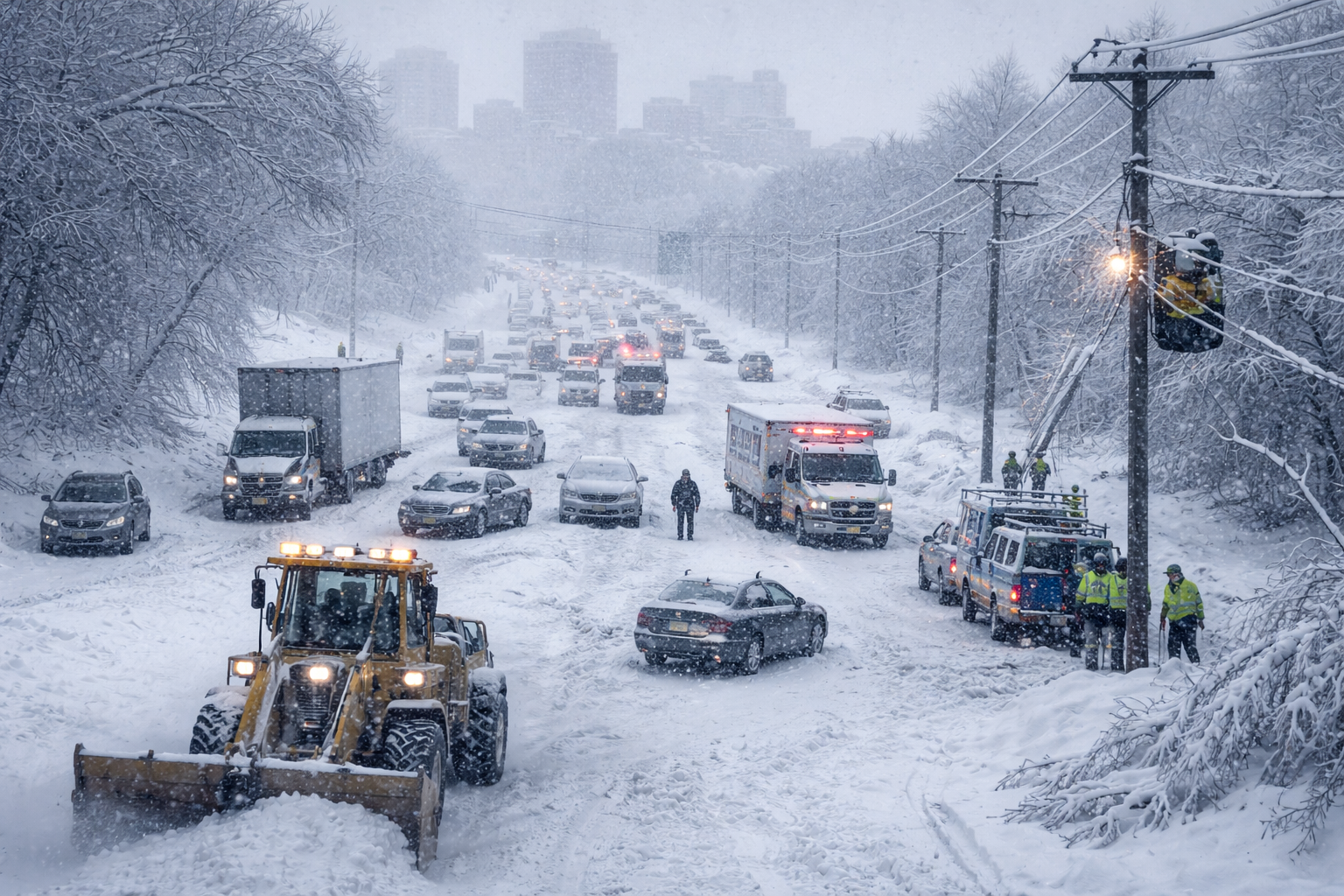
A major winter storm system, referred to by The Weather Channel as Winter Storm Fern, affected a large portion of the United States from January 24 through January 26, 2026, bringing heavy snow, damaging ice, and a surge of Arctic cold to much of the central and eastern part of the country. The storm disrupted daily life for tens of millions of residents, causing widespread travel delays, power outages, and dangerous conditions that persisted for several days.
Heavy snowfall stretched across parts of the Midwest and into the Northeast. Reuters reported snowfall of around a foot or more in some locations across Illinois, Indiana, Missouri, New Jersey, New York, and Pennsylvania. The heaviest accumulations were reported in parts of Pennsylvania and Massachusetts, where more than 20 inches of snow fell in some communities. Near New Bethlehem, Pennsylvania, a snowfall total of 23 inches was reported. Snow-covered and wind-swept roads made travel hazardous and led to numerous closures and accidents.
South of the main snow band, freezing rain created a destructive ice storm across parts of the Ohio Valley, Appalachians, and the Southeast. Ice accretion approaching an inch was reported in some areas, leading to extensive damage to trees and power lines. The weight of the ice caused widespread power outages and made road conditions extremely dangerous, particularly in rural and mountainous areas.
At the height of the storm, more than 1 million customers across multiple states were without electricity, with the largest impacts reported in parts of the South, including Tennessee and neighboring states. As of January 26, hundreds of thousands of customers remained without power as utility crews worked amid freezing temperatures to restore service.
Behind the storm system, an outbreak of Arctic air spread across much of the country. Sub-zero temperatures were reported in parts of the northern Plains and Upper Midwest, while wind chills dropped as low as minus 50 degrees Fahrenheit in the northern Plains. The extreme cold posed serious risks of frostbite and hypothermia and complicated recovery efforts in areas already dealing with snow and ice damage.
Transportation systems were heavily affected nationwide. Airlines canceled thousands of flights as the storm progressed, with more than 11,000 U.S. flight cancellations reported on Sunday, January 25, following more than 4,000 cancellations the previous day. Additional cancellations and delays continued into Monday as snow moved through the Northeast. Rail travel was also disrupted, with Amtrak canceling or modifying service on multiple routes, including in the Northeast Corridor.
The storm proved deadly. As of the morning of January 26, at least 18 weather-related deaths had been reported across multiple states, according to ABC News. Fatalities were linked to a range of storm hazards, including vehicle crashes on icy roads, exposure to extreme cold, and other weather-related incidents. Officials cautioned that the death toll could rise as assessments continued.
Emergency declarations were issued across numerous states as the storm unfolded. Federal emergency disaster declarations were approved for more than a dozen states, and state and local governments activated emergency operations to support response and recovery efforts. National Guard units and emergency crews assisted with road clearing, shelter operations, and welfare checks, particularly in hard-hit and rural communities.
As cleanup and restoration efforts continued on January 26, officials urged residents to avoid unnecessary travel where conditions remained hazardous, conserve heat and electricity where possible, and check on neighbors, elderly residents, and others who may be vulnerable during the prolonged period of cold and recovery.
This image is the property of The New Dispatch LLC and is not licenseable for external use without explicit written permission.