On December 22, 2025, President Donald Trump unveiled a proposal to develop a new class of large U.S. Navy surface combatants, described by administration officials and media coverage as part of a broader effort to expand and modernize the American fleet. The announcement was made in Florida and framed as a response to intensifying strategic competition at sea, particularly with China.
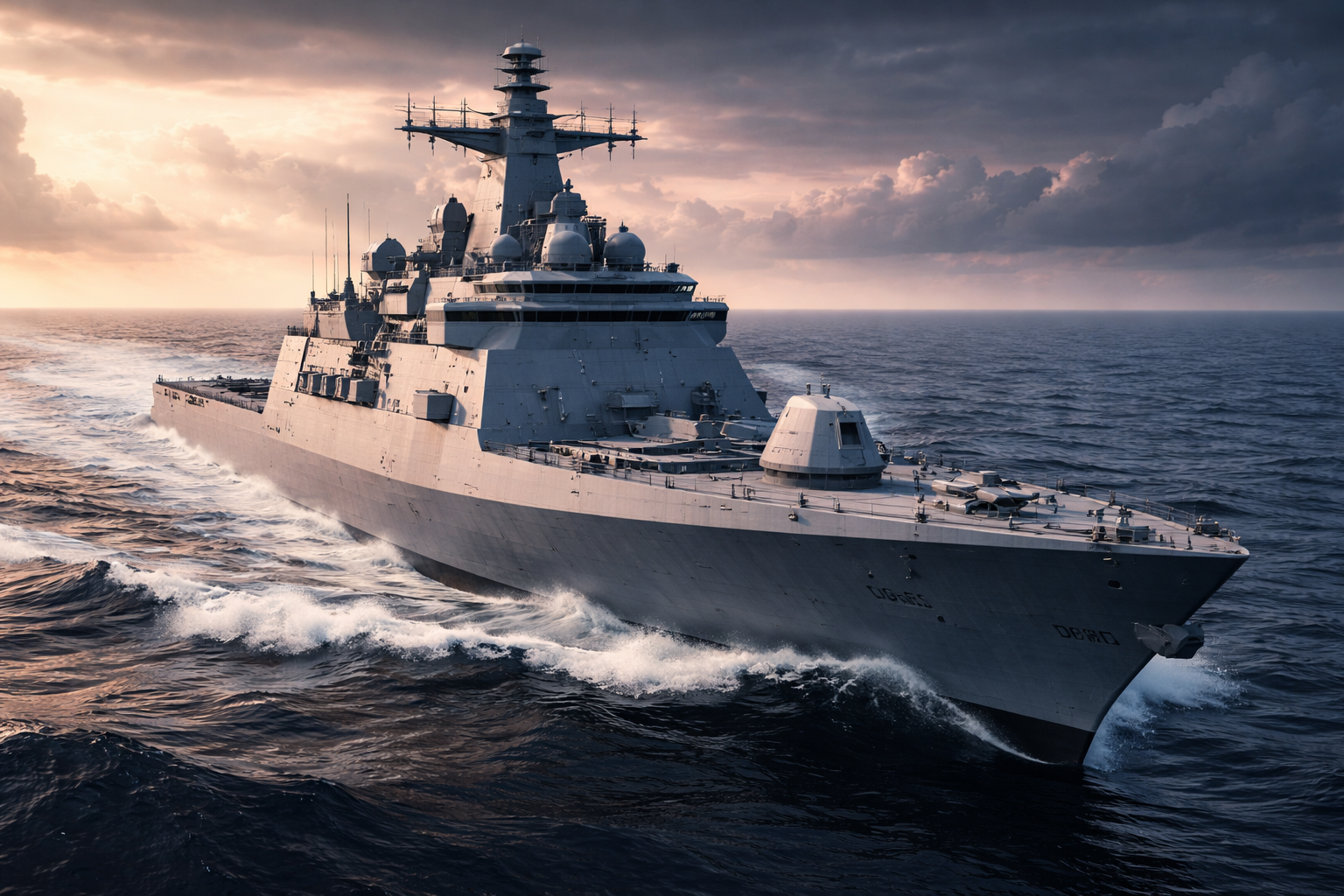
The proposal centers on the creation of a new battleship-like surface combatant, informally referred to in reporting as the “Trump-class.” According to publicly available information, the initial phase would begin with two ships, with the possibility of expanding the program in the future. The first vessel is expected to be named USS Defiant. While the concept has been presented as a major step toward restoring U.S. naval power, many details regarding the program’s scope, funding, and timeline remain undefined.
Reporting following the announcement indicated that the ships would be among the largest surface combatants built by the United States since World War II. Navy data cited by defense outlets suggests a displacement exceeding 35,000 tons, significantly smaller than Cold War-era battleships but larger than any current U.S. cruiser or destroyer. The administration has highlighted the potential incorporation of advanced technologies, including long-range missile systems and next-generation sensors, though specific design features and propulsion choices have not been formally confirmed.
The announcement comes amid ongoing concern within the U.S. defense community over China’s rapidly expanding naval capabilities. U.S. government assessments regularly describe China’s People’s Liberation Army Navy as the world’s largest by number of ships, with more than 370 vessels currently in service and further growth projected. By contrast, recent U.S. Navy force-structure plans cite a battle force of approximately 296 ships, a figure that has fueled debate over whether the United States can maintain maritime superiority in key regions such as the Indo-Pacific.
Supporters of the proposal argue that a renewed emphasis on large surface combatants would enhance deterrence, strengthen U.S. shipbuilding capacity, and generate long-term employment in the defense industrial base. Critics, however, question whether large, capital-intensive ships are well suited to modern naval warfare, which increasingly emphasizes submarines, long-range precision weapons, unmanned systems, and distributed operations. Skeptics also note that the costs and survivability of such ships remain open questions in an era of advanced anti-ship missiles.
The Department of Defense and the Navy are expected to provide additional details in the coming months, including clearer timelines, cost estimates, and shipyard plans. As presented, the initiative represents an ambitious vision rather than a finalized acquisition program, and its future will depend on congressional support, sustained funding, and the ability to translate high-level concepts into executable designs.
Published in late December 2025, the proposal reflects a stated priority of the current administration to expand U.S. naval power. Whether it ultimately reshapes the U.S. fleet will depend on how effectively it can adapt to evolving maritime threats and fiscal realities in an increasingly contested global environment.
This image is the property of The New Dispatch LLC and is not licenseable for external use without explicit written permission.