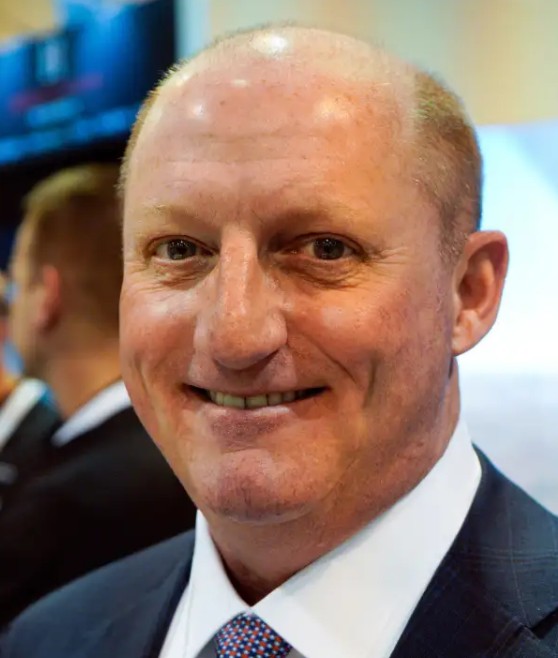
Warren Buffett has ended his tenure as chief executive officer of Berkshire Hathaway, transferring executive authority to longtime lieutenant Greg Abel at the beginning of 2026. Buffett, now 95, continues to serve as chairman and retains control of his voting shares, preserving his influence over the company’s long-term direction.
Buffett assumed control of Berkshire in 1965, when it was a declining textile business, and reshaped it over the following decades into a sprawling holding company encompassing insurance, transportation, energy, manufacturing, and consumer brands. Through disciplined capital allocation and a long-term investment philosophy, Berkshire grew into a corporate giant with a valuation exceeding one trillion dollars.
The leadership change follows a succession framework that Buffett had discussed publicly for years. In 2021, he named Abel as his eventual replacement, and the timing of the transition was confirmed at Berkshire’s annual meeting in Omaha in May 2025. At that gathering, Buffett emphasized that Abel would assume full operational authority while Buffett would remain available in a limited advisory role. He also reiterated that he had no plans to divest his Berkshire holdings.
Abel joined Berkshire in 2000 through its acquisition of MidAmerican Energy, later renamed Berkshire Hathaway Energy, and steadily expanded his responsibilities across the company’s non-insurance businesses. Meanwhile, Ajit Jain continues to oversee Berkshire’s insurance operations, maintaining stability across the company’s most significant profit centers.
Abel takes charge at a moment when Berkshire’s scale presents both strength and constraint. By late 2025, the company was holding more than 380 billion dollars in cash and cash equivalents, an unprecedented reserve that provides flexibility but has also fueled debate among investors about missed opportunities during periods of market turbulence.
Berkshire’s share performance during 2025 reflected that tension. The stock posted a modest gain that lagged the broader U.S. equity market, prompting renewed attention on how the company deploys capital in an environment where acquisitions of meaningful size are increasingly difficult. Market observers view Abel’s approach to capital allocation as the central variable shaping Berkshire’s next chapter.
Buffett’s personal wealth, which fluctuates with market conditions and ongoing charitable contributions, was estimated in the high one-hundred-billion-dollar range during 2025 and declined somewhat by early 2026. He has repeatedly stated that nearly all of his fortune will be directed toward philanthropy, primarily through foundations associated with his family and longtime partners.
Although Buffett has relinquished the CEO role, his imprint on Berkshire remains unmistakable. The company’s decentralized structure, conservative balance sheet, and emphasis on long-term ownership reflect principles he embedded over decades. As Berkshire moves forward under Greg Abel’s leadership, those principles are expected to remain central to how the company operates and invests.
Image is licensed under the Creative Commons Attribution-Share Alike 4.0 International license and was created by Tankforwin.