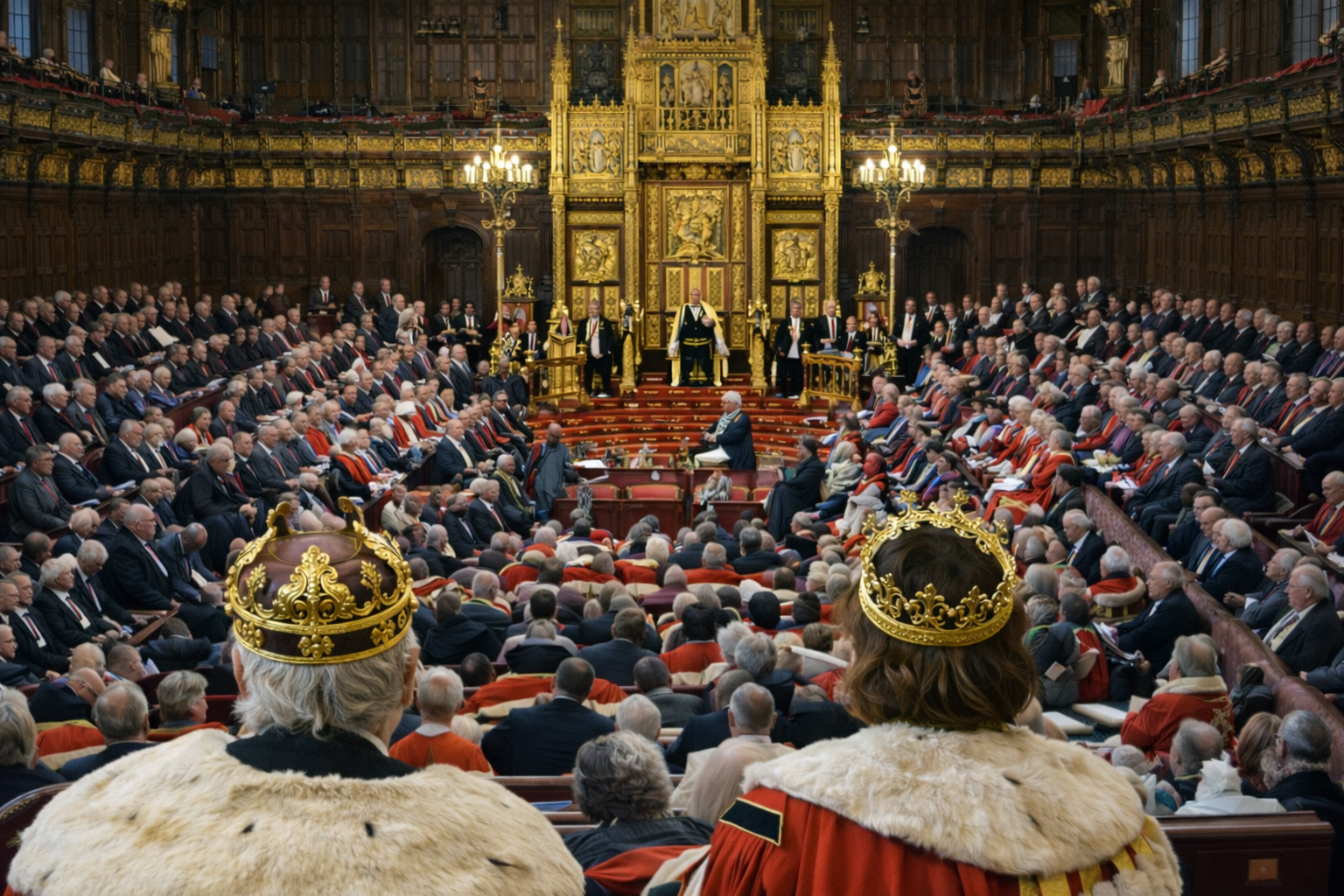
Britain is preparing to end the remaining hereditary seats in the House of Lords after lawmakers approved legislation removing aristocrats who inherited their positions. The measure closes a chapter in British parliamentary practice in which noble titles passed through families also granted the right to participate in the country’s lawmaking process.
The House of Lords forms the upper chamber of the United Kingdom’s parliament and works alongside the elected House of Commons. Members of the Lords examine proposed laws, suggest revisions, and hold debates on policy issues. Although the chamber can delay legislation and recommend changes, the Commons ultimately has the authority to override its decisions.
For generations, a portion of the Lords consisted of hereditary peers whose titles and parliamentary seats were passed from parent to child. Critics have long argued that allowing people to take part in legislation simply because of their family background conflicts with democratic principles. Supporters of reform say positions in Parliament should depend on ability and public service rather than lineage.
Efforts to change the system began decades ago. In 1999 the Labour government led by Prime Minister Tony Blair removed more than six hundred hereditary peers from the chamber. However, a temporary compromise allowed ninety two hereditary members to remain. The arrangement was meant to last only until further reforms were agreed upon, yet it continued for more than twenty five years.
The newly approved legislation will end that arrangement. After the bill receives royal assent from King Charles III, the remaining hereditary peers are expected to leave their seats when the current parliamentary session concludes later this year. The step completes a reform process that began in the late twentieth century.
Angela Smith, who leads the House of Lords for the government, said the reform reflects a basic principle that membership in Parliament should not be based on inherited privilege. She described the legislation as the beginning of a broader effort to update how the chamber functions. Officials are considering additional changes, including rules related to retirement and expectations for participation in debates and committee work.
Negotiations surrounding the bill produced a compromise that allows some hereditary peers to remain in the Lords in a different capacity. Political parties may recommend certain individuals for life peerages, which permit members to serve for life but cannot be passed on to descendants. Reports indicate that the Conservative Party may receive several of these appointments, allowing a number of former hereditary members to continue their parliamentary careers.
Today the House of Lords contains more than eight hundred members. Most are life peers chosen by the prime minister after consultation with political parties or an independent appointments body. The chamber also includes bishops from the Church of England. Because of its size, the Lords is one of the largest legislative bodies in the world.
Debate about the chamber’s future continues. Some critics argue that the appointment process allows political favoritism and results in an excessively large membership. Others believe the Lords provides valuable scrutiny of legislation and benefits from the experience of members drawn from many professions.
With the removal of hereditary peers, Britain moves further away from a system rooted in aristocratic tradition and toward one shaped more by appointment and public service. Discussions about deeper reform of the upper chamber are likely to continue in the years ahead.
This image is the property of The New Dispatch LLC and is not licenseable for external use without explicit written permission.