President Donald Trump has signed an executive order to temporarily expand the amount of beef the United States imports from Argentina, a move the administration says is aimed at easing high prices for American consumers while strengthening trade ties with the South American nation. The decision, announced Friday, allows for a sharp increase in imported lean beef trimmings, which are commonly used in ground beef products such as hamburgers.
The order permits the United States to bring in an additional 80,000 metric tons of beef during the 2026 calendar year, with imports divided into four quarterly allotments of 20,000 metric tons. These shipments will enter at a lower tariff rate and will be allocated entirely to Argentina under a broader trade framework agreed upon by the two countries. According to Argentina’s foreign ministry, the arrangement expands access for Argentine beef by a total of 100,000 tons and is expected to generate about $800 million in additional exports for the country.
The White House said the policy is meant to address rising demand and strained domestic production. Over the past several years, beef prices in the United States have climbed steadily. By December 2025, ground beef averaged $6.69 per pound, the highest level recorded since federal agencies began tracking such data in the 1980s. Officials pointed to ongoing drought conditions, shrinking cattle herds, and wildfires that have damaged grazing land in states such as Texas and Kansas as factors limiting supply.
In the executive order, the president said expanding imports is a necessary step to help increase availability and make beef more affordable. The action applies specifically to lean beef trimmings, which are often blended with fattier domestic cuts to create ground beef sold in grocery stores and restaurants. The administration described the change as temporary and tied to current market conditions rather than a long-term shift in trade policy.
The agreement also touches on other areas of trade between the two countries. U.S. officials have pledged to remove certain reciprocal tariffs on goods from Argentina, including pharmaceutical ingredients, and to review duties on steel and aluminum. The broader trade partnership has been framed by both governments as a way to strengthen economic cooperation across the Americas.
Argentine President Javier Milei, who has aligned closely with Trump, is expected to benefit from the deal as his country looks to expand exports and boost its agricultural sector. Argentine officials described the arrangement as a major step forward in gaining access to the U.S. market.
Despite the administration’s stated goal of lowering costs for shoppers, the decision has drawn criticism from American cattle ranchers and some lawmakers. The National Cattlemen’s Beef Association argued that increasing imports could harm domestic producers while doing little to reduce prices at the checkout counter. The group’s leaders said market forces should be allowed to balance supply and demand without added foreign competition.
Industry representatives have also raised concerns about animal health risks, noting Argentina’s past struggles with livestock diseases. They have called for strong inspection protocols and updated safeguards to protect American cattle and consumers.
Republican lawmakers from cattle-producing states have voiced similar worries. In an earlier letter to administration officials, they warned that expanding imports might hurt family farms and ranchers who are already navigating difficult conditions.
Even so, the White House maintains that the order fulfills trade commitments made last year and responds to immediate supply challenges. With beef prices still high and demand strong, the policy is intended to provide short-term relief while maintaining a growing partnership with Argentina.
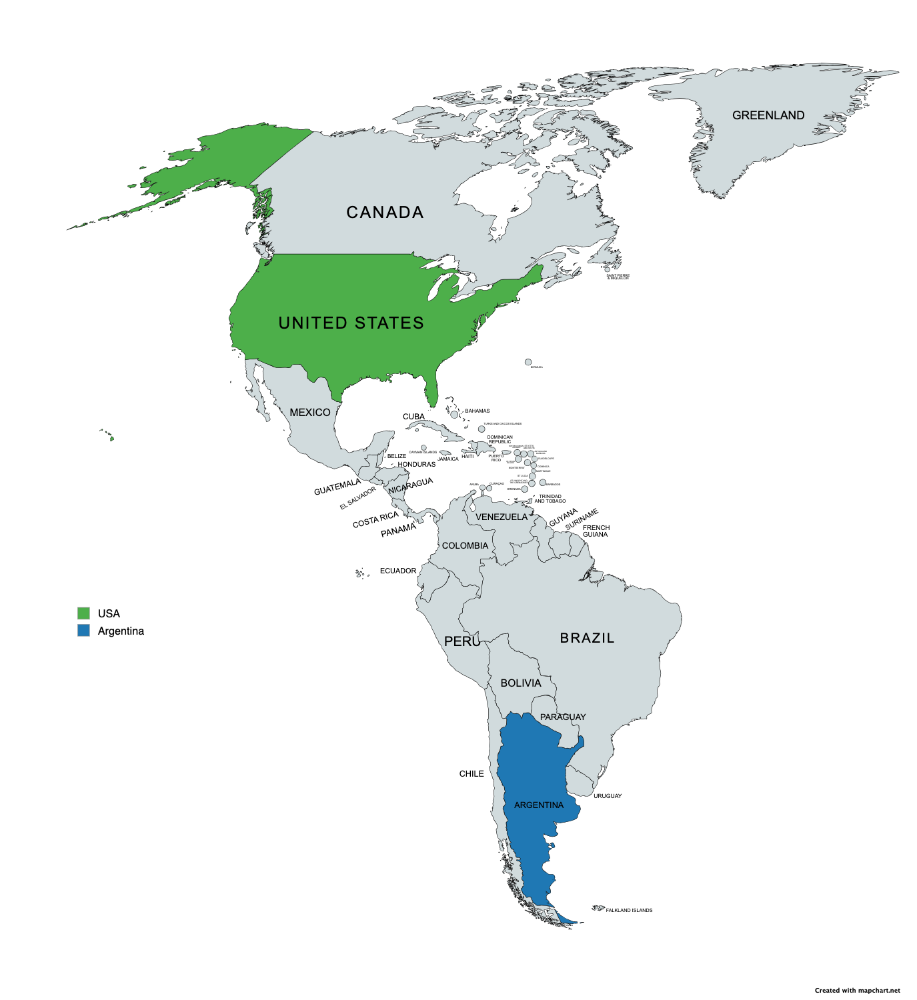
USA = Green
Argentina = Blue
Image is licensed under the Creative Commons Attribution-Share Alike 4.0 International license and was created using MapChart (https://mapchart.net).